

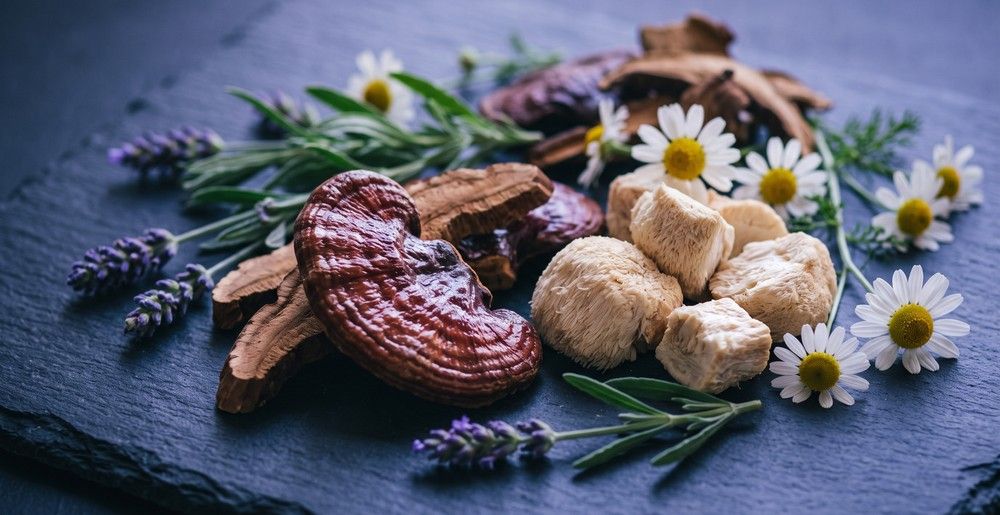
Best Mushroom Supplements for Better Sleep UK

About the author...
Will founded Supermushrooms after digging into the research behind mushroom and nootropic supplements. Every pick is checked against clinical dosing, extract standardisation, and real buyer reviews, and each star rating starts from a product's real Amazon score before being adjusted for formulation quality. Read more about how ratings are calculated.
Table of contents
Reishi is the best-evidenced medicinal mushroom for sleep, working by lowering evening cortisol and calming the HPA stress axis rather than sedating the nervous system directly. Lion's Mane, Chaga, and Turkey Tail offer secondary, more indirect support through anxiety reduction, stress modulation, and gut-brain axis effects.
Poor sleep is the most common health complaint in the UK. Studies consistently show that around a third of UK adults regularly fail to get the recommended 7-9 hours of quality sleep. The consequences go far beyond tiredness: chronic poor sleep is linked to a significantly higher risk of anxiety, depression, immune dysfunction, heart disease, and cognitive decline. Functional mushrooms offer a gentler, non-habit-forming approach than pharmaceutical sleep aids, working through the body's own stress and relaxation pathways rather than sedating the nervous system directly.
This guide covers the mushroom species with the strongest sleep-support evidence, how they work, and how to choose the best mushroom supplement for sleep.
Key Takeaways (TL;DR)
- Reishi is the best-evidenced sleep mushroom, working via GABA receptor and cortisol effects rather than sedation.
- Lion's Mane helps indirectly through anxiety reduction, not direct sedation.
- Chaga supports sleep through antioxidant and anti-inflammatory action.
- Choose fruiting body products and avoid mycelium-on-grain fillers.
- Prefer dual-extracted tinctures to capture both water- and alcohol-soluble compounds.
- Avoid taking Cordyceps in the evening — it's energising, not calming.
- Allow 4-8 weeks of consistent use before judging results.
How Mushrooms Support Sleep
Mushrooms improve sleep through several overlapping mechanisms:
Stress and cortisol reduction: The HPA axis (the stress response system) is one of the most significant disruptors of sleep quality. High evening cortisol, often from chronic stress, blue light exposure, or poor lifestyle, prevents the transition into sleep. Adaptogenic mushrooms like Reishi directly modulate this system, reducing cortisol and promoting relaxation.
GABA system support: Reishi ganoderic acids have been shown to enhance GABA receptor activity, the same system targeted by benzodiazepines and sleep aids, but through gentle modulation rather than pharmacological override. This produces genuine relaxation without the dependency risk.
Immune regulation and inflammation reduction: Sleep quality is tightly linked to immune status. Active infections, chronic inflammation, and immune dysregulation disrupt sleep architecture. The beta-glucans in medicinal mushrooms (particularly Reishi and Turkey Tail) modulate immune function and reduce pro-inflammatory cytokines that interfere with sleep.
NGF and nervous system support: Lion's Mane's nerve growth factor (NGF) stimulation supports the health and resilience of the nervous system overall, including the neurological pathways involved in sleep regulation.
The Best Mushrooms for Sleep
Reishi (Ganoderma lucidum) — The Primary Sleep Mushroom
Reishi is the mushroom with the strongest and most direct evidence for sleep improvement. A 2012 study published in the Journal of Ethnopharmacology found that Reishi extract significantly decreased sleep onset time and increased total sleep time and non-REM sleep in animal models. Human observational data supports these findings. The mechanism works mainly through ganoderic acids acting on GABA receptors, plus a direct cortisol-lowering effect.
What to look for: Reishi supplements standardised to ganoderic acid content, or dual-extracted tinctures that capture both the water-soluble polysaccharides and alcohol-soluble terpenoids. Fruiting body source matters too; avoid mycelium-on-grain preparations.
Dose: 500-1500mg of fruiting body extract daily, or 1ml tincture. Best taken in the evening, 1-2 hours before bed.
Find a product: Best Reishi Supplements UKLion's Mane (Hericium erinaceus) — Anxiety-Mediated Sleep Support
Lion's Mane's sleep benefits are mostly indirect, working through its established effects on anxiety and nervous system support. Multiple studies show Lion's Mane supplementation reduces anxiety and irritability scores. Since anxiety is one of the most common causes of sleep difficulty, that translates into better sleep quality too. A Japanese study specifically found Lion's Mane reduced anxiety and sleep disturbances in menopausal women after 4 weeks.
Lion's Mane also supports neurological health broadly, which includes the neural circuits governing the circadian rhythm. While it is not primarily a sedating supplement, its calming and nervous system-supporting effects make it a valuable addition to a sleep-focused mushroom stack.
Find a product: Best Lion's Mane Supplements UKChaga (Inonotus obliquus) — Stress and Inflammation Support
Chaga's sleep relevance is primarily through its exceptional antioxidant and anti-inflammatory properties. Oxidative stress and inflammation both disrupt healthy sleep patterns. Elevated evening inflammatory markers, linked to chronic stress, poor diet, and age, are strongly associated with reduced deep sleep. Chaga's antioxidant capacity, one of the highest ORAC values of any known substance, helps neutralise the oxidative burden that contributes to disrupted sleep.
Chaga also demonstrates adaptogenic properties, helping the body regulate its response to stressors, which reduces the cortisol and adrenaline dysregulation that keeps many people awake.
Find a product: Best Chaga Supplements UKTurkey Tail (Trametes versicolor) — Gut-Brain Axis Support
An increasingly understood pathway for sleep quality is the gut-brain axis: the two-way communication network between the gut microbiome and the brain. About 95% of the body's serotonin, the precursor to the sleep hormone melatonin, is produced in the gut. Turkey Tail is one of the most well-researched prebiotics among medicinal mushrooms. Its polysaccharopeptides (PSK and PSP) selectively feed beneficial gut bacteria, improving the microbiome balance that supports serotonin production and, in turn, melatonin availability.
While Turkey Tail is primarily studied for immune support, its prebiotic gut-support function makes it a secondary consideration for anyone whose sleep is affected by gut health.
Find a product: Best Turkey Tail Supplements UKMushroom Sleep Supplements to Avoid
Some mushroom supplements are not appropriate for evening use:
- Cordyceps: Increases ATP production and is energising, so it's best taken in the morning. Taken in the evening, it may actually worsen sleep onset.
- High-dose Lion's Mane in the evening: At high doses (5g+), some users report increased alertness, though at standard doses (1-2g) this is rarely an issue.
How to Stack Mushrooms for Sleep
The most effective sleep-focused mushroom approach combines:
- Reishi (primary): taken 1-2 hours before bed for direct GABA support and cortisol reduction.
- Lion's Mane (secondary, morning): for anxiety reduction and nervous system support throughout the day.
- Chaga (tertiary, any time): for antioxidant and inflammation reduction support.
This combination addresses multiple pathways: direct sleep-promoting effects (Reishi), daytime anxiety management (Lion's Mane), and background oxidative stress reduction (Chaga), all without the sedation of pharmaceutical sleep aids.
What Else to Look For
When choosing mushroom sleep supplements, prioritise:
- Fruiting body specification: Avoid mycelium-on-grain products with grain starch filler.
- Dual extraction (for tinctures): Ensures capture of both water and alcohol-soluble sleep-relevant compounds.
- Reishi ganoderic acid specification or polysaccharide %: Confirms active compound content.
- Organic certification: Particularly important for Chaga, since it's wild-harvested from trees and source environment matters.
- No stimulants or fillers: Some "mushroom sleep" blends add synthetic melatonin, 5-HTP, or herbs. Useful if intentional, but read labels carefully.
Mushrooms and 5-HTP or Magnesium
Mushroom sleep supplements combine particularly well with 5-HTP, a direct serotonin/melatonin precursor, and Magnesium Glycinate, a GABA-activating mineral with its own independent sleep-quality evidence. Reishi plus Magnesium Glycinate plus 5-HTP is one of the most evidence-based natural sleep stacks available. Together they cover cortisol (Reishi), GABA activation (Reishi and Magnesium), and melatonin precursor availability (5-HTP) at the same time.
Summary
For sleep specifically, Reishi is the priority mushroom: the species with the most direct evidence for sleep improvement. Lion's Mane provides supporting anxiety reduction. Chaga supports the inflammatory and oxidative stress reduction that enables quality sleep. Cordyceps and other energising mushrooms should be reserved for morning use. Tinctures offer faster absorption; capsules offer convenience. The best sleep results from consistent daily use over 4-8 weeks rather than acute dosing as a "sleep drug."