

Best Green Tea Extract (EGCG) Supplement UK for Weight Loss

About the author...
Will founded Supermushrooms after digging into the research behind mushroom and nootropic supplements. Every pick is checked against clinical dosing, extract standardisation, and real buyer reviews, and each star rating starts from a product's real Amazon score before being adjusted for formulation quality. Read more about how ratings are calculated.
Table of contents
- Green Tea Extract vs Green Tea: What's the Difference?
- Key Takeaways (TL;DR)
- How We Choose
- Quick Comparison
- Alpha01 Green Tea Extract 15,000mg - 95% Polyphenols - 50% EGCG
- Zipvit Green Tea Extract 7000mg - 95% Polyphenols
- NOW Foods EGCG Green Tea Extract 400mg
- True Veda Organic Green Tea Extract, Low Caffeine
- Swiss BioEnergetics Green Tea Extract, Made in UK
- Supplements Wise Green Tea Max, 12,480mg
- Safety and Side Effects
- Best Green Tea Extract Supplement FAQ
- The Best Green Tea Extract Supplement for You
The best green tea extract supplement in the UK is currently the Alpha01 Green Tea Extract, praised for stating both its EGCG percentage (50%) and total polyphenol content (95%) rather than hiding behind a vague "high strength" headline number. See the comparison below for how 5 other well-reviewed alternatives stack up depending on your priorities.
Green tea extract is a concentrated capsule or tablet form of Camellia sinensis leaf, built to deliver a consistent, much higher dose of catechins, particularly epigallocatechin gallate (EGCG), than you'd get from a cup of brewed tea. In the UK it's searched overwhelmingly for one reason: weight management. EGCG appears to modestly increase fat oxidation and 24-hour energy expenditure, an effect first demonstrated in a landmark Swiss trial combining green tea catechins with a small amount of caffeine1. The effect is real but modest. It's not a substitute for diet and exercise, and once you look outside industry-funded trials the evidence for meaningful weight loss specifically becomes much more mixed2.
What separates a genuinely useful green tea extract from a mediocre one isn't the eye-catching "equivalent to 15,000mg of green tea leaf" claim printed on the front of the pack. It's whether the label discloses an actual standardised EGCG percentage or milligram figure you can compare against clinical research doses. Several products reviewed below simply don't say, which matters both for judging effectiveness and for the liver-safety guidance covered later in this article, since knowing your real EGCG intake is the whole basis of that guidance.
Green Tea Extract vs Green Tea: What's the Difference?
They come from the same plant, but the dose isn't remotely comparable. A cup of brewed green tea delivers a relatively small and highly variable amount of EGCG, because steeping only pulls a fraction of the leaf's catechins into the water and dilutes them across a large volume, and that amount swings widely with leaf quality, water temperature, and brewing time. Green tea extract concentrates and standardises that same catechin profile into a capsule or tablet, so a single serving reliably delivers a fixed, known amount of EGCG rather than a moving target3. That consistency is exactly why extract is used in clinical research and why it's the more practical option if you're trying to hit a specific studied dose.
It's also why extract carries a different safety profile to the tea itself. Concentrating catechins into a capsule removes the natural pacing and dilution that comes from sipping tea throughout the day, which is central to the Liver Safety section below.
Key Takeaways (TL;DR)
- EGCG standardisation varies hugely across UK listings. Look for an explicit percentage or milligram figure, not just a "leaf equivalent" number.
- Dose matters: much of the weight-management research uses somewhere in the region of 250-800mg of EGCG a day, often alongside a small amount of caffeine.
- Third-party testing and GMP certification separate trustworthy brands from budget ones with vague, unverified labels.
- Take it with food: EGCG absorption spikes on an empty stomach, which is linked to the rare liver-injury reports seen with high-dose extracts.
- Expect modest, gradual effects: most users report subtle changes within 2-4 weeks of consistent use, not overnight results.
- Value varies by format: capsules and tablets with disclosed standardisation tend to cost more per serving than vague "high-strength" leaf-equivalent blends.
- Organic and low-caffeine options exist for buyers who want a gentler, whole-extract profile rather than an isolated EGCG dose.
How We Choose
We start from each product's real, live Amazon UK customer rating and review count, then check what the label actually discloses: a standardised EGCG or polyphenol percentage, a comparable dose to what's used in clinical research, and evidence of manufacturing quality such as GMP certification or independent batch testing. Products that hide behind a "leaf equivalent" milligram figure without a genuine standardisation claim score lower on that specific criterion, even where their reviews and other credentials are strong.
Quick Comparison
Each product's overall rating starts from its real Amazon UK customer rating, then gets adjusted (up to ±0.5) for dose versus clinical research, extract standardisation, manufacturing quality, and value. Click a product name to jump straight to its full review below.
| Product | Best For | Type | Serving | Standardisation |
|---|---|---|---|---|
|
Alpha01 Green Tea Extract 15,000mg - 95% Polyphenols - 50% EGCG 4.9 |
Buyers wanting the clearest EGCG standardisation | Vegan Capsules | 1 capsule (490mg polyphenols, standardised to 50% EGCG) | 50% EGCG / 95% Polyphenols disclosed |
|
Zipvit Green Tea Extract 7000mg - 95% Polyphenols 4.8 |
Buyers who want an established, trusted brand | Tablets | 1 tablet (157.5mg EGCG) | 95% Polyphenols, 157.5mg EGCG per tablet |
|
NOW Foods EGCG Green Tea Extract 400mg 4.7 |
Buyers wanting independently lab-tested global standards | Vegan Capsules | 1 capsule (200mg EGCG) | 50% EGCG / 80% total catechins disclosed |
|
True Veda Organic Green Tea Extract, Low Caffeine 4.6 |
Organic, clean-label buyers wanting low caffeine | Vegan Capsules | 1-2 capsules daily | No EGCG % disclosed (full-spectrum organic extract) |
|
Swiss BioEnergetics Green Tea Extract, Made in UK 4.4 |
UK-made buyers wanting a transparent mg breakdown | Capsules | 1 capsule, up to 3x daily (79mg EGCG per capsule) | 79mg EGCG per capsule disclosed (mg, not %) |
|
Supplements Wise Green Tea Max, 12,480mg 4.1 |
Budget buyers wanting a high-strength option | Capsules | 1-3 capsules daily (12,480mg leaf equivalency) | No EGCG % or mg disclosed |
Alpha01 Green Tea Extract 15,000mg - 95% Polyphenols - 50% EGCG
Best Overall — Highest EGCG Standardisation
based on 320 Amazon UK reviews (4.6★), adjusted for formulation quality
What We Love About the EGCG Disclosure
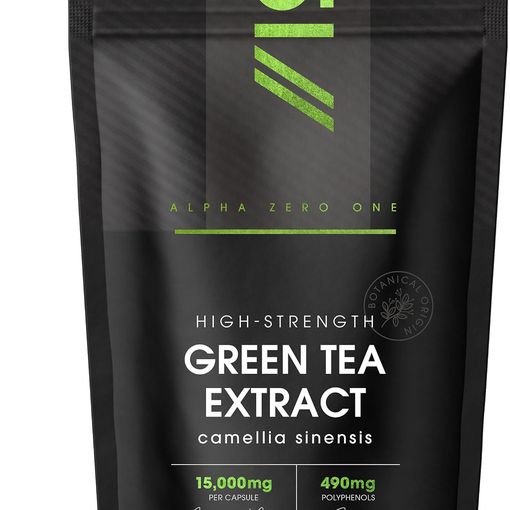
Alpha01's pouch states both figures buyers actually need: 95% total polyphenols and 50% EGCG, working out to 490mg of polyphenols in every capsule. That's a level of transparency most of its rivals on this list don't match, and it lets you estimate roughly how much active EGCG you're getting rather than guessing from a vague leaf-equivalent number. The capsules are produced to HACCP and GMP protocols, are non-GMO, and are free from gluten and dairy, with every batch screened for heavy metals and contaminants. One capsule a day keeps dosing simple, which matters given the liver-safety guidance further down this page about not stacking multiple concentrated EGCG products.
The 95% Polyphenol Formula: All The Details
Each vegan capsule is standardised to 95% total polyphenols and 50% EGCG, delivering 490mg of polyphenols per serving from a Camellia sinensis leaf extract described on the label as the botanical equivalent of 15,000mg of fresh leaf. Alpha01 is a newer brand to the UK market than some of the more established names on this list, but it has quickly built a strong review history off the back of that dosing transparency, currently sitting at 4.6 stars from 320 ratings. Capsules are non-GMO, vegan, gluten-free, dairy-free, and preservative-free, and every batch is tested against HACCP and GMP protocols. Ninety capsules at one a day works out to roughly a three-month supply.
Zipvit Green Tea Extract 7000mg - 95% Polyphenols
Best Established Brand — Third-Party Tested
based on 1254 Amazon UK reviews (4.4★), adjusted for formulation quality
What Stands Out About Zipvit's Track Record
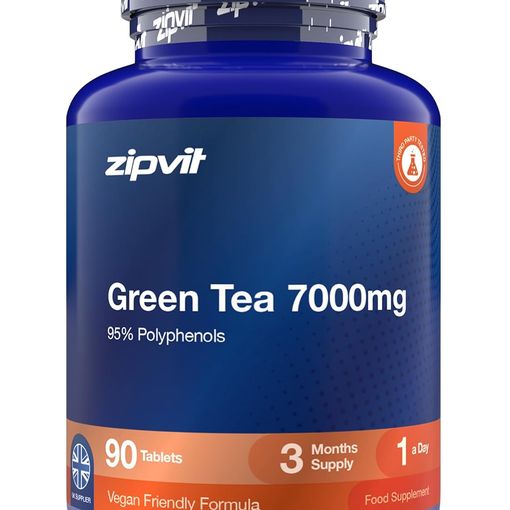
Zipvit has been formulating UK supplements for more than 25 years, and its green tea extract is by far the most reviewed product in this comparison, with well over a thousand ratings averaging 4.4 stars. The label breaks its standardisation down properly rather than hiding behind one headline figure: 95% polyphenols, 332.5mg of polyphenols per tablet, 245mg of catechins, and 157.5mg of EGCG. Every batch is tested by an independent third party, manufacture happens in a GMP-certified UK facility, and the once-daily tablet removes any ambiguity about serving size that comes with "take up to three" competitors.
Zipvit's Third-Party Testing: All The Details
One tablet a day supplies 332.5mg of total polyphenols, including 245mg of catechins and 157.5mg of EGCG, from an extract standardised to 95% polyphenols. Ninety tablets cover a three-month supply. Zipvit independently tests every batch for heavy metals and contaminants and manufactures to GMP standards in the UK, and the brand's quarter-century track record shows up clearly in its review volume. Its raw EGCG dose sits mid-pack, below the amounts used in the highest-dose clinical trials, but the manufacturing transparency and consistency here are genuinely hard to fault.
NOW Foods EGCG Green Tea Extract 400mg
Best for Global Manufacturing Standards
based on 59 Amazon UK reviews (4.4★), adjusted for formulation quality
Why NOW Foods Earns Its Place
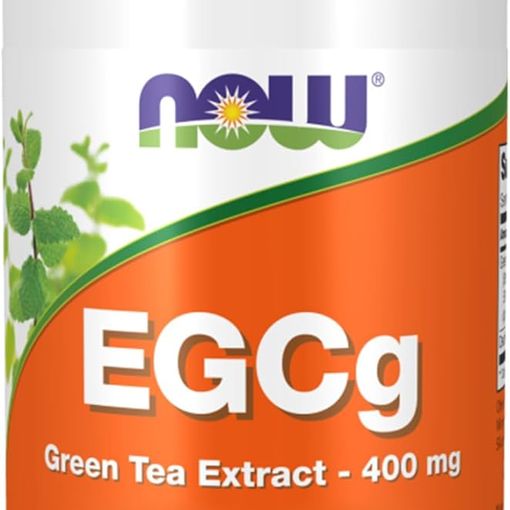
NOW is one of the longest-established supplement manufacturers selling into the UK market, and its quality-control reputation for independent lab testing and Non-GMO Project verification tends to travel with the brand wherever it's sold. Each capsule discloses 400mg of green tea extract broken down into 320mg of total catechins and 200mg of EGCG, alongside a small 4mg of naturally occurring caffeine. That's a genuinely useful label for comparison shopping, even though the practical EGCG dose per capsule sits below what several higher-strength competitors here offer.
The 200mg EGCG Capsule: All The Details
A single capsule provides 400mg of green tea extract standardised to 80% total catechins, of which 200mg is EGCG, plus 4mg of caffeine carried over from the non-decaffeinated portion of the extract. Capsules are gluten-free, non-GMO, and suitable for vegetarians and vegans, and independent lab testing is a genuine differentiator against brands that only cite in-house quality control. Ninety capsules make roughly a three-month supply at one a day. Anyone wanting to push EGCG intake toward the higher end of the clinically studied range would need to take more than the single capsule suggested on the label.
True Veda Organic Green Tea Extract, Low Caffeine
Best Organic — Low Caffeine
based on 614 Amazon UK reviews (4.5★), adjusted for formulation quality
What We Love About the Organic Extraction
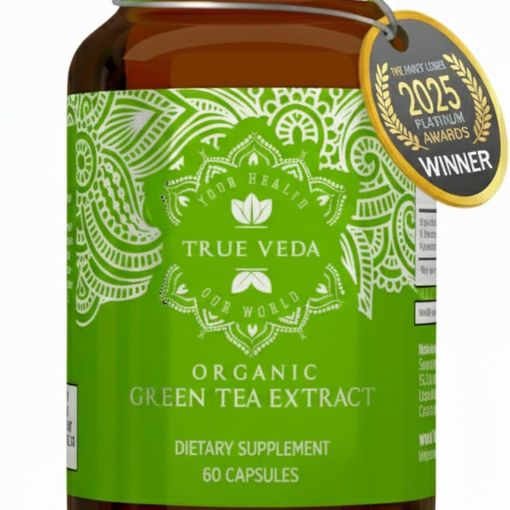
True Veda is Soil Association certified organic, a genuinely higher regulatory bar than most green tea extracts on Amazon UK bother to clear. Rather than pulling out actives with harsh solvents, the brand uses a water and CO2-based extraction process, and the finished capsules contain zero fillers, zero binders, and zero artificial ingredients. It's marketed as a full-spectrum extract rather than an isolated EGCG concentrate, which suits buyers who'd rather take green tea's whole catechin profile than a single standardised compound, and it retains a small amount of natural caffeine and L-theanine instead of being fully decaffeinated.
True Veda's Clean-Label Process: All The Details
Each capsule contains organic Camellia sinensis leaf extract in a plant-based hypromellose shell, with directions to take one to two capsules daily. The label doesn't state an exact EGCG percentage or milligram figure, framing the product instead around full-spectrum potency and organic sourcing, so buyers who specifically want a guaranteed EGCG dose to compare against clinical research doses will need to look elsewhere on this list. What it does disclose clearly is manufacturing quality: GMP-certified UK production and independent testing at multiple stages. It's also the highest-reviewed product in this comparison, holding 4.5 stars across more than 600 ratings.
Swiss BioEnergetics Green Tea Extract, Made in UK
Best UK-Made — Transparent Milligram Dosing
based on 69 Amazon UK reviews (4.2★), adjusted for formulation quality
What Sets the UK Manufacturing Apart
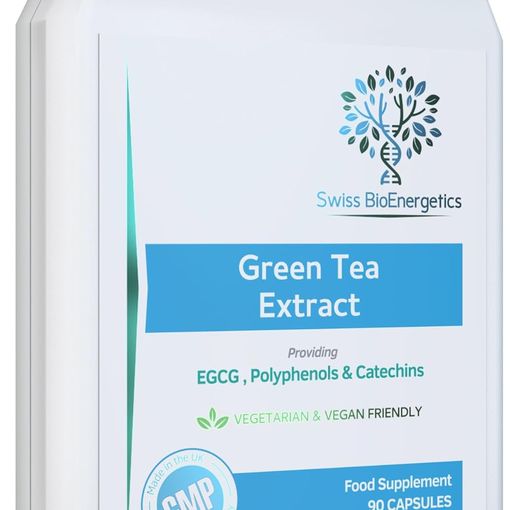
Swiss BioEnergetics manufactures its green tea capsules in the UK to GMP and ISO 9001 standards, and unlike several competitors that hide behind a single "high strength" headline number, the label states the actual milligram breakdown per capsule. That transparency, even without a stated percentage, gives buyers something concrete to compare rather than guessing. Directions allow up to three capsules a day, so the achievable EGCG intake scales further than most single-serving products on this list, though it's worth noting the "12,480mg" figure on the front refers to leaf equivalency, not a single capsule's actual weight.
The Milligram Breakdown: All The Details
Each capsule provides 220mg of polyphenols, 146mg of catechins, and 79mg of EGCG, described on the label as equivalent to 12,480mg of whole-leaf green tea. Taken at the maximum suggested three capsules a day, that scales to roughly 237mg of EGCG, closer to the doses used in metabolic research1 than a single serving alone would suggest. Manufacturing is GMP-certified and carried out in ISO 9001-accredited UK facilities. It's a newer entrant with a smaller review base than some of the more established names here, currently at 4.2 stars from 69 ratings, but the label transparency is a genuine strength worth rewarding.
Supplements Wise Green Tea Max, 12,480mg
Best Budget Option — High-Strength
based on 112 Amazon UK reviews (4.1★), adjusted for formulation quality
Why This Is the Value Pick
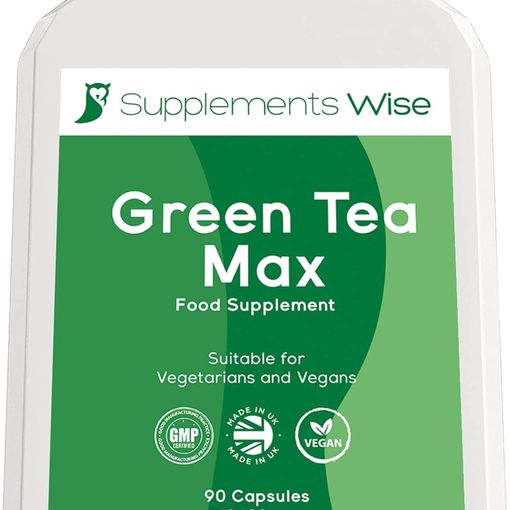
Supplements Wise positions its Green Tea Max as a straightforward, no-frills high-strength option, and it sits toward the more accessible end of the price range in this comparison. The capsules are GMP-certified, made in the UK, and suitable for vegetarians and vegans, with reviewers regularly noting good value for a three-month supply when taken once daily, which is how most buyers seem to use it even though the label allows up to three capsules a day.
The High-Strength Budget Formula: All The Details
The label states a 12,480mg green tea leaf equivalency per serving and confirms the presence of polyphenols, catechins, and EGCG, but it doesn't break any of them down into a specific milligram or percentage figure the way several other products on this list do. That makes it harder to judge the exact active dose you're getting, and it's the main reason this sits toward the bottom of the standardisation criteria despite a reasonable review history of 4.1 stars from 112 ratings. Ninety capsules provide flexibility between a light one-a-day routine and a stronger three-a-day regime, though going beyond one capsule is worth weighing against the liver-safety guidance below before increasing.
Safety and Side Effects
Liver Safety: What You Should Know
This is the single most important thing to know about concentrated green tea extract, so it's worth reading in full before you buy.
Green tea itself, brewed and drunk as a beverage, has a long and well-established safety record. The concern here is specific to concentrated extracts, capsules and tablets that deliver, in a single dose, an amount of catechins you'd struggle to reach by drinking tea. A small number of documented case reports describe acute liver injury in people taking high-dose green tea extract supplements, generally after two weeks or more of consistent daily use45. The European Food Safety Authority reviewed the available clinical trial data and concluded that EGCG intakes of around 800mg a day or more, taken as a food supplement, were linked to a measurable increase in liver enzyme markers in some trials, while doses below that threshold showed no consistent signal of harm over trials lasting up to 12 months3. A comprehensive US regulatory review reached a similar conclusion, and the United States Pharmacopeia's monograph for green tea extract now carries a specific caution against taking it on an empty stomach6.
How it's taken appears to matter as much as the total dose. Human research shows EGCG absorption is dramatically higher on an empty stomach than with food, several times higher in some studies7, which is thought to explain why the same daily dose can behave very differently depending on timing. In practical terms:
- Take green tea extract with a meal, not first thing in the morning on an empty stomach.
- Don't combine more than one EGCG-containing product, such as a green tea extract capsule alongside a separate fat-burner or pre-workout that also contains green tea. It's easy to unknowingly exceed 800mg of EGCG a day by stacking products.
- Check the label for its actual EGCG content in milligrams rather than assuming a "high strength" or leaf-equivalent number is a safe guide. Several products reviewed above don't disclose this figure at all, which makes tracking your total intake harder.
- Stop taking it and speak to a GP if you notice possible signs of liver problems: unusual fatigue, loss of appetite, nausea, abdominal pain, dark urine, or yellowing of the skin or eyes.
Beyond the liver-specific concern, green tea extract carries the same caffeine-related caution as any caffeinated supplement. It can cause jitteriness, disrupted sleep, or a raised heart rate in caffeine-sensitive people, even at the modest caffeine levels found in most extracts. Catechins can also reduce absorption of non-haem iron when taken alongside iron-rich meals or iron supplements, so it's sensible to space the two apart. As with most concentrated herbal extracts, there isn't enough safety data to recommend green tea extract supplements during pregnancy or breastfeeding, and anyone taking blood-thinning medication or with an existing liver condition should check with a doctor or pharmacist before starting.
Best Green Tea Extract Supplement FAQ
What is green tea extract and how is it different from green tea? Green tea extract is a concentrated capsule or tablet form of the Camellia sinensis plant, standardised to deliver a fixed, much higher dose of catechins, especially EGCG, than a cup of brewed tea provides. See the "Green Tea Extract vs Green Tea" section above for the full comparison.
What are the key active compounds in green tea extract? The main compounds are catechins, a family of polyphenols, of which epigallocatechin gallate (EGCG) is the most studied and typically the most abundant1. Extracts also usually retain some naturally occurring caffeine unless specifically decaffeinated.
Does green tea extract actually help with weight loss? The evidence is genuinely mixed. Early trials combining EGCG with caffeine showed a measurable, modest increase in 24-hour fat oxidation and energy expenditure1, but a Cochrane review of trials outside Japan found only a negligible effect on actual body weight2. Treat it as a small potential aid alongside diet and exercise, not a standalone solution.
Can green tea extract lower blood pressure or cholesterol? A meta-analysis in overweight and obese adults found modest improvements in blood pressure and lipid markers with regular green tea catechin intake8, though effect sizes were generally small and shouldn't replace prescribed treatment for either condition.
How long does it take to notice effects? Most people report subtle changes, such as steadier energy or mild appetite effects, within 2 to 4 weeks of consistent daily use. Green tea extract isn't a fast-acting stimulant in the way caffeine alone is, and its metabolic effects build gradually.
What's a safe daily dose of EGCG? There's no single number that suits everyone, but regulatory reviews haven't found a consistent safety signal below roughly 800mg of EGCG a day from supplements, while risk appears to rise above that3. See the Liver Safety section above for full guidance, including why taking it with food matters.
Is green tea extract generally well tolerated? Most people tolerate standard doses without issue, though caffeine sensitivity and, less commonly, liver-related concerns at high doses are worth understanding before you start. Full detail is in the Safety and Side Effects section above.
Does green tea extract pair well with mushroom supplements? It can. Green tea extract's mild caffeine content combines reasonably with the calming, non-jittery focus support of L-theanine, and its antioxidant profile is complementary rather than overlapping with the cognitive-support mechanisms of mushrooms like Lion's Mane. Just factor in total caffeine and EGCG intake if you're combining several stimulant-containing products at once.
The Best Green Tea Extract Supplement for You
Alpha01 earns the top spot here for one clear reason: it tells you exactly what you're getting, both the EGCG percentage and the total polyphenol content, so you can judge the dose against real research rather than a marketing number. Zipvit and NOW Foods are close behind for buyers who'd rather lean on an established brand's track record and independent testing. If organic sourcing or a gentler, low-caffeine profile matters more to you than a headline EGCG figure, True Veda is worth a look, and Swiss BioEnergetics or Supplements Wise cover UK-made and budget priorities respectively. Whichever you choose, read the Liver Safety section above first, take it with food, and give it a few weeks of consistent use before judging whether it's working for you.
-
Efficacy of a green tea extract rich in catechin polyphenols and caffeine in increasing 24-h energy expenditure and fat oxidation in humans ↩︎ ↩︎ ↩︎ ↩︎
-
Green tea for weight loss and weight maintenance in overweight or obese adults ↩︎ ↩︎
-
Scientific opinion on the safety of green tea catechins ↩︎ ↩︎ ↩︎
-
Green tea extract-associated acute liver injury: Case report and review ↩︎
-
United States Pharmacopeia (USP) comprehensive review of the hepatotoxicity of green tea extracts ↩︎
-
Food Inhibits the Oral Bioavailability of the Major Green Tea Antioxidant Epigallocatechin Gallate in Humans ↩︎
-
Effects of green tea catechin on the blood pressure and lipids in overweight and obese population - a meta-analysis ↩︎