

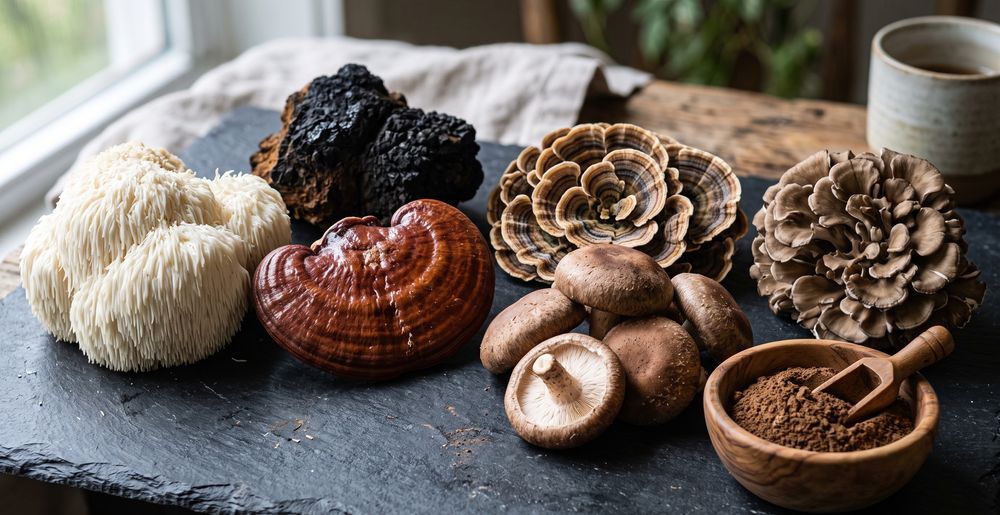
Medicinal Mushroom Comparison Chart: Benefits & Uses UK

About the author...
Will founded Supermushrooms after digging into the research behind mushroom and nootropic supplements. Every pick is checked against clinical dosing, extract standardisation, and real buyer reviews, and each star rating starts from a product's real Amazon score before being adjusted for formulation quality. Read more about how ratings are calculated.
Table of contents
- Key Takeaways (TL;DR)
-
Medicinal Mushroom Comparison Chart
- Lion's Mane — The Nerve and Cognition Specialist
- Reishi — The Calming Adaptogen
- Chaga — The Antioxidant Heavyweight, With a Caveat
- Cordyceps — The Energy and Endurance Mushroom
- Turkey Tail — The Most Studied, Least Accessible Mushroom
- Shiitake — The Everyday Immune Mushroom
- Maitake — The Immune-Modulating "Dancing Mushroom"
- Tremella — The Beauty and Memory Mushroom
- Poria — The Calming, Diuretic TCM Staple
- Oyster Mushroom — The Everyday Cholesterol Helper
- How We Compared These
-
FAQ
- Which medicinal mushroom has the strongest clinical evidence overall?
- Can I take Lion's Mane and Reishi together?
- Is Chaga safe to drink as a daily tea?
- Why is Turkey Tail so hard to buy in the UK, given the research behind it?
- Which mushroom is best for exercise performance or energy?
- Do any of these mushrooms interact with medication?
- Conclusion
There is no single "best" medicinal mushroom. Each of the ten species compared here has a different primary strength: Lion's Mane for cognition, Reishi for sleep and immunity, Cordyceps for energy, and Turkey Tail for immune surveillance, though its UK legal status is currently restricted. The table below compares all ten side by side.
Medicinal mushrooms have moved from niche herbalist shelves to mainstream UK supplement aisles in the space of a few years, and the range on offer can be bewildering. Lion's Mane, Reishi, Chaga, Cordyceps, Turkey Tail, Shiitake, Maitake, Tremella, Poria, and Oyster mushroom are all sold as capsules, powders, or tinctures, often with overlapping claims about immunity, focus, energy, and stress. Some of that overlap is genuine: several species share beta-glucan-based immune mechanisms. Some of it is marketing shorthand that glosses over real differences in evidence quality, dosing, and legal status.
This guide exists to make those differences legible in one place. The table below lets you compare all ten species side by side on the criteria that actually matter when choosing a supplement: what each mushroom is traditionally used for, which compounds are believed to do the work, the single best-supported clinical benefit, how strong that evidence actually is, a workable dose range, timing, key cautions, and whether you can buy it legally in the UK without complication. The sections underneath expand on each mushroom individually, with the specific clinical studies behind the claims.
Read the "Strength of Clinical Evidence" column carefully. It is not a marketing rating. A mushroom rated "Preliminary" is not necessarily weaker in traditional use or biochemical plausibility than one rated "Strong"; it usually just means human randomised controlled trials are scarce, small, or absent, with most support instead coming from cell studies, animal models, or single pilot trials. We explain how we arrived at each rating in the methodology section further down.
Key Takeaways (TL;DR)
- Lion's Mane leads for cognition via NGF stimulation; Reishi for sleep/immunity; Cordyceps for energy.
- Turkey Tail has the deepest clinical evidence of any mushroom here (PSK, 23 RCTs), but is UK-restricted as a novel food.
- Chaga, Tremella and Poria lean on traditional use and lab chemistry more than large human trials — rated "Preliminary" here.
- Always check for fruiting body sourcing, not mycelium-on-grain, and a disclosed active-compound percentage.
- Lion's Mane and Reishi mycelium powder specifically carries its own separate novel food restriction.
- No single "best" mushroom exists — match the species to your specific goal using the comparison table.
Medicinal Mushroom Comparison Chart
| Mushroom | Traditional/Primary Use | Key Active Compounds | Primary Evidence-Backed Benefit | Strength of Clinical Evidence | Typical Effective Extract Dose | Best Time to Take | Cautions/Side Effects | UK Availability Note |
|---|---|---|---|---|---|---|---|---|
| Lion's Mane | Nerve and digestive tonic (Chinese/Japanese herbalism) | Hericenones, erinacines | Improved cognitive function scores in mild impairment1 | Moderate | 500-3,000mg fruiting body extract/day | Morning, or split AM/PM | Rare allergic reaction in fungi-sensitive individuals | Legal as fruiting body extract; mycelium powder is a novel food. |
| Reishi | "Mushroom of immortality," adaptogen/calming tonic | Ganoderic acids (triterpenes), beta-glucans | Reduced fatigue and improved quality of life23 | Moderate | 1,000-1,500mg extract/day (or equivalent concentrate) | Evening | May potentiate anticoagulant/antihypertensive drugs | Legal as fruiting body extract; mycelium powder is a novel food. |
| Chaga | Siberian/Baltic folk tea, general tonic | Betulinic acid, melanin-polyphenol complexes | High in-vitro antioxidant capacity4 | Preliminary (human RCTs lacking) | 500-2,000mg extract/day | Any time, with food | Contains oxalates; caution with history of kidney stones | Legal and widely available (usually wild-harvested). |
| Cordyceps | TCM kidney/lung tonic for stamina | Cordycepin, adenosine | Improved exercise threshold and ATP-linked performance56 | Moderate | 1,000-3,000mg extract/day | Morning or pre-exercise | Caution with autoimmune conditions or immunosuppressants | C. militaris is a UK novel food; see note below. |
| Turkey Tail | Japanese/Chinese cancer adjunct (PSK/Krestin) | PSK, PSP polysaccharopeptides | Improved survival as a chemotherapy adjunct78 | Strong (for PSK, as an adjunct) | 1-3g PSK-equivalent (clinical doses; OTC extracts are lower) | With meals | Generally well tolerated in trials at clinical doses | Novel food restricted; grey-market only, see note below. |
| Shiitake | East Asian culinary and immune tonic | Lentinan, AHCC (mycelium extract), eritadenine | Improved immune markers with daily intake910 | Moderate | 5g dried mushroom equivalent, or 500-1,000mg AHCC extract | With food | Raw shiitake can cause flagellate dermatitis in rare cases | Legal and widely available (culinary and supplement). |
| Maitake | Japanese "dancing mushroom," folk immune tonic | D-fraction, MD-fraction beta-glucans | Enhanced natural killer cell activity in cancer patients1112 | Preliminary to moderate | 1,000-3,000mg extract/day | With food | May lower blood sugar or blood pressure further in treated patients | Legal and widely available from UK brands. |
| Tremella | Chinese "beauty mushroom," lung/skin tonic | Glucuronoxylomannan polysaccharides | Improved subjective memory complaints13 | Preliminary | 600-1,200mg extract/day | Any time | Limited long-term human safety data | Legal and widely available from UK brands. |
| Poria | TCM diuretic and calming tonic ("Fu Ling") | Pachymic acid, triterpenes, polysaccharides | Anti-inflammatory effect demonstrated in skin irritation model14 | Preliminary | 1,000-3,000mg extract/day | Any time | Mild diuretic effect; caution alongside diuretic medication | Available from specialist mushroom/TCM brands, less mainstream. |
| Oyster Mushroom | Global culinary staple, folk cholesterol remedy | Lovastatin-like statins, beta-glucans, ergothioneine | Reduced total cholesterol, LDL, and triglycerides1516 | Moderate | 100-150g fresh mushroom, or 500-1,000mg extract/day | With meals | Very few reported adverse effects | Widely available fresh in supermarkets and as extract. |
Lion's Mane — The Nerve and Cognition Specialist
Lion's Mane (Hericium erinaceus) is a distinctive white, shaggy mushroom that grows on hardwood trees and resembles an icicle formation more than a typical cap-and-stem fungus. In traditional Chinese medicine it was used as a digestive tonic, but modern interest centres almost entirely on the nervous system, driven by two compound classes unique to this species: hericenones, found in the fruiting body, and erinacines, found in the mycelium.
Both compounds are of interest because they appear to stimulate nerve growth factor (NGF) synthesis, a protein essential for the growth, maintenance, and survival of neurons. This is a plausible mechanism for benefits in memory, focus, and nerve regeneration, though NGF stimulation in a petri dish does not automatically translate into a measurable cognitive effect in a person taking a capsule once a day.
The clinical evidence, while still limited in volume, is more direct than for most mushrooms on this list. A double-blind, placebo-controlled trial in Japanese adults aged 50 to 80 with mild cognitive impairment found that four months of Lion's Mane supplementation produced significant improvements on a cognitive function scale compared with placebo. The effect faded after supplementation stopped.1 A separate one-year pilot trial using an erinacine A-enriched mycelium extract in patients with early Alzheimer's disease found improvements on the Mini-Mental State Examination after 49 weeks. There was also a slower decline on a separate cognitive screening tool in the treatment group compared with placebo.17 Neither trial is large, and both would benefit from replication, but they represent some of the more direct human cognitive data available for any mushroom species.
When buying, look for fruiting body extracts rather than mycelium-on-grain products if cognition is the goal, since hericenones are concentrated in the fruiting body. Extracts standardised to beta-glucan content are a reasonable quality marker. Typical doses in the research range from 1 to 3 grams of extract daily, taken consistently for at least eight weeks before assessing effect.
Find a product: Best Lion's Mane Supplements UKReishi — The Calming Adaptogen
Reishi (Ganoderma lucidum) has the longest continuous reputation of any mushroom on this list, referred to in Chinese texts spanning two millennia as the "mushroom of immortality" and used as a general tonic for longevity and calm. It grows as a glossy, kidney-shaped bracket in shades of red, brown, and black, and is typically too bitter and woody to eat, which is why it is almost always consumed as an extract, tincture, or tea rather than a food.
The mushroom's signature compounds are triterpenes, particularly ganoderic acids, alongside the immune-active polysaccharides common to most medicinal fungi. Ganoderic acids have been studied for effects on the HPA axis and for direct modulation of GABA receptor activity. That gives a mechanistic basis for Reishi's traditional reputation as a calming, rather than stimulating, tonic — in contrast to something like Cordyceps.
The strongest human evidence relates to fatigue rather than sleep or mood specifically. A randomised, double-blind, placebo-controlled trial tested a Reishi polysaccharide extract in Chinese patients with neurasthenia, a diagnosis characterised by persistent fatigue and weakness. It found a significantly greater reduction in fatigue scores after eight weeks compared with placebo.2 A separate pilot trial in breast cancer patients undergoing endocrine therapy found that Reishi spore powder improved physical wellbeing and fatigue subscale scores, with reductions in inflammatory markers associated with cancer-related fatigue.3 Both trials are modest in size, but they point in the same direction and align with the mushroom's long traditional use for exhaustion and stress.
Quality Reishi supplements should disclose triterpene or ganoderic acid content, not just a generic polysaccharide percentage, since triterpenes are the compounds most linked to the calming and hepatoprotective effects associated with the mushroom. Dual-extracted products, combining hot water and alcohol extraction, capture both the water-soluble polysaccharides and the alcohol-soluble triterpenes. Because Reishi's triterpenes can interact with blood-thinning and blood-pressure medication, anyone on those drugs should check with a pharmacist before starting.
Find a product: Best Reishi Supplements UKChaga — The Antioxidant Heavyweight, With a Caveat
Chaga (Inonotus obliquus) is not a mushroom in the conventional sense but a hardened, charcoal-black mass of mycelium (a sclerotium) that grows on birch trees across cold climates including Siberia, the Baltic states, and parts of Scandinavia and Canada. It has a long folk history as a brewed tea in these regions, used to support general resilience and vitality, and it looks nothing like the soft-bodied mushrooms on the rest of this list.
Chaga's reputation rests heavily on its antioxidant content. Chemical analyses have isolated a distinctive set of small phenolic compounds and melanin-polyphenol complexes from the fruiting mass. Several of these show strong free-radical scavenging activity against ABTS and DPPH radicals in laboratory assays, alongside moderate superoxide radical scavenging.4 Chaga water extracts have also shown some of the highest antioxidant readings among fungi tested by these methods, ahead of many better-known culinary and medicinal species.
The important caveat is that almost all of this evidence comes from chemistry and cell-based work rather than human trials. There is no well-designed randomised controlled trial demonstrating that oral Chaga supplementation lowers oxidative stress markers, improves immune function, or reduces cholesterol in living humans, despite those benefits being widely claimed in marketing copy. This does not mean the traditional use is baseless, only that the human clinical record has not caught up with the laboratory chemistry, which is why we rate the evidence here as preliminary rather than moderate or strong.
Buyers should look for hot water extracts (the traditional preparation method and the one used in most of the phenolic research), with disclosed beta-glucan or polyphenol content where possible. Because Chaga accumulates oxalates from birch trees, anyone with a history of kidney stones should treat high or prolonged doses with caution and check with their GP.
Find a product: Best Chaga Supplements UKCordyceps — The Energy and Endurance Mushroom
Cordyceps occupies an unusual place in mycology: the wild form, Cordyceps sinensis, is a parasitic fungus that grows out of the body of a caterpillar larva in high-altitude Tibetan and Himalayan grassland, making it one of the most expensive natural products in the world. Almost all supplements sold today instead use Cordyceps militaris, a related species that can be cultivated on grain substrate without a host insect, or a fermented mycelial strain known as Cs-4, which mimics the chemical profile of the wild fungus.
The mushroom's traditional use in Chinese medicine is as a tonic for kidney and lung energy, and its modern popularity is built almost entirely around exercise and stamina. The proposed mechanism runs through cordycepin and adenosine derivatives increasing cellular ATP production, the energy currency muscles rely on during exertion. A double-blind, placebo-controlled trial in healthy older adults given Cs-4 for 12 weeks found significant increases in both metabolic threshold and ventilatory threshold during incremental cycle ergometer testing, markers associated with improved aerobic capacity.5 A separate study using a Cordyceps militaris extract found measurable changes in biomarkers along the ATP generation pathway alongside modest gains in grip strength, comparable to a red ginseng comparator group, reinforcing the cellular energy mechanism rather than a reduction in muscle fatigue itself.6
Buyers need to check the species and form carefully. Cs-4 fermented mycelium and Cordyceps militaris fruiting body extract are not identical products, and label claims can be loose. There is also a specific UK regulatory wrinkle: Cordyceps militaris is classified as a novel food by the Food Standards Agency in the same way Turkey Tail is, on the grounds that it lacks a documented history of significant food use in the UK or EU before May 1997. We cover this in full, including the clinical evidence behind Cordyceps, in a dedicated guide to the restriction. Our UK Novel Food Tracker covers this framework across every mushroom on this page, including why Lion's Mane and Reishi are affected too once you get down to mycelium powder specifically.
Find a product: Best Cordyceps Supplements UKTurkey Tail — The Most Studied, Least Accessible Mushroom
Turkey Tail (Trametes versicolor) is a thin, fan-shaped bracket fungus common on dead hardwood across Europe, Asia, and North America, named for its resemblance to a wild turkey's spread tail feathers. It carries the deepest clinical research base of any mushroom covered here, built almost entirely around a single compound: PSK (polysaccharide-K, sold in Japan under the brand name Krestin), a licensed adjunct cancer therapy used alongside chemotherapy since the 1970s.
PSK works primarily through immune modulation. Its beta-glucan and protein-bound polysaccharide structure activates macrophages, natural killer cells, and T-helper cells, helping to counter the immune suppression that chemotherapy and cancer itself can cause. A 2017 systematic review and network meta-analysis covering 23 randomised controlled trials and over 10,000 patients found that PSK added to chemotherapy significantly improved three-year and five-year overall survival compared with chemotherapy alone. The largest gains were in colorectal and gastric cancer.7 A separate meta-analysis focused specifically on gastric cancer patients following curative surgery found consistent survival improvements when PSK was added to standard adjuvant treatment.8
Here is the complication for UK buyers: none of that pharmaceutical history changes Turkey Tail's status under UK food law. It is classified as a novel food because it was not a significant part of the European diet before May 1997, regardless of its long pharmaceutical use in Japan, so it cannot currently be sold as a food supplement in Great Britain. What remains is a grey market of imported products, mostly from third-party sellers, of inconsistent quality and uncertain legal footing. We break down exactly what that means and what options still exist in our full guide to the Turkey Tail restriction.
Find a product: Best Turkey Tail Supplements UKShiitake — The Everyday Immune Mushroom
Shiitake (Lentinula edodes) is the mushroom most UK readers have already eaten, sold fresh and dried in ordinary supermarkets and central to East Asian cuisine for centuries. Its supplement form is less about novelty and more about concentration: extracting and standardising the specific immune-active compounds present at lower levels in a normal serving of the whole mushroom.
Two compounds do most of the work in the research literature. Lentinan, a beta-glucan extracted from the fruiting body, has a long history as an adjunct immunotherapy in Japan, administered intravenously in oncology settings rather than taken orally as a supplement. AHCC (active hexose correlated compound), by contrast, is an oral extract derived from cultured Shiitake mycelium, standardised for oligosaccharide content, and is the form most commonly found in UK supplements. A randomised dietary intervention in healthy young adults found that daily consumption of whole dried Shiitake mushrooms over four weeks produced measurable improvements in several markers of innate and adaptive immune function, including secretory IgA and reductions in inflammatory markers. This was compared with a control period.9 Separately, a randomised, double-blind, placebo-controlled trial of AHCC supplementation over six months found it supported clearance of persistent high-risk human papillomavirus infections in a cohort of women, an outcome consistent with AHCC's known effects on natural killer and T cell activity.10
For general immune support, whole dried Shiitake or a basic fruiting body extract is sufficient. For a more targeted, higher-potency immune product, look specifically for AHCC on the label, since it is a distinct, patented extraction process rather than a generic mycelium powder, and dosing in the research is typically in the 1-3 gram range rather than the smaller amounts used for whole-mushroom extracts. One practical caution: raw Shiitake can occasionally cause a distinctive whip-like ("flagellate") skin rash in sensitive individuals, a reaction not seen with cooked mushroom or standard supplement extracts.
Find a product: Best Shiitake Supplements UKMaitake — The Immune-Modulating "Dancing Mushroom"
Maitake (Grifola frondosa) grows in large, ruffled, overlapping clusters at the base of oak and other hardwood trees, and its Japanese name (roughly "dancing mushroom") is said to derive from the joy foragers reportedly felt at finding one, historically valuable enough to be worth its weight in silver. It shares much of its research territory with Maitake, Turkey Tail, and Shiitake: beta-glucan polysaccharides studied for immune modulation, here concentrated in a proprietary extract known as D-fraction.
D-fraction research has focused heavily on natural killer (NK) cell activity, the arm of the innate immune system most directly involved in identifying and destroying abnormal or infected cells. An open-label study in cancer patients found that Maitake D-fraction administration was associated with increased NK cell activity across the patient group studied, alongside changes in tumour marker expression.11 A phase I/II dose-escalation trial in postmenopausal breast cancer patients, free of disease after initial treatment, evaluated oral Maitake extract across a range of doses over three weeks and found immunological changes consistent with an immune-stimulating effect, without dose-limiting toxicity.12 Neither study used the double-blind, placebo-controlled design considered the gold standard, which is why we rate the overall evidence as preliminary to moderate rather than strong, but the consistency across independent research groups is a point in Maitake's favour.
Maitake extracts on the UK market vary widely in D-fraction concentration, and many are simply whole fruiting body powders without the concentrated fraction used in the research. Buyers wanting to approximate the studied effect should look specifically for D-fraction or MD-fraction on the label rather than a generic "Maitake extract" listing. Because Maitake has shown blood sugar and blood pressure-lowering effects in some research, people on diabetes or hypertension medication should introduce it cautiously and monitor for additive effects.
Find a product: Best Maitake Supplements UKTremella — The Beauty and Memory Mushroom
Tremella (Tremella fuciformis) is instantly recognisable: a translucent, gelatinous, almost coral-like white mushroom that grows on decaying hardwood, prized in Chinese cuisine for centuries as a dessert ingredient and, more recently, marketed in the West as a "beauty mushroom" for skin hydration. Unlike most mushrooms on this list, Tremella contains very little in the way of the terpenoids or lentinan-type polysaccharides that dominate other species; its primary active constituent is a distinct polysaccharide called glucuronoxylomannan.
Tremella's skin-related reputation comes mainly from cell and animal studies showing that its polysaccharide can hold many times its weight in water and reduce oxidative damage in skin fibroblast models, rather than from human trials of oral supplementation improving skin outcomes directly. The more concrete human evidence sits, somewhat unexpectedly, in cognition. An eight-week, randomised, double-blind, placebo-controlled trial in adults with subjective cognitive impairment found that Tremella supplementation at both 600mg and 1,200mg daily produced significantly greater improvement in a subjective memory complaint questionnaire compared with placebo, alongside secondary improvements on standardised short-term memory and executive function tests.13
This is a single trial, and it would benefit from independent replication before the cognitive claim is treated as settled, which is why we rate the evidence as preliminary rather than moderate. It is nonetheless one of the more direct human data points for any mushroom on this list outside Lion's Mane and Turkey Tail. For buying, prioritise extracts that disclose polysaccharide content by percentage rather than relying on the word "Tremella" alone, since fruiting body quality and extraction method both affect the final polysaccharide yield.
Find a product: Best Tremella Supplements UKPoria — The Calming, Diuretic TCM Staple
Poria (Poria cocos, also called Fu Ling) is unusual among the mushrooms here in that it is barely known outside traditional Chinese medicine, where it has been used for well over a thousand years as a spleen tonic, mild diuretic, and calming agent, often included in classical formulas alongside herbs like Ziziphus for sleep and digestive complaints. It grows as a hard, potato-like sclerotium on the roots of pine trees and is typically dried and ground rather than eaten fresh.
Poria's chemistry centres on triterpenes, particularly pachymic acid, alongside polysaccharides that overlap mechanistically with other medicinal fungi. Human clinical data on Poria taken alone, rather than as part of a multi-herb TCM formula, is thin. One of the more directly applicable human studies tested a topical Poria cocos preparation in a repeated sodium lauryl sulphate skin irritation model and found a statistically significant anti-inflammatory effect on visual scoring and non-invasive measures of skin barrier function when applied during the induction phase of irritation.14 This demonstrates a real anti-inflammatory action in human skin, though it says less about oral supplementation for internal use, which is how most UK Poria products are actually sold and used.
Given the shortage of trials on oral Poria alone, we rate the evidence here as preliminary, reflecting genuine traditional use and plausible mechanism rather than a robust modern clinical record. Poria has a mild diuretic action in traditional use, so anyone already taking prescribed diuretics, or managing a condition that requires careful fluid balance, should introduce it cautiously. It is less widely stocked than the other mushrooms in this guide and is usually found through specialist mushroom or TCM-focused UK brands rather than mainstream supplement retailers.
Find a product: Best Poria Supplements UKOyster Mushroom — The Everyday Cholesterol Helper
Oyster mushroom (Pleurotus ostreatus) is grown commercially at enormous scale and sold as an ordinary culinary ingredient in every UK supermarket, which makes it the least exotic entry on this list and, for that reason, one of the easiest to actually incorporate into a diet rather than a supplement routine. Its fan-shaped, greyish-brown caps grow in dense, overlapping clusters on dead or dying hardwood.
The mushroom's most studied property is a genuine biochemical curiosity: Oyster mushroom naturally contains lovastatin and related statin-like compounds, the same class of molecule used in prescription cholesterol-lowering drugs, alongside beta-glucans and the antioxidant amino acid ergothioneine. A systematic review of eight clinical trials examining Oyster mushroom intake and cardiometabolic parameters found consistent reductions in total cholesterol, LDL cholesterol, and triglycerides across multiple studies, alongside some evidence for improved glucose metabolism and blood pressure, though the review's authors noted that risk of bias across the included trials was often high or unclear.16 A more tightly controlled trial in HIV-positive individuals with antiretroviral-induced hypercholesterolaemia found modest improvements in HDL cholesterol and triglycerides over eight weeks, though the changes were not large enough to be considered clinically meaningful on their own.15
Given the mixed trial quality, we rate the cholesterol evidence as moderate rather than strong: the mechanism is real and the direction of effect is consistent, but individual trials are small and methodologically variable. For most people, incorporating fresh Oyster mushroom into meals several times a week is a more practical and better-value approach than buying a concentrated extract, though extracts standardised for beta-glucan content are available for those wanting a more consistent dose.
Find a product: Best Oyster Mushroom Supplements UKHow We Compared These
The "Strength of Clinical Evidence" ratings in the table above are an editorial judgement, not a regulatory or clinical classification, and it is worth being explicit about how we arrived at them. We looked at three things for each mushroom: the number of published human randomised controlled trials, the size and duration of those trials, and whether independent research groups had reached broadly similar conclusions. A mushroom rated "Strong" here, such as Turkey Tail's PSK, has multiple sizeable trials and at least one large systematic review or meta-analysis behind it. "Moderate" reflects a small number of decent-quality human trials showing a consistent effect, without the volume needed for a confident meta-analysis. "Preliminary" means the human evidence is limited to one or two small trials, or is missing entirely, with support instead resting on cell studies, animal models, or centuries of traditional use that have not yet been tested rigorously in people.
None of these ratings are a verdict on whether a mushroom "works." Traditional use over centuries carries its own kind of evidence, and mechanistic plausibility from cell studies is not nothing. But it is a different kind of evidence from a double-blind randomised trial in humans, and conflating the two is one of the most common ways supplement marketing misleads buyers. We have tried not to do that here.
FAQ
Which medicinal mushroom has the strongest clinical evidence overall?
Turkey Tail, specifically its PSK extract, has the deepest human clinical record of any mushroom in this comparison. A 2017 network meta-analysis of 23 randomised controlled trials involving over 10,000 patients found that PSK added to chemotherapy significantly improved long-term survival in several cancer types, particularly colorectal and gastric cancer.7 The complication is that this pharmaceutical-grade evidence has no bearing on Turkey Tail's UK food supplement status, which is governed by a separate novel food regulation rather than clinical merit.
Can I take Lion's Mane and Reishi together?
Yes, and the combination is a common one because the two mushrooms work on complementary systems rather than duplicating each other. Lion's Mane's evidence centres on cognitive function via nerve growth factor pathways,1 while Reishi's evidence centres on fatigue and calming effects via triterpene and polysaccharide action.2 Taking Lion's Mane earlier in the day and Reishi in the evening reflects their traditional and researched use patterns reasonably well.
Is Chaga safe to drink as a daily tea?
Traditional Chaga tea has been consumed for generations in Siberia and the Baltic states without documented widespread harm, and its phenolic compounds show strong antioxidant activity in laboratory testing.4 However, there is no substantial human clinical trial confirming these antioxidant effects translate into a measurable health outcome from regular tea consumption, and Chaga's oxalate content means people with a history of kidney stones should moderate intake and discuss it with a GP rather than assuming daily use is automatically risk-free.
Why is Turkey Tail so hard to buy in the UK, given the research behind it?
Turkey Tail is classified as a novel food by the Food Standards Agency because it lacks documented significant food use in the UK or EU before May 1997, a test that has nothing to do with clinical evidence or safety.8 Cordyceps militaris faces the same classification for the same reason. Both remain legal for a registered medical herbalist to dispense following an individual consultation, but cannot currently be sold as an ordinary food supplement. Our Turkey Tail regulatory guide covers the mechanics of this rule in full.
Which mushroom is best for exercise performance or energy?
Cordyceps has the most direct evidence here. A 12-week trial of Cs-4 fermented mycelium in healthy older adults found significant improvements in metabolic and ventilatory threshold during cycling tests, both markers of aerobic capacity.5 A separate trial using a Cordyceps militaris extract found changes in ATP-related biomarkers alongside modest strength gains.6 Both point to a genuine, if moderate, cellular energy effect rather than a stimulant-like jolt.
Do any of these mushrooms interact with medication?
Several do, and this is worth checking individually rather than assuming mushrooms are automatically risk-free because they are natural. Reishi's triterpenes can interact with anticoagulant and blood pressure medication. Maitake and Cordyceps have both shown blood sugar-lowering effects in research that could compound with diabetes medication.11 Poria has a mild traditional diuretic action worth flagging alongside prescribed diuretics.14 Anyone on regular prescription medication should check with a pharmacist before starting a new mushroom supplement, the same way they would with any other over-the-counter product.
Conclusion
There is no single "best" medicinal mushroom, because the ten species covered here are not interchangeable versions of the same thing. Lion's Mane and Turkey Tail have the most direct human trial evidence for cognition and cancer-adjunct care respectively. Reishi, Cordyceps, Shiitake, and Oyster mushroom sit in a solid moderate-evidence tier with plausible mechanisms and consistent, if modest, trial results. Chaga, Maitake, Tremella, and Poria lean more heavily on traditional use and laboratory chemistry than on large human trials, which is not disqualifying, but should temper expectations about what a bottle of capsules will actually do.
What buyers can control is quality: fruiting body versus mycelium-on-grain, disclosed active compound percentages, and extraction method all matter more than which species happens to be trending. Use the comparison table to shortlist mushrooms relevant to your goal, then follow the internal links through to our full buying guides for each species, where we review the specific UK products worth considering.
-
Improving effects of the mushroom Yamabushitake (Hericium erinaceus) on mild cognitive impairment: a double-blind placebo-controlled clinical trial ↩︎ ↩︎ ↩︎
-
A randomized, double-blind and placebo-controlled study of a Ganoderma lucidum polysaccharide extract in neurasthenia ↩︎ ↩︎ ↩︎
-
Spore Powder of Ganoderma lucidum Improves Cancer-Related Fatigue in Breast Cancer Patients Undergoing Endocrine Therapy: A Pilot Clinical Trial ↩︎ ↩︎
-
New antioxidant polyphenols from the medicinal mushroom Inonotus obliquus ↩︎ ↩︎ ↩︎
-
Effect of Cs-4 (Cordyceps sinensis) on exercise performance in healthy older subjects: a double-blind, placebo-controlled trial ↩︎ ↩︎ ↩︎
-
Beneficial Effect of Cordyceps militaris on Exercise Performance via Promoting Cellular Energy Production ↩︎ ↩︎ ↩︎
-
Can polysaccharide K improve therapeutic efficacy and safety in gastrointestinal cancer? A systematic review and network meta-analysis ↩︎ ↩︎ ↩︎
-
Efficacy of adjuvant immunochemotherapy with polysaccharide K for patients with curative resections of gastric cancer ↩︎ ↩︎ ↩︎
-
Consuming Lentinula edodes (Shiitake) Mushrooms Daily Improves Human Immunity: A Randomized Dietary Intervention in Healthy Young Adults ↩︎ ↩︎
-
AHCC Supplementation to Support Immune Function to Clear Persistent Human Papillomavirus Infections ↩︎ ↩︎
-
Effect of Maitake (Grifola frondosa) D-Fraction on the activation of NK cells in cancer patients ↩︎ ↩︎ ↩︎
-
A phase I/II trial of a polysaccharide extract from Grifola frondosa (Maitake mushroom) in breast cancer patients: immunological effects ↩︎ ↩︎
-
Efficacy and Safety of Tremella fuciformis in Individuals with Subjective Cognitive Impairment: A Randomized Controlled Trial ↩︎ ↩︎
-
Assessment of anti-inflammatory activity of Poria cocos in sodium lauryl sulphate-induced irritant contact dermatitis ↩︎ ↩︎ ↩︎
-
Antihyperlipidemic effects of Pleurotus ostreatus (oyster mushrooms) in HIV-infected individuals taking antiretroviral therapy ↩︎ ↩︎
-
Effect of the Intake of Oyster Mushrooms (Pleurotus ostreatus) on Cardiometabolic Parameters—A Systematic Review of Clinical Trials ↩︎ ↩︎
-
Prevention of Early Alzheimer's Disease by Erinacine A-Enriched Hericium erinaceus Mycelia Pilot Double-Blind Placebo-Controlled Study ↩︎