

Ceylon vs Cassia Cinnamon for Blood Sugar: Does the Type Matter?

About the author...
Will founded Supermushrooms after digging into the research behind mushroom and nootropic supplements. Every pick is checked against clinical dosing, extract standardisation, and real buyer reviews, and each star rating starts from a product's real Amazon score before being adjusted for formulation quality. Read more about how ratings are calculated.
Table of contents
- Key Takeaways (TL;DR)
-
FAQ
- Is Ceylon cinnamon actually safer than cassia?
- How much cassia cinnamon is actually risky?
- Can cinnamon supplements damage the liver?
- Does cinnamon actually lower blood sugar?
- Which type of cinnamon is used in most diabetes studies?
- Should I stop taking cinnamon supplements if I don't know which type they are?
- The Bottom Line
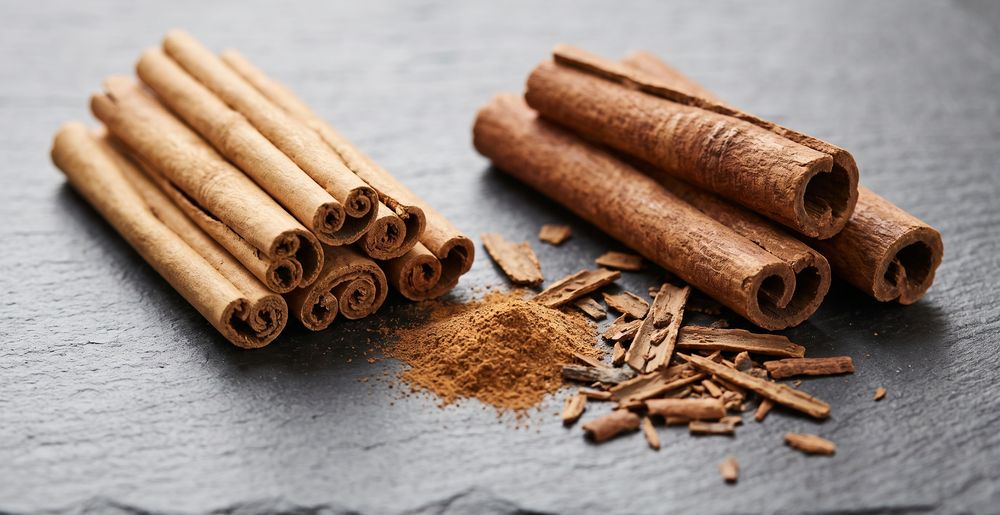
Yes, the type matters. Cassia cinnamon, the kind in most UK supermarket jars and many cinnamon capsules, contains far more coumarin, a compound linked to liver toxicity at high intakes, than Ceylon (Cinnamomum verum), the pricier "true cinnamon."1 Most UK cinnamon supplement listings don't say which one is inside.
That's the gap this guide is about. Cinnamon is one of the more popular blood sugar supplements sold in the UK, usually alongside or as an alternative to berberine. What rarely gets mentioned on the label is that "cinnamon" covers at least two commercially distinct barks with very different coumarin content, and coumarin is a genuine, regulator-recognised liver concern rather than an internet scare story. This isn't an argument for abandoning cinnamon. It's an argument for knowing which one you're taking and roughly how much coumarin comes with it.
The confusion is easy to understand. Both barks come from trees in the same genus, both smell and taste recognisably like cinnamon, and both get sold, ground, and encapsulated under the single word "cinnamon" without further explanation. Cassia is cheaper, more widely cultivated, and dominates the global spice trade. Ceylon is costlier to produce and far less common on supermarket shelves. A shopper picking a bottle of cinnamon capsules off a UK retailer's site has no obvious way to tell which bark went into it unless the label actually names the species.
Key Takeaways (TL;DR)
- Cassia cinnamon contains roughly 6 to 25 times more coumarin per kilogram than Ceylon cinnamon, based on peer-reviewed market analyses.12
- EFSA's tolerable daily intake (TDI) for coumarin is 0.1mg per kg of body weight per day, about 7mg for a 70kg adult, set because of liver toxicity in long-term animal studies.1
- A single teaspoon of ground cassia can contain roughly 4 to 19mg of coumarin, which can meet or exceed that entire daily limit on its own.
- Ceylon cinnamon contributes well under 1mg of coumarin per teaspoon even at the high end of measured ranges.1
- Most UK cinnamon supplement labels don't state the species; absence of "Ceylon" or "Cinnamomum verum" usually means cassia.
- Evidence for cinnamon and blood sugar is genuinely mixed: some meta-analyses show modest fasting glucose benefits, others find no significant effect once dose is accounted for.3456
- Most clinical trials to date have used cassia, not Ceylon, so the better-studied type is also the one with the coumarin concern.7
What Is Coumarin, and Why Does It Matter?
Coumarin is a naturally occurring aromatic compound responsible for part of cinnamon's characteristic smell. It's also found in tonka beans, sweet woodruff, and a handful of other plants used in traditional cooking and perfumery. In isolation, coumarin isn't acutely dangerous at the doses found in food. The concern is chronic liver toxicity (hepatotoxicity) with sustained, higher-level exposure, an effect first established in long-term animal studies and later supported by case reports in humans.
The European Food Safety Authority set a tolerable daily intake (TDI) for coumarin of 0.1mg per kilogram of body weight per day, a figure reconfirmed after review and independently corroborated by Germany's Federal Institute for Risk Assessment (BfR).1 For a 70kg adult, that works out to roughly 7mg a day, for life, without an appreciable health risk. The TDI was derived primarily from hepatotoxic effects seen in a two-year dog study, which is the standard precautionary basis regulators use when deciding a safe long-term exposure threshold, not a sign that coumarin causes sudden harm at ordinary intakes.1
This isn't a theoretical risk invented for a supplement blog. A published case report describes a 73-year-old woman who developed acute hepatitis after around a week of taking cinnamon supplements alongside a long-standing statin prescription.8 The authors pointed to coumarin as the likely mechanism and noted the combination should be approached cautiously. It's a single case, and the statin itself is a potential confounder, so this shouldn't be read as proof that cinnamon reliably damages the liver. It is a real-world illustration that the liver-toxicity concern behind the TDI isn't purely academic, particularly for anyone already taking medication that affects the liver, or anyone with existing liver disease.
Cassia vs Ceylon: How Much Coumarin Are We Talking About?
This is where the two cinnamons genuinely diverge. A peer-reviewed review of commercial cinnamon analyses reports that cassia cinnamon powder sampled from German retail outlets contained roughly 1,740 to 7,670mg of coumarin per kilogram, while Ceylon powder from the same market ranged from undetectable up to about 297mg per kilogram.1 That's a gap of somewhere between roughly 6-fold and 25-fold, depending on which end of each range you compare. A separate US market analysis of cinnamon-flavoured foods and supplements reached a similar conclusion from a different direction: Ceylon bark (C. verum) contained only trace coumarin, while the three cassia species tested, particularly Indonesian and Vietnamese cassia, carried substantial, measurable amounts.2
Converting that into something closer to a kitchen measurement is useful. A teaspoon of ground cinnamon weighs roughly 2.5g. At the cassia range above, that single teaspoon could contain somewhere between about 4mg and 19mg of coumarin, which on its own can meet or exceed the entire 7mg daily limit for a 70kg adult, depending on the specific batch.1 The same teaspoon of Ceylon, using the upper end of its measured range, contributes well under 1mg, nowhere near the limit. Neither of these figures means a single cinnamon-dusted porridge bowl is dangerous. They do mean that someone taking a daily cassia cinnamon supplement, on top of cassia in cooking, baking, or flavoured drinks, could be accumulating coumarin intake far closer to the regulatory ceiling than they'd assume from a spice most people think of as harmless.
It's worth being precise about what is and isn't legally capped here. The EU, and UK law retained from it, sets maximum coumarin levels for certain manufactured food categories, such as cinnamon-flavoured baked goods, under flavouring regulations. There is no equivalent hard legal limit on whole cinnamon spice or on cinnamon sold as a food supplement. The TDI functions as a risk-assessment reference point for consumers and regulators to judge cumulative exposure, not an enforced cap stamped onto every jar or capsule bottle. That's precisely why label transparency matters so much here: nothing stops a manufacturer from filling a capsule with undisclosed cassia at whatever concentration the bark happens to contain.
Does Cinnamon Actually Help Blood Sugar? What the Evidence Shows
The evidence is genuinely mixed, and it's worth saying that plainly rather than picking the most flattering study. A 2011 meta-analysis of eight randomised trials found a modest but statistically significant reduction in fasting blood glucose, averaging around 0.49 mmol/L versus control.3 A more recent 2024 dose-response meta-analysis, pooling 24 trials, reported reductions in fasting glucose, HOMA-IR, and HbA1c, with no significant change in fasting insulin.4 That sounds like a reasonably solid case.
Set against that, a 2019 systematic review described the overall evidence on cinnamon and metabolic markers as conflicting, flagging high heterogeneity between trials and inconsistent methodology as real limitations rather than minor caveats.5 More strikingly, a separate 2023 dose-response meta-analysis found no significant overall effect on fasting blood glucose, HbA1c, or total cholesterol across the pooled trials, though it did identify a benefit at lower daily doses, 1,200mg or less, that faded or reversed at higher doses.6 That's an unusual, somewhat counterintuitive result: more cinnamon didn't mean a bigger effect, and in this analysis the opposite pattern showed up.
There's a detail in this evidence base that connects directly back to the safety question. A 2012 Cochrane review of cinnamon monopreparations for diabetes noted that trials predominantly used Cinnamomum cassia, typically at a mean dose around 2g a day for 4 to 16 weeks, and still judged the effect on fasting glucose inconclusive overall.7 Put simply, cassia is both the better-studied type for blood sugar and the type carrying the higher coumarin load. Ceylon has far less dedicated trial data behind it, so switching to Ceylon on safety grounds means accepting a thinner evidence base for the blood-sugar benefit itself, not a straightforward safety upgrade with the same proven effect. Reasonable people can land on either side of that trade-off. What matters is making the choice with both halves of the picture in view, rather than assuming Ceylon is simply "the safe version of the thing that works."
Find a product: Best Berberine Supplements UKHow to Check a Cinnamon Supplement's Label
Most of the work here is just reading the label properly, which is harder than it sounds because manufacturers rarely volunteer the species. A few practical checks:
Look for the words "Ceylon," "true cinnamon," or the Latin name Cinnamomum verum on the front or ingredients panel. Any of these specifically indicates the lower-coumarin bark. A product that simply says "cinnamon" or "cinnamon bark powder," with no species named, should be assumed to be cassia by default, since that's the commodity bark sold globally under the plain name and the one used in most manufacturing supply chains.2
Check the per-serving dose against the TDI math above. A capsule stating, say, 1,000mg to 2,000mg of cassia cinnamon per serving, taken daily, sits in a range where coumarin contribution could matter, particularly for anyone also using cassia in cooking or drinking cinnamon-flavoured products regularly. A Ceylon-labelled product at the same dose carries a much smaller coumarin load by comparison.
Be cautious of extract-based products claiming a "standardised" cinnamaldehyde or polyphenol content without stating the underlying species or coumarin level. Standardisation tells you about one active compound's concentration. It says nothing about which bark was used or how much coumarin travelled along with it.
Anyone with existing liver disease, anyone on medication known to affect the liver such as certain statins, and anyone already consuming cinnamon heavily through food should treat cassia-based supplementation with particular caution, and a conversation with a GP or pharmacist before adding a daily cassia capsule is a reasonable precaution rather than overcaution.
Combining Cinnamon With Other Blood Sugar Supplements
Cinnamon is frequently stacked with other ingredients aimed at glucose control, most commonly berberine, chromium, or alpha-lipoic acid, and it sits alongside those options in our Blood Sugar Support guide. The practical point for stacking purposes is additive rather than interactive: there's no evidence cinnamon and berberine clash pharmacologically, but combining two glucose-lowering ingredients does raise the general, sensible caution of watching for symptoms of low blood sugar if you're also on prescribed diabetes medication such as metformin or insulin. That's a dosing and monitoring issue rather than a coumarin issue specifically, and it applies regardless of which cinnamon type is involved.
Where the coumarin question does interact with stacking is simple accumulation. Someone taking a cassia-based cinnamon capsule, adding cassia to coffee or porridge, and perhaps also using a cinnamon-flavoured protein product or snack bar, is stacking coumarin exposure across several sources without necessarily realising it. None of those individual sources is likely to be a problem alone. Add them together daily over months, and the total can edge meaningfully closer to the TDI than any single product's label would suggest.
FAQ
Is Ceylon cinnamon actually safer than cassia?
For coumarin specifically, yes. Market analyses consistently find Ceylon bark contains far less coumarin than cassia, roughly 6 to 25 times less by some measurements, with Ceylon's levels sitting close to or below detection limits in several samples.12 That doesn't automatically make Ceylon "safer" in every sense, since it has considerably less clinical trial data behind its use for blood sugar specifically, so the trade-off is a lower coumarin load against a thinner evidence base for benefit.7
How much cassia cinnamon is actually risky?
There's no single sharp cut-off, but the EFSA tolerable daily intake of 0.1mg per kg of body weight, around 7mg for a 70kg adult, gives a useful reference point.1 Based on measured coumarin ranges in commercial cassia powder, a single teaspoon can already supply somewhere between roughly 4mg and 19mg, meaning daily cassia intake from food and supplements combined can approach or exceed that limit well before anyone would consider themselves a heavy cinnamon user.1
Can cinnamon supplements damage the liver?
There is at least one published case report of acute hepatitis following cinnamon supplement use alongside a statin, attributed to coumarin, though this involved a single patient with a likely contributing medication.8 Clinical trials testing cassia cinnamon directly, generally at doses from 360mg up to several grams daily for up to three months, have not found significant increases in standard liver enzyme markers in the broader trial population. The practical reading is that liver injury from cinnamon appears to be rare and dose-dependent, with existing liver disease or interacting medication as the main risk amplifiers, rather than cinnamon being broadly unsafe for the general population at typical intakes.
Does cinnamon actually lower blood sugar?
The evidence is mixed rather than settled either way. Some meta-analyses report modest reductions in fasting blood glucose and HbA1c.34 Others, including a more recent dose-response analysis, found no significant overall effect once results were pooled across all doses, with a hint of benefit only at lower daily intakes.56 Cinnamon is reasonable to try as an adjunct alongside diet, exercise, and any prescribed treatment, but it shouldn't be relied on as a primary blood sugar management strategy.
Which type of cinnamon is used in most diabetes studies?
Overwhelmingly cassia. A 2012 Cochrane review of cinnamon trials for diabetes noted the included studies predominantly used Cinnamomum cassia at a mean dose around 2g daily.7 This means the clinical evidence base for cinnamon and blood sugar leans almost entirely on the higher-coumarin type, while Ceylon, the lower-coumarin option, remains comparatively under-studied for this specific use.
Should I stop taking cinnamon supplements if I don't know which type they are?
Not necessarily, but it's worth finding out. Check the label and any product page for "Ceylon," "Cinnamomum verum," or an equivalent disclosure. If none is stated, it's reasonable to assume cassia and to be mindful of total daily dose, particularly if you also use cinnamon regularly in food. Anyone with liver disease, anyone on a statin or other liver-affecting medication, and anyone taking a cassia product daily long-term should raise it with a GP or pharmacist rather than guessing.
The Bottom Line
Cassia and Ceylon cinnamon are different products wearing the same name, and the difference isn't marketing spin. It's a measurable, regulator-recognised gap in coumarin content that most UK cinnamon supplements don't bother to disclose. Cassia carries the bulk of the clinical evidence for blood sugar support and the bulk of the coumarin load. Ceylon carries less of both. Neither fact alone tells you what to buy. Together, they tell you what question to ask before you do: does this label actually say which cinnamon is inside, and if it doesn't, are you comfortable assuming cassia and tracking your total daily intake accordingly. For most occasional users, this is a minor consideration. For anyone taking a daily cinnamon capsule long-term, especially alongside liver-affecting medication or a cinnamon-heavy diet, it's worth five minutes of label-reading rather than none.
-
Coumarins in Food and Methods of Their Determination ↩︎ ↩︎ ↩︎ ↩︎ ↩︎ ↩︎ ↩︎ ↩︎ ↩︎ ↩︎ ↩︎
-
Cassia cinnamon as a source of coumarin in cinnamon-flavored food and food supplements in the United States ↩︎ ↩︎ ↩︎ ↩︎
-
Cinnamon intake lowers fasting blood glucose: meta-analysis ↩︎ ↩︎ ↩︎
-
The effect of cinnamon supplementation on glycemic control in patients with type 2 diabetes mellitus: An updated systematic review and dose-response meta-analysis of randomized controlled trials ↩︎ ↩︎ ↩︎
-
The impact of cinnamon on anthropometric indices and glycemic status in patients with type 2 diabetes: A systematic review and meta-analysis of clinical trials ↩︎ ↩︎ ↩︎
-
The Effect of Cinnamon on Glycolipid Metabolism: A Dose-Response Meta-Analysis of Randomized Controlled Trials ↩︎ ↩︎ ↩︎