

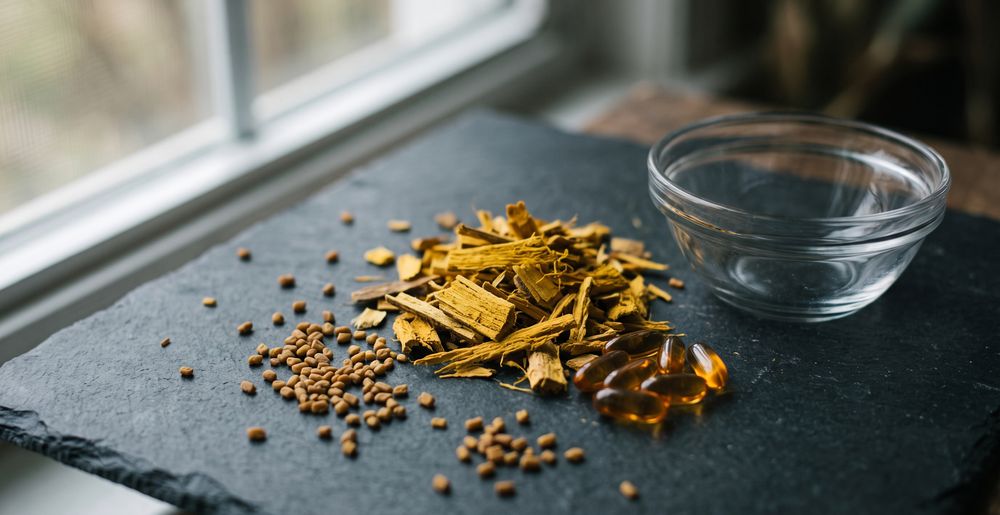
Best Blood Sugar Supplements UK: Berberine to Fenugreek

About the author...
Will founded Supermushrooms after digging into the research behind mushroom and nootropic supplements. Every pick is checked against clinical dosing, extract standardisation, and real buyer reviews, and each star rating starts from a product's real Amazon score before being adjusted for formulation quality. Read more about how ratings are calculated.
Table of contents
- Key Takeaways (TL;DR)
- Combining These With Diabetes Medication
- How to Combine These Supplements
-
FAQ
- Can supplements actually lower blood sugar, or is this mostly marketing?
- Is berberine really comparable to metformin?
- Can I take berberine, ALA or fenugreek alongside metformin or insulin?
- Which of the three has the strongest evidence?
- Are these supplements safe for someone who isn't diabetic but has borderline readings?
- Do any of these replace the need for diet and exercise changes?
- Conclusion
The three UK supplements with the most direct evidence for blood sugar support are Berberine (AMPK activation, glucose-lowering effects studied alongside metformin), Alpha Lipoic Acid (antioxidant and modest glycaemic support, strongest evidence in nerve health) and Fenugreek (soluble fibre that slows carbohydrate absorption). None of them treats diabetes or replaces prescribed medication.
Blood sugar has become one of the most searched supplement categories in the UK, and for good reason. Diabetes UK estimates more than 4.7 million people in the UK now live with a diabetes diagnosis. Almost 1.3 million more cases of type 2 diabetes are thought to be undiagnosed.1 Millions more sit in the prediabetes range, where fasting glucose or HbA1c is raised but not yet high enough to meet a diabetes diagnosis. It's this middle group, people whose numbers are creeping upward but who aren't yet on medication, where interest in supplements tends to concentrate.
This guide covers three ingredients with genuinely different mechanisms rather than one "blood sugar complex" with a dozen unproven extras. Berberine works through the same cellular energy pathway as metformin. Alpha Lipoic Acid brings antioxidant protection with a secondary glucose effect. Fenugreek slows how fast carbohydrate reaches the bloodstream in the first place. Used sensibly, they can support blood sugar levels that are already within or close to a normal range. They are not a substitute for diagnosis, monitoring or treatment, and the section below on combining them with diabetes medication should be read before starting any of the three.
Key Takeaways (TL;DR)
- Berberine activates AMPK, the same pathway metformin engages, and one trial found glucose-lowering effects broadly comparable to metformin over three months.
- Alpha Lipoic Acid's strongest evidence is for diabetic nerve pain (the SYDNEY 2 trial), with a smaller, dose-dependent glycaemic effect.
- Fenugreek's soluble fibre (galactomannan) slows carbohydrate absorption, and a 2023 meta-analysis found real benefits in type 2 diabetes and prediabetes.
- Over 4.7 million people in the UK have a diabetes diagnosis, with an estimated 1.3 million more undiagnosed.
- Berberine and Alpha Lipoic Acid carry the more significant hypoglycaemia interaction risk with diabetes medication; fenugreek's is milder but still real.
- These supplements support levels already within or close to a normal range. None of them is a treatment for diagnosed diabetes.
- Anyone on insulin or a glucose-lowering medication should talk to a GP or pharmacist before starting any of the three.
Berberine — AMPK Activation, the Metformin Comparison
Berberine is a yellow alkaloid found in barberry, goldenseal and several related plants, long used in traditional Chinese medicine. Its modern relevance comes down to one enzyme: AMP-activated protein kinase, or AMPK, a cellular fuel gauge that governs how liver and muscle cells handle glucose. Berberine activates AMPK directly, in the same broad pathway that metformin engages. That lowers how much glucose the liver releases, and it helps muscle tissue pull glucose out of the bloodstream more efficiently.2
The trial that keeps getting cited is a head-to-head comparison in people with type 2 diabetes. It gave 500mg of berberine three times daily for three months, and found glucose-lowering effects broadly comparable to metformin, alongside reductions in triglycerides and cholesterol.3 That's a genuinely notable result for a plant compound. It's why berberine picked up the "nature's Ozempic" nickname on social media, even though the two work through completely unrelated mechanisms: AMPK versus the GLP-1 receptor. A later meta-analysis pooling multiple randomised trials found berberine improved fasting glucose and HbA1c against placebo. It performed similarly to standard oral diabetes medication when combined with it.4
Worth being careful here rather than overselling the comparison. These are a modest number of trials, several run in China with variable methodological quality. "Broadly comparable in one trial" is not the same claim as "proven equivalent" across the wider evidence base. Read it as a genuinely promising signal, not a settled substitute for a first-line diabetes drug.
What to look for when buying: most of the positive trials used 900 to 1,500mg daily, typically split as 500mg two or three times before meals, since berberine's absorption window is short and splitting the dose improves both effect and tolerability. Many UK capsule products default to one dose a day well under this range, so check the label rather than assuming any product labelled "berberine 500mg" delivers what the trials used. Berberine also has a well-documented effect on liver enzymes that metabolise a wide range of prescription drugs, covered in the medication section below and in more detail on Berberine's safety profile.
Find a product: Best Berberine Supplements UKAlpha Lipoic Acid — Antioxidant Support With a Secondary Glucose Effect
Alpha Lipoic Acid (ALA) is a sulphur-containing compound made in small amounts by the body and involved in mitochondrial energy production. It's unusual among antioxidants for being soluble in both water and fat, which lets it work inside and outside cells. It also helps regenerate other antioxidants, including vitamin C, vitamin E and glutathione. Its best-established clinical use sits in diabetic neuropathy rather than glucose control on its own. The SYDNEY 2 trial gave 181 people with diabetic polyneuropathy either placebo or 600, 1,200 or 1,800mg of oral ALA daily for five weeks. The 600mg dose produced a meaningful reduction in stabbing pain, burning, tingling and numbness. Higher doses added side effects but no extra benefit.5
The glycaemic side of ALA is real but more modest, and it's a genuine mechanism, not a side note. Clinical research in people with type 2 diabetes found ALA supplementation improved insulin-mediated glucose uptake. It also reduced markers of oxidative stress, alongside a measurable drop in blood glucose.6 A 2022 dose-response meta-analysis pooling 16 randomised trials found each 500mg/day increase in oral ALA meaningfully reduced HbA1c, fasting plasma glucose and triglycerides. The dose curve was roughly J-shaped and levelled off around 600mg daily.7 The same analysis was honest about scale. The improvements were statistically real but not large enough, on their own, to count as clinically transformative for someone already on standard diabetes treatment. ALA's more compelling case, in other words, is nerve protection with a useful secondary glucose benefit, not glucose control as a primary reason to take it.
Typical doses run 300 to 600mg daily, generally taken on an empty stomach for better absorption, though this can worsen mild stomach upset in some people. The R-ALA form is the naturally occurring enantiomer and reaches higher blood concentrations than standard racemic ALA, though most oral trials, including SYDNEY 2, used the cheaper racemic form. ALA has a genuine, well-supported blood-glucose-lowering effect of its own. That makes its interaction risk with diabetes medication one of the more significant in this guide; see Alpha Lipoic Acid's safety profile for the full picture, including a rare autoimmune hypoglycaemia syndrome reported in a small number of case studies.
Find a product: Best Alpha Lipoic Acid Supplements UKFenugreek — Soluble Fibre That Slows Carbohydrate Absorption
Fenugreek (Trigonella foenum-graecum) works through a mechanism that's mechanically different from the other two ingredients here. Rather than acting on a cellular energy pathway, its seeds contain a soluble fibre called galactomannan. This fibre thickens in the gut and physically slows how quickly carbohydrate is broken down and absorbed. Laboratory research on fenugreek's galactomannan found it inhibited intestinal glucose uptake in a way that tracked directly with the fibre's viscosity. The thicker the gel it forms, the more it delays glucose reaching the bloodstream.8 That translates clinically into a flatter post-meal glucose curve rather than a change to baseline metabolism.
A 2023 systematic review and meta-analysis of randomised controlled trials in people with type 2 diabetes and prediabetes found real, if moderate, improvements in fasting glucose and HbA1c with fenugreek supplementation.9 That evidence sits alongside fenugreek's two other well-studied uses: as a testosterone-support ingredient in men and as a galactagogue for breastfeeding mothers, both covered in full on our dedicated fenugreek review. The blood-sugar effect specifically comes from whole seed or seed-powder products rich in galactomannan fibre, rather than the concentrated saponin extracts (Furosap, Testofen) marketed for testosterone. It's worth matching the product type to the reason you're taking it, rather than assuming any fenugreek capsule does all three jobs equally well.
Doses in the glucose-focused trials generally used whole seed powder in the range of 5 to 10g daily, taken with or just before meals so the fibre is present in the gut when carbohydrate arrives. That's a meaningfully larger amount than the milligram doses used in concentrated extract products, so check which type you're buying. Fenugreek's blood-sugar-lowering effect is well documented and can add to the action of insulin or glucose-lowering medication; see Fenugreek's safety profile for the full detail, including its legume-family allergy risk and pregnancy caution.
Find a product: Best Fenugreek Supplements UKCombining These With Diabetes Medication
This section matters more than any other in this guide, and it deserves to be read in full rather than skimmed. All three supplements above lower blood glucose through genuine, evidence-backed mechanisms. That is exactly why they carry a real hypoglycaemia risk when stacked with prescribed diabetes treatment, not a theoretical one buried in small print.
Berberine and Alpha Lipoic Acid are the two to be most careful with. Berberine activates AMPK, the same pathway metformin uses. Taking both together can produce an additive glucose-lowering effect that pushes blood sugar lower than either would alone. ALA has its own directly documented glucose-lowering action in clinical trials of people with type 2 diabetes. Combined with insulin or a sulfonylurea, this creates a genuine, additive hypoglycaemia risk, where levels can drop further than either treatment would cause by itself. Fenugreek's fibre-based mechanism is gentler by comparison, since it slows absorption rather than actively lowering output or improving uptake. But its documented blood-sugar effect still means it can add to the action of insulin or oral glucose-lowering drugs, and the same caution applies.
Berberine has an additional interaction layer worth flagging separately. Controlled research in healthy volunteers found that two weeks of regular berberine use meaningfully blocked several liver enzymes, including CYP3A4 and CYP2D6. These enzymes break down a very large share of prescription medications, not just diabetes drugs.10 That means berberine can also change how other medications, from statins to blood thinners, are processed by the body, independent of the glucose interaction above.
None of this means these three ingredients can never be combined with diabetes treatment. It means the combination needs a conversation with a GP, diabetes nurse or pharmacist first, and closer blood glucose monitoring once started, since dose adjustments to existing medication may be needed. Anyone with diagnosed type 1 or type 2 diabetes, or currently on insulin, metformin, a sulfonylurea or any other glucose-lowering drug, should treat that conversation as a required step, not an optional one. These supplements are designed to support blood sugar levels that are already within or close to a normal range. They are not a treatment for diagnosed diabetes or prediabetes, and starting or adjusting one should never replace an existing medical management plan or delay seeing a GP about rising blood glucose readings.
How to Combine These Supplements
Because berberine, ALA and fenugreek act through three separate mechanisms, some stacking logic exists for people without diabetes who are managing borderline readings under medical guidance. Berberine and fenugreek pair reasonably well: one works at the liver and muscle level through AMPK, the other slows carbohydrate absorption in the gut, so the two don't simply duplicate the same action. ALA is often better considered on its own merits, for its antioxidant and nerve-support case, rather than added purely to stack glucose effects, given that its glycaemic benefit is the most modest of the three on a milligram basis.
Start with one ingredient at a time rather than all three together. Give each a proper run, six to eight weeks at a consistent dose, and only add a second if blood glucose monitoring (or, for anyone not diabetic, general bloodwork alongside diet and exercise changes) shows a partial but incomplete effect. Stacking all three from day one makes it far harder to identify what's actually helping, and it compounds the hypoglycaemia risk covered above rather than simply adding convenience.
FAQ
Can supplements actually lower blood sugar, or is this mostly marketing?
Some genuinely can, through real, mechanistically documented pathways, though the effect sizes vary a lot between ingredients. Berberine's AMPK-driven glucose-lowering effect has been compared directly to metformin in clinical trials.3 Fenugreek's soluble fibre measurably slows carbohydrate absorption in laboratory and clinical studies.89 Alpha Lipoic Acid's glycaemic effect is real but more modest, and its strongest evidence is actually for diabetic nerve pain rather than glucose control itself.57 None of that makes any of them equivalent to a prescribed diabetes medication.
Is berberine really comparable to metformin?
One frequently cited trial found glucose-lowering effects broadly comparable to metformin over three months in people with type 2 diabetes, alongside improvements in cholesterol and triglycerides.3 A later meta-analysis supported similar findings across multiple trials.4 That's a genuinely strong signal for a plant compound, but it comes from a modest number of studies, several with methodological limitations, so it's more accurate to call it a promising comparison than a proven substitute for a first-line diabetes drug.
Can I take berberine, ALA or fenugreek alongside metformin or insulin?
Not without medical supervision. All three lower blood glucose through genuine mechanisms, and combining any of them with insulin, metformin or a sulfonylurea creates a real, additive hypoglycaemia risk, not a theoretical one.26 Berberine also inhibits liver enzymes that metabolise a wide range of other medications.10 Anyone on diabetes medication should speak to a GP, diabetes nurse or pharmacist before starting any of these, and expect closer blood glucose monitoring once they do.
Which of the three has the strongest evidence?
They're strongest in different places, which is really the point of covering all three rather than picking one. Berberine has the most direct head-to-head glucose comparison against a prescription drug.34 Alpha Lipoic Acid's strongest evidence is for diabetic neuropathy symptoms, with glucose control as a secondary, more modest benefit.57 Fenugreek's evidence is most consistent for post-meal glucose specifically, through its fibre-driven mechanism.89
Are these supplements safe for someone who isn't diabetic but has borderline readings?
Generally yes for most healthy adults at standard doses, but "generally safe" isn't the same as "no monitoring needed." Anyone with prediabetes or borderline readings should still confirm with a GP before starting, particularly because these supplements are unregulated as medicines, and product quality and actual active-ingredient content vary between brands. Full safety details, including who should avoid each ingredient, are covered on each supplement's dedicated review page linked throughout this guide.
Do any of these replace the need for diet and exercise changes?
No, and this is worth being direct about. Every trial cited in this guide tested these supplements as an addition to, not a replacement for, standard dietary and lifestyle management, and in most trials participants also received general lifestyle advice. Diet, physical activity and weight management remain the foundation of blood sugar management, whether someone is prediabetic, diabetic, or simply keeping an eye on borderline readings. Supplements sit alongside that foundation. They don't substitute for it.
Conclusion
Berberine, Alpha Lipoic Acid and Fenugreek each approach blood sugar from a genuinely different angle: cellular energy signalling, antioxidant and nerve protection, and slowed carbohydrate absorption in the gut. That variety is what makes them worth covering together rather than as three entries in a generic "blood sugar complex." Berberine's evidence is the most striking, with a direct comparison to metformin in clinical trials, though it should be read as a promising signal rather than proof of equivalence. ALA's real strength lies in diabetic nerve protection, with glucose support as a secondary benefit. Fenugreek's fibre mechanism gives it the most mechanically straightforward case of the three.
What ties all three together is the same caution: they support blood sugar levels already within or close to a normal range, and they are not a treatment for diagnosed diabetes or prediabetes. The hypoglycaemia interaction risk with diabetes medication is real, not a legal disclaimer added for form's sake, and it's the single most important thing to get right before adding any of these three to an existing medication regimen. Anyone managing diagnosed diabetes should treat a conversation with their GP, diabetes nurse or pharmacist as the first step, not the last one.
-
Berberine, a natural plant product, activates AMP-activated protein kinase with beneficial metabolic effects in diabetic and insulin-resistant states ↩︎ ↩︎
-
Efficacy of berberine in patients with type 2 diabetes mellitus ↩︎ ↩︎ ↩︎ ↩︎
-
Meta-analysis of the effect and safety of berberine in the treatment of type 2 diabetes mellitus, hyperlipemia and hypertension ↩︎ ↩︎ ↩︎
-
Oral treatment with alpha-lipoic acid improves symptomatic diabetic polyneuropathy: the SYDNEY 2 trial ↩︎ ↩︎ ↩︎
-
Effect of alpha-lipoic acid on blood glucose, insulin resistance and glutathione peroxidase of type 2 diabetic patients ↩︎ ↩︎
-
Efficacy and safety of oral alpha-lipoic acid supplementation for type 2 diabetes management: a systematic review and dose-response meta-analysis of randomized trials ↩︎ ↩︎ ↩︎
-
In vitro intestinal glucose uptake is inhibited by galactomannan from Canadian fenugreek seed (Trigonella foenum graecum L) in genetically lean and obese rats ↩︎ ↩︎ ↩︎
-
The Effect of Fenugreek in Type 2 Diabetes and Prediabetes: A Systematic Review and Meta-Analysis of Randomized Controlled Trials ↩︎ ↩︎ ↩︎
-
Repeated administration of berberine inhibits cytochromes P450 in humans ↩︎ ↩︎