


Best Vitamin C Supplement UK for Immune & Skin Health

About the author...
Will founded Supermushrooms after digging into the research behind mushroom and nootropic supplements. Every pick is checked against clinical dosing, extract standardisation, and real buyer reviews, and each star rating starts from a product's real Amazon score before being adjusted for formulation quality. Read more about how ratings are calculated.
Table of contents
- Key Takeaways (TL;DR)
- How We Choose
- Quick Comparison
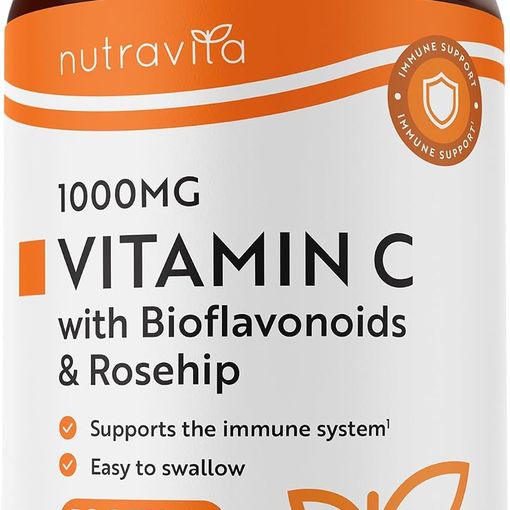
- Nutravita Vitamin C 1000mg with Bioflavonoids & Rosehip, 180 Tablets
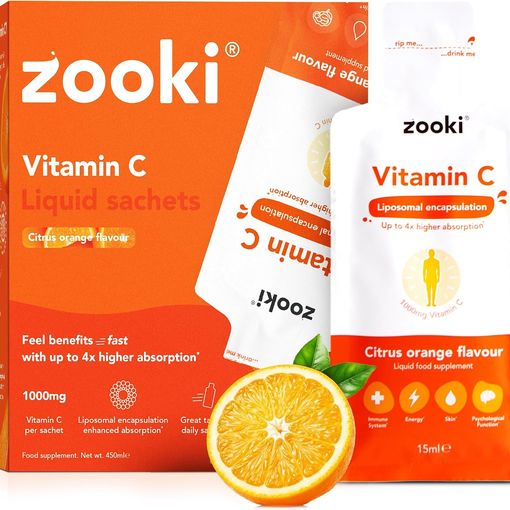
- Zooki Liposomal Vitamin C 1000mg Liquid Sachets, 30 Servings
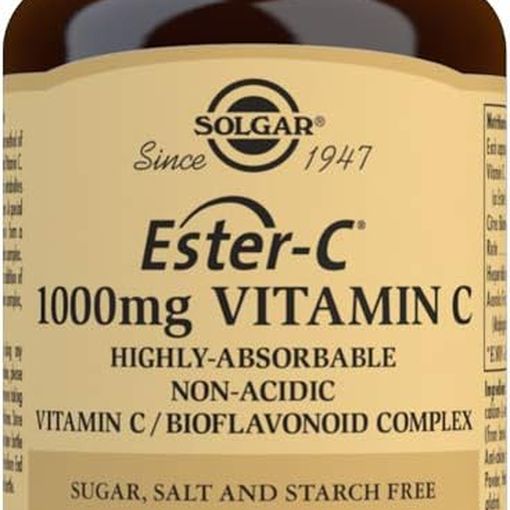
- Solgar Ester-C 1000mg Vitamin C, 90 Veg Capsules
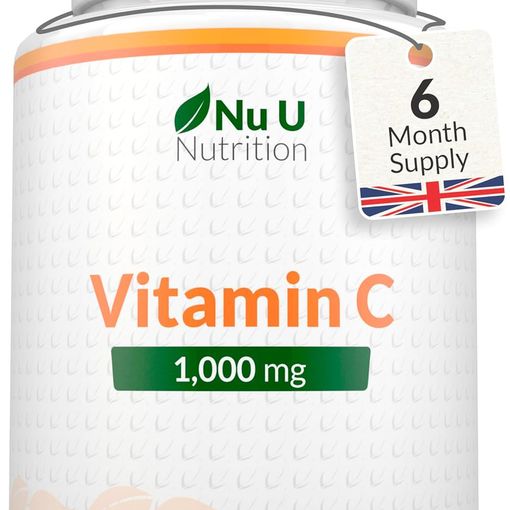
- Nu U Nutrition Vitamin C 1000mg, 180 Vegan Tablets
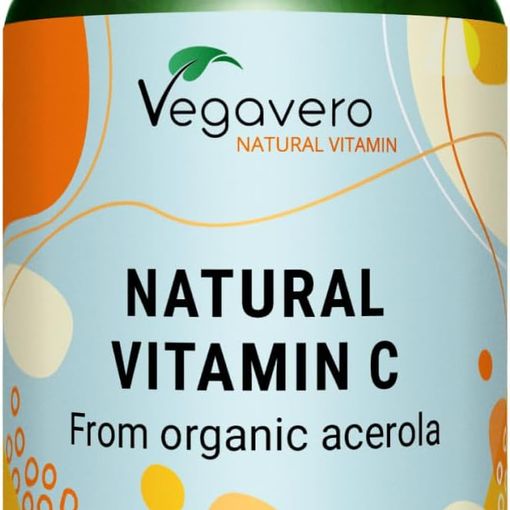
- Vegavero Natural Vitamin C from Organic Acerola, 180 Capsules
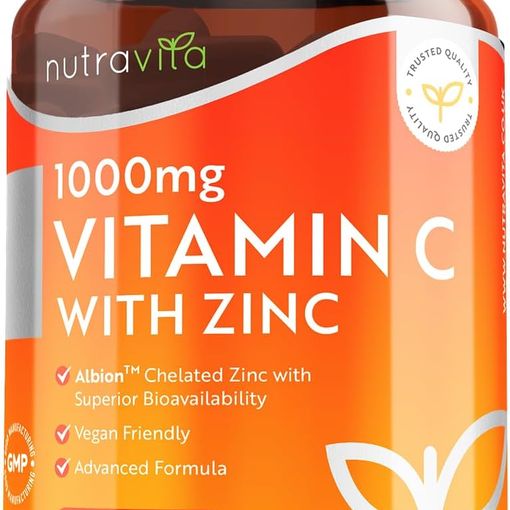
- Nutravita Vitamin C and Zinc, 210 Vegan Tablets
- Safety and Side Effects
- Best Vitamin C Supplement FAQ
- The Best Vitamin C Supplement for You
The best vitamin C supplement in the UK is currently Nutravita Vitamin C 1000mg with Bioflavonoids & Rosehip, praised for its clinically saturating 1,000mg dose and individually disclosed cofactor amounts across more than 15,000 UK ratings. See the comparison below for how five other well-reviewed alternatives stack up depending on your priorities.
Vitamin C, or ascorbic acid, is a water-soluble vitamin the body can't make or store, so it needs a fresh supply from food or supplements every day. It's a cofactor for the enzymes that build collagen, the structural protein behind skin, blood vessels, cartilage, and bone, and it's one of the body's main water-soluble antioxidants, helping to neutralise the free radicals generated by normal metabolism and by stress on the immune system.12 Most UK adults get enough from fruit and vegetables alone, but a supplement is a straightforward way to close the gap during illness, poor diet, or heavy training.
What separates a genuinely useful vitamin C product from a marketing exercise comes down to three things: the form the vitamin C is delivered in (plain ascorbic acid, buffered calcium ascorbate, liposomal, or whole-food acerola), whether the label discloses exact amounts rather than hiding behind a blend, and whether the dose is anywhere near what's actually been studied. A surprising number of UK listings lean on vague "high strength" language without ever stating a real number.
Key Takeaways (TL;DR)
- Form matters more than the headline mg figure. Plain ascorbic acid, buffered Ester-C, liposomal, and whole-food acerola all deliver vitamin C differently, and the best choice depends on your stomach and budget.
- 1,000mg is the realistic ceiling for absorption, not a step towards a bigger effect. Plasma vitamin C saturates around this dose, so "megadosing" past it mostly just gets excreted.3
- Liposomal formats do show a real absorption edge in published trials, roughly 20-35% higher depending on the study, well short of the "4x" some brands advertise.45
- Look for disclosed cofactor amounts. A trustworthy label states exact mg for rosehip, bioflavonoids, or chelated zinc rather than folding them into a vague blend.
- Third-party testing and UK/GMP manufacturing are the real quality signals beyond the ingredient list itself.
- Cold-duration evidence is modest but real, not the dramatic prevention effect the supplement industry often implies.6
- Expect a gradual effect. Skin and immune benefits build over several weeks of consistent use rather than showing up overnight.
How We Choose
We scored each product on how its dose compares with the saturation research above, whether the label discloses exact amounts for vitamin C and any added cofactors rather than a vague blend, third-party testing and manufacturing standards, and value relative to the other five products here. Where a brand's marketing claim outran the published evidence, as with some liposomal absorption figures, we said so rather than repeating it uncritically. Full methodology on the About page.
Quick Comparison
Each product's overall rating starts from its real Amazon UK customer rating, then gets adjusted (up to +/-0.5) for dose versus clinical research, extract standardisation, manufacturing quality, and value. Click a product name to jump straight to its full review below.
| Product | Best For | Type | Serving | Form |
|---|---|---|---|---|
|
Nutravita Vitamin C 1000mg with Bioflavonoids & Rosehip, 180 Tablets 5.0 |
Best-value all-rounder with disclosed cofactors | Tablets | 1 tablet daily (1,000mg + 20mg rosehip, 7mg bioflavonoids) | 1,000mg ascorbic acid plus 20mg rosehip and 7mg citrus bioflavonoids per tablet, both individually disclosed |
|
Zooki Liposomal Vitamin C 1000mg Liquid Sachets, 30 Servings 4.4 |
Highest bioavailability for sensitive absorbers | Liquid Sachets | 1 sachet daily (1,000mg liposomal vitamin C) | Liposomal encapsulation independently verified by a nanotechnology lab, though the label's 4x absorption claim outpaces the 20-35% seen in published trials |
|
Solgar Ester-C 1000mg Vitamin C, 90 Veg Capsules 4.9 |
Best for sensitive stomachs and reflux | Capsules | 1 capsule daily (1,000mg Ester-C calcium ascorbate) | Patented Ester-C calcium ascorbate and metabolite complex with natural bioflavonoids, pH-neutral |
|
Nu U Nutrition Vitamin C 1000mg, 180 Vegan Tablets 4.9 |
Best budget high-strength option | Tablets | 1 tablet daily (1,000mg pure ascorbic acid) | Single-ingredient pure ascorbic acid, no added bioflavonoids or extras |
|
Vegavero Natural Vitamin C from Organic Acerola, 180 Capsules 4.6 |
Best natural whole-food source | Capsules | 2 capsules daily (1,060mg acerola extract, of which 180mg is vitamin C) | Organic acerola cherry extract, exact 180mg vitamin C content disclosed per serving alongside natural bioflavonoids |
|
Nutravita Vitamin C and Zinc, 210 Vegan Tablets 4.9 |
Best combo for cold-and-flu season | Tablets | 1 tablet daily (1,000mg vitamin C + 15mg Albion chelated zinc) | 15mg Albion fully-reacted amino acid chelated zinc, a well-absorbed form disclosed alongside the 1,000mg vitamin C dose |
Nutravita Vitamin C 1000mg with Bioflavonoids & Rosehip, 180 Tablets
Best Overall Vitamin C Supplement
based on 15037 Amazon UK reviews (4.6★), adjusted for formulation quality
What We Love About the Disclosed Cofactor Doses
Most rosehip-and-bioflavonoid vitamin C tablets just list the ingredients without saying how much of each one you're getting. Nutravita breaks it down: 20mg rosehip and 7mg citrus bioflavonoids alongside the full 1,000mg ascorbic acid dose, on a single tablet you only need to take once a day. That transparency, combined with over 15,000 UK ratings holding steady at 4.6 stars, is what earns this the top spot rather than any single standout ingredient.
Full Dose, Full Disclosure: All The Details
Each bottle holds 180 vegan tablets, a six-month supply at one a day. Nutravita tests every batch independently for heavy metals and microbiological safety, and manufactures in UK, GMP-certified facilities. The brand has been going since 2014 and has built its review count into one of the largest of any vitamin C product on Amazon UK, which is itself a useful signal that the formula suits a wide range of stomachs and routines. If you're also weighing up zinc for immune support, our zinc supplement review covers dedicated products in more depth than the combo option further down this page.
Zooki Liposomal Vitamin C 1000mg Liquid Sachets, 30 Servings
Best Liposomal Vitamin C for Absorption
based on 952 Amazon UK reviews (4.3★), adjusted for formulation quality
Why the Liposomal Format Earns Its Place
Liposomal encapsulation wraps ascorbic acid in a phospholipid shell, protecting it through the stomach and helping more of it cross into the bloodstream intact. Zooki's own third-party testing, carried out by a university nanotechnology centre, confirms the liposomes are genuinely formed rather than just labelled that way, which isn't true of every liquid vitamin C product on the market. The taste is a real advantage too. Each sachet mixes easily into water or yoghurt rather than requiring a tablet to be swallowed.
Liposomal Delivery: All The Details
One important caveat worth stating plainly. Zooki markets "up to 4x higher absorption" and cites its own 2024 bioavailability studies as the source. The closest matching published trial, a double-blind randomised crossover study, actually found liposomal vitamin C raised plasma peak concentration by around 27% and leukocyte uptake by about 20% versus standard ascorbic acid, a real and measurable edge, but nowhere near fourfold.5 Take the "4x" figure as marketing rounding rather than a literal multiplier, and buy this for the format and taste rather than an exaggerated absorption number. Each box contains 30 sachets, a month's supply at one daily, and the liquid is sugar-free, gluten-free and vegan.
Solgar Ester-C 1000mg Vitamin C, 90 Veg Capsules
Best Buffered Vitamin C for Sensitive Stomachs
based on 1291 Amazon UK reviews (4.6★), adjusted for formulation quality
A Genuinely Gentler Vitamin C Form
Plain ascorbic acid is, chemically, an acid, and that's exactly what causes the heartburn and stomach ache some people get from high-dose tablets. Ester-C sidesteps this by binding vitamin C to calcium as calcium ascorbate, along with naturally occurring metabolites that Solgar says help the body retain vitamin C in immune cells for longer. The result is pH-neutral rather than acidic, which is the whole reason this patented form exists.
Ester-C Complex: All The Details
The formula includes natural plant bioflavonoids alongside the core calcium ascorbate, and Solgar has been producing it since 1947 under what the brand calls its "Gold Standard" for sourcing and small-batch consistency. Bottles are 100% recyclable amber glass rather than plastic, a detail some buyers specifically look for. Ninety capsules works out to three months at one a day, sitting at the premium end of the market compared with the plain-ascorbic-acid options here, though anyone who's previously had stomach trouble with standard vitamin C tablets will likely find the extra cost worthwhile.
Nu U Nutrition Vitamin C 1000mg, 180 Vegan Tablets
Best Value High-Strength Vitamin C
based on 9564 Amazon UK reviews (4.6★), adjusted for formulation quality
No Frills, Full Dose
Sometimes the simplest option is the right one. Nu U Nutrition's tablet contains exactly one thing: 1,000mg of pure ascorbic acid, with no rosehip, no bioflavonoids, and no proprietary blend to decode. For anyone who just wants a reliable, research-matching dose without paying for extras they may not need, that simplicity is the whole appeal, and over 9,500 reviews at 4.6 stars suggest a lot of buyers agree.
Plain Ascorbic Acid: All The Details
The tablets are UK-made, vegan, and packaged 180 to a bottle, a full six-month supply at one a day that keeps the effective cost per gram noticeably lower than most of the fortified or liposomal alternatives on this list. Nu U Nutrition started as a family business in 2014 and has since built a wide catalogue of straightforward, clean-label supplements. There's a genuine trade-off here: you lose the added bioflavonoids that some research suggests aid absorption, but if budget and dose are your two priorities, this covers both.
Vegavero Natural Vitamin C from Organic Acerola, 180 Capsules
Best Natural Whole-Food Vitamin C
based on 932 Amazon UK reviews (4.6★), adjusted for formulation quality
An Honest Whole-Food Alternative
Acerola cherries are naturally one of the richest known food sources of vitamin C, and Vegavero's capsules deliver it as an organic whole-food extract rather than an isolated, lab-synthesised compound. That comes with real trade-offs worth stating clearly. Two capsules provide 1,060mg of extract, but only 180mg of that is actual vitamin C, since the rest is the surrounding fruit matrix, including the naturally occurring bioflavonoids and carotenoids the brand highlights. It's a genuinely gentler option on the stomach than an acidic 1,000mg tablet, just at a fraction of the dose.
Organic Acerola Extract: All The Details
Vegavero discloses the exact 180mg vitamin C figure on the label rather than rounding up to a headline number, which is more honesty than several competitors offer. The acerola is grown under controlled organic cultivation in Brazil, certified non-GMO and pesticide-free, and the capsules are free from additives and fillers. Worth a look if you specifically want a food-form vitamin C for its accompanying phytonutrients rather than for hitting the highest possible dose. Anyone chasing the saturation-level intake used in most of the clinical research below will need to look elsewhere on this list, or take considerably more than the labelled two-capsule serving.
Nutravita Vitamin C and Zinc, 210 Vegan Tablets
Best Vitamin C and Zinc Combo
based on 1646 Amazon UK reviews (4.5★), adjusted for formulation quality
Two Immune Nutrients, One Tablet
Vitamin C and zinc work through different mechanisms but get grouped together constantly in cold-and-flu marketing, and there's a reasonable basis for the pairing: both contribute to normal immune function and to protecting cells from oxidative stress. Nutravita's version pairs the full 1,000mg vitamin C dose with 15mg of Albion chelated zinc, a "fully reacted" amino acid form built for better absorption than cheaper zinc oxide, and 15mg sits comfortably under the UK's zinc safe upper level while still delivering 100% of the daily reference intake in a single tablet.
The Combo Formula: All The Details
A bottle holds 210 tablets, a seven-month supply at one a day, manufactured in the UK to GMP and BRC standards with batch testing on every run. It's free from wheat, gluten, lactose, and soya. The main thing to weigh against the standalone options above is redundancy: if you already take a separate zinc supplement, or a multivitamin that includes it, doubling up here isn't necessary and just adds unneeded zinc to your day. For a closer look at zinc doses and forms on their own, our zinc supplement guide goes further into the comparison.
Safety and Side Effects
At doses up to around 500mg per day, vitamin C is very well tolerated and has an excellent long safety record. The main risk emerges at higher, sustained doses: a large prospective study of over 23,000 men found those taking vitamin C supplements (typically 1,000mg tablets) were roughly twice as likely to develop kidney stones as men taking no supplements — an effect not seen with ordinary dietary vitamin C from food.7
At high doses generally (above 2,000mg per day), digestive side effects like stomach cramps, bloating, and diarrhoea become more likely as the gut's absorption capacity is exceeded. People with a history of kidney stones, kidney disease, or the inherited condition G6PD deficiency should check with a GP before taking vitamin C supplements at anything above a low daily dose.
Best Vitamin C Supplement FAQ
What is vitamin C and why does the body need it? Vitamin C (ascorbic acid) is a water-soluble vitamin that acts as a cofactor for enzymes involved in collagen synthesis and as one of the body's primary water-soluble antioxidants. Because humans can't synthesise it internally, it has to come from diet or supplements every day.1
What are the proven benefits of taking a vitamin C supplement? The clearest evidence is for immune function support and, in people who are deficient or under physical stress, modestly shortened cold duration. A Cochrane review of regular supplementation found colds were around 8% shorter in adults and 14% shorter in children, though regular supplementation didn't meaningfully reduce how often people caught a cold in the first place.6 Vitamin C also plays a genuine, mechanistic role in collagen formation for skin, cartilage, and wound healing, backed by both laboratory and preclinical evidence, even though large human trials on supplementation alone for cosmetic skin outcomes remain limited.12
Does liposomal vitamin C actually absorb better than standard tablets? Yes, but not by as much as some marketing suggests. One randomised crossover trial found liposomal vitamin C produced around 35% greater plasma AUC than standard oral ascorbic acid over a 2-4 hour window, and a separate double-blind trial found 20-27% higher peak plasma and leukocyte concentrations, rather than the "3x" or "4x" figures some brands advertise.45
Is "megadosing" vitamin C worth it? Not for most healthy adults. Classic pharmacokinetic research found that plasma vitamin C saturates around a 1,000mg daily dose, and anything a healthy kidney can't use gets excreted in urine rather than stored or put to further use.3 Beyond a certain point, a bigger number on the label doesn't translate into a bigger effect in the body.
How much vitamin C do I actually need, and how long before I notice anything? The NHS recommends 40mg a day for adults aged 19 to 64, a figure most people already get from diet alone.8 Supplemental doses up to 1,000mg a day are considered unlikely to cause harm, while doses above that can cause stomach pain, diarrhoea, and flatulence that resolve once you stop. Immune and antioxidant effects build gradually. Give a supplement several weeks of consistent use before judging whether it's doing anything noticeable.
Is vitamin C safe? Who should be cautious? Vitamin C is generally very well tolerated, but anyone with a history of kidney stones should talk to a doctor before taking high doses, since excess ascorbic acid is partly excreted as oxalate. It can also interact with certain chemotherapy drugs and iron-overload conditions like haemochromatosis, since vitamin C significantly boosts dietary iron absorption. If you're on regular medication or manage a chronic condition, check with a pharmacist before starting a high-dose product.
Does vitamin C pair well with mushroom supplements like Reishi or Chaga? There's no direct interaction to worry about, and the antioxidant mechanisms are complementary rather than competing. Some people specifically take vitamin C alongside iron-containing mushroom or multivitamin blends because it improves the iron's absorption, which is worth knowing if you're managing iron intake deliberately rather than by accident.
What's the difference between ascorbic acid, Ester-C, and acerola-based vitamin C? Ascorbic acid is the plain, synthesised form and the one used in almost all clinical research. Ester-C is ascorbic acid bound to calcium as calcium ascorbate, formulated to be pH-neutral and gentler on the stomach. Acerola-based vitamin C comes from the fruit itself, delivering a lower net dose of vitamin C per serving but retaining the surrounding plant's natural bioflavonoids and carotenoids.
The Best Vitamin C Supplement for You
If you want one product that covers the dose, disclosure, and value bases without a specific complaint to solve, Nutravita's Bioflavonoids & Rosehip tablet is the safest overall pick. Anyone with a sensitive stomach should look at Solgar's Ester-C or Vegavero's acerola capsules instead, and anyone chasing the best-evidenced absorption boost should weigh Zooki's liposomal sachets against their real, more modest published numbers rather than the marketing headline. Whichever you choose, a consistent daily dose matters more than chasing the highest number on the label.
-
Efficacy of Vitamin C Supplementation on Collagen Synthesis and Oxidative Stress After Musculoskeletal Injuries: A Systematic Review ↩︎ ↩︎
-
Vitamin C pharmacokinetics in healthy volunteers: evidence for a recommended dietary allowance ↩︎ ↩︎
-
Liposomal-encapsulated Ascorbic Acid: Influence on Vitamin C Bioavailability and Capacity to Protect Against Ischemia-Reperfusion Injury ↩︎ ↩︎
-
Liposomal delivery enhances absorption of vitamin C into plasma and leukocytes: a double-blind, placebo-controlled, randomized trial ↩︎ ↩︎ ↩︎
-
Ascorbic acid supplements and kidney stone incidence among men: a prospective study ↩︎