

Performance Lab Sleep Review UK: Ingredients, Evidence & Verdict

About the author...
Will founded Supermushrooms after digging into the research behind mushroom and nootropic supplements. Every pick is checked against clinical dosing, extract standardisation, and real buyer reviews, and each star rating starts from a product's real Amazon score before being adjusted for formulation quality. Read more about how ratings are calculated.
Table of contents
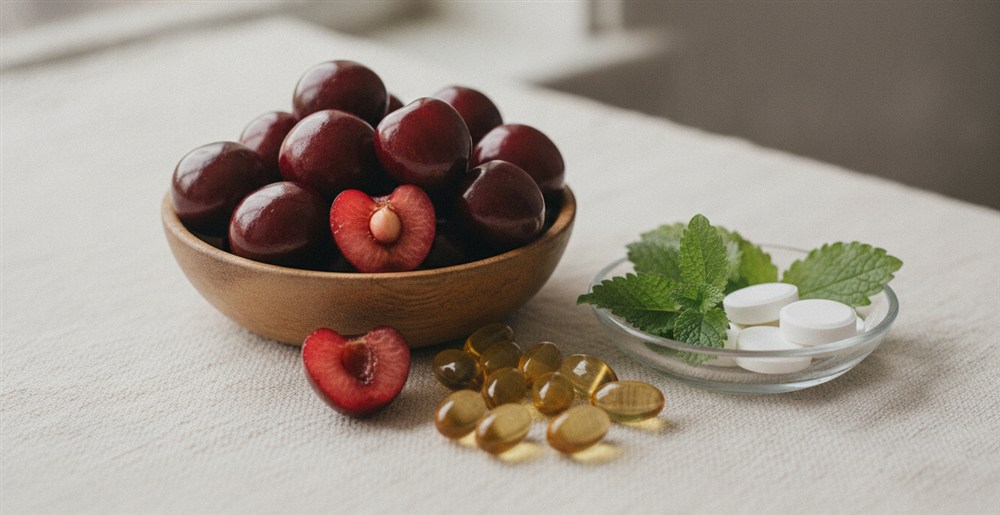
Performance Lab Sleep is a four-ingredient night-time formula built around magnesium (as bisglycinate, taurate and the brand's NutriGenesis complex), Montmorency tart cherry extract, L-tryptophan and lemon balm extract. Be clear about what it isn't from the start: it contains no added or isolated melatonin. Real melatonin is a prescription-only medicine in the UK, not a permitted food-supplement ingredient, so no UK-sold sleep supplement, including this one, can legally add it. The only melatonin-related ingredient here is the tart cherry extract, a genuine natural food source of trace melatonin, but Performance Lab doesn't publish an actual milligram figure for how much it delivers.
Performance Lab is part of the Performance Lab Group, the same company behind Opti-Nutra's Mind Lab Pro, which we've reviewed in detail separately, the NutriGenesis Multi vitamins covered here, and the eye-health formula Vision, reviewed here. Sleep follows the same house style as those: every ingredient disclosed at an exact milligram amount, no proprietary blend, sold direct rather than through Amazon.
This review goes through each of the four ingredients at the dose actually printed on the label, checks that dose against the independent research specific to each one, and is honest about where the formula undershoots the trials it's implicitly leaning on.
Key Takeaways (TL;DR)
- No added melatonin, anywhere in the formula. Melatonin is prescription-only in the UK. The tart cherry extract is a natural source of trace melatonin, but the brand doesn't disclose how much.
- Magnesium (100mg across three forms) sits well below the 250mg elemental dose used in the clinical trial most directly behind this ingredient's sleep claim, and the effect in that trial was itself modest.12
- Tart cherry (500mg, 50:1 extract) is backed by two small, genuine RCTs, but both tested a juice or juice-concentrate form, not a dry capsule extract, and both had very small sample sizes (15 and 20 people).34
- L-tryptophan (200mg) sits at a fifth of the ≥1g daily dose a 2022 meta-analysis found necessary to meaningfully shorten time spent awake after sleep onset.5
- Lemon balm (200mg) is half the 400mg/day dose used in the clinical trial behind this ingredient's calming/sleep claim, and that trial used a specific standardised phospholipid-carrier extract form Performance Lab doesn't state it's using.6
- No proprietary blend: all four ingredients are disclosed at an exact milligram amount, the same transparency standard as Performance Lab's other products.
- Non-habit-forming, caffeine-free, vegan, and free from common allergens — a reasonable profile for nightly long-term use.
What Is Performance Lab Sleep?
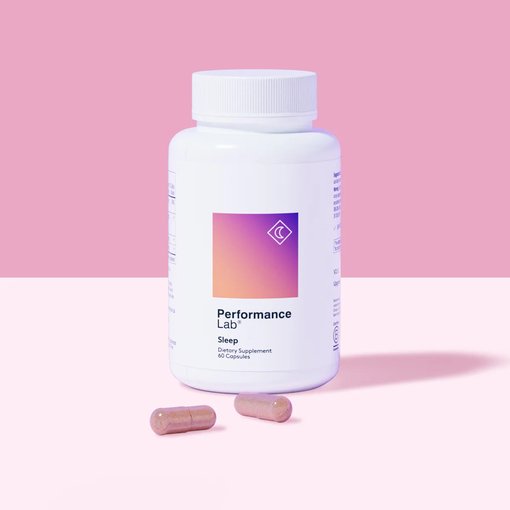
Each bottle holds 60 NutriCaps, a one-month supply at the stated serving of 2-4 capsules taken 30 minutes before bed. The capsule shell is Performance Lab's usual NutriCaps: pullulan fermented from tapioca, with rice concentrate (branded Nu-FLOW) as a flow agent, rather than gelatin or HPMC.
The formula leans on four mechanistically distinct ingredients rather than one headline active: a mineral cofactor (magnesium), an amino acid precursor (L-tryptophan), a traditional calming herb (lemon balm), and a natural, low-dose source of melatonin-adjacent compounds (tart cherry). Every ingredient is disclosed at an exact dose rather than folded into a proprietary blend total, the same transparency standard we look for across every product on this site.
The Full Ingredient Breakdown
Magnesium (100mg as Bisglycinate, Taurate and NutriGenesis®)
Magnesium is a genuine cofactor in the nervous-system processes behind sleep onset, and a 2025 randomised, double-blind, placebo-controlled trial in 155 adults with self-reported poor sleep found that magnesium bisglycinate supplementation produced a significantly greater reduction in Insomnia Severity Index scores than placebo after four weeks (p = 0.049). The effect size was described by the study's own authors as small (Cohen's d = 0.2), a modest rather than dramatic benefit, with the clearest improvements seen in people with lower baseline dietary magnesium intake.1 A separate systematic review of magnesium supplementation RCTs for sleep reaches a similarly cautious conclusion: a plausible, mechanistically-grounded benefit without large, consistent effect sizes across the available trials.2
The dose gap is the thing to know before buying on this ingredient alone. That 2025 trial used 250mg of elemental magnesium daily. Performance Lab Sleep provides 100mg, split across three different magnesium forms (bisglycinate, taurate, and the brand's own NutriGenesis complex), 40% of the trial dose. If magnesium is specifically what you're after, our dedicated Best Magnesium Glycinate UK guide compares single-ingredient products dosed closer to, or above, that 250mg figure.
Find a product: Best Magnesium Glycinate Supplements UKMontmorency Tart Cherry Extract (500mg, 50:1 Concentration)
Tart cherries, specifically the Montmorency variety, are a genuine food source of naturally occurring melatonin, along with anthocyanin antioxidants. Two small randomised, placebo-controlled, crossover trials have tested this specifically. A 2010 pilot study in 15 older adults with chronic insomnia found a tart cherry juice blend significantly reduced time spent awake after sleep onset compared with placebo, though sleep latency, total sleep time and sleep efficiency weren't significantly improved, and the paper's own authors describe the effect sizes as "moderate and in some cases negligible."3 A 2012 trial in 20 healthy adults found tart cherry juice concentrate significantly raised urinary melatonin levels and modestly improved several sleep measures via actigraphy.4
Two things are worth being precise about. First, both trials used a juice or juice-concentrate form, not a dry, concentrated capsule extract like the 50:1 ratio Performance Lab uses here, so the two aren't automatically interchangeable even though both ultimately come from the same fruit. Second, and more importantly, neither trial (nor Performance Lab's own labelling) states an actual melatonin dose in milligrams. "50:1 concentrated, equivalent to roughly 25g of whole cherries" tells you the concentration ratio, not the melatonin content, so there's no figure here to compare against a dosed melatonin product, because this isn't one.
L-Tryptophan (200mg)
L-tryptophan is the dietary amino acid the body converts, via several enzymatic steps, into serotonin and ultimately melatonin. It is not a direct sedative itself, and it has to compete with other large neutral amino acids for transport across the blood-brain barrier, which is part of why its effect on sleep is dose-dependent rather than immediate. A 2022 systematic review and meta-analysis of tryptophan supplementation trials found it could significantly shorten time spent awake after sleep onset, but specifically flagged dose as the deciding factor: doses of 1 gram or more per day were associated with meaningfully larger improvements than doses under 1 gram, and 1g+ was the threshold the review's authors identified as clinically useful.5
Performance Lab Sleep provides 200mg of L-tryptophan per serving, a fifth of that 1g threshold. Combined with magnesium, which does act as a cofactor in the conversion pathway from tryptophan toward serotonin and melatonin, the formula is clearly designed to nudge that pathway rather than deliver tryptophan at a dose shown to work well on its own.
Lemon Balm Extract (200mg)
Lemon balm (Melissa officinalis) has real supporting clinical research for emotional distress and poor sleep, not just traditional herbal use. A 2023 randomised, double-blind, placebo-controlled trial in 100 adults with moderate depression, anxiety, stress or poor sleep found that a standardised extract significantly improved depressive mood, anxiety, stress, and sleep-quality-linked wellbeing scores (all p < 0.001) after three weeks.6
Two caveats apply directly to this formula. The trial above dosed its extract at 400mg per day (200mg twice daily); Performance Lab Sleep's 200mg per serving is half that, matching the trial's dose only if someone takes the full 4-capsule upper serving rather than the 2-capsule minimum. The trial also used a specific standardised phospholipid-carrier delivery form (a branded extract called Relissa™), which Performance Lab's label doesn't state it's using, just "Lemon Balm Extract" without a standardisation marker. The ingredient has real evidence behind it; this particular formula's dose and form aren't confirmed to match the trial that evidence comes from.
Is It Actually a Melatonin Supplement?
No, and this is worth repeating plainly rather than leaving to a FAQ further down. Melatonin is classified by the MHRA as a medicine, not a food supplement, because of its ability to directly modify human physiology. The NHS states it's available on prescription only, and that supplements claiming to contain it aren't authorised for sale in the UK. Performance Lab Sleep's own ingredient panel reflects this correctly: there's no "melatonin" line item anywhere on it. The tart cherry extract is a legitimate, natural, low-dose nod toward the same biological pathway, not a substitute dosed source of the hormone itself. If you've landed here specifically searching for a dosed UK melatonin alternative, our legal melatonin alternatives guide covers this product alongside five others built around different mechanisms.
How It Compares to Single-Ingredient Options
Performance Lab Sleep's whole premise is combining four ingredients at modest, individually-undershot doses rather than one ingredient at a fully clinically-matched dose. That's a real, honest trade-off, not a flaw unique to this product; most multi-ingredient "sleep stack" formulas work this way. If you'd rather dose one well-evidenced ingredient properly, each of the following compares Performance Lab Sleep against dedicated single-ingredient products in that exact category, including where it currently ranks on each page:
- Best Magnesium Glycinate UK — Performance Lab Sleep's magnesium bisglycinate component genuinely overlaps here, though at a lower elemental dose than the single-ingredient picks.
- Best Legal Melatonin Alternative UK — ranked here on the strength of being a non-prescription, no-isolated-melatonin option, not because it delivers a dosed melatonin substitute.
- Best Valerian Root Supplement UK — included as a non-valerian alternative; it contains no valerian at all.
- Best 5-HTP Supplement UK — included as an L-tryptophan-based alternative; tryptophan is the precursor to 5-HTP, not the same compound.
Manufacturing and Quality
Performance Lab Sleep is manufactured to GMP standards and the brand states it's third-party tested for purity and potency, though as with every brand's self-reported quality claims, we haven't independently audited batch-level certificates of analysis ourselves. It's vegan, non-GMO, free from soy, egg, fish, shellfish, dairy, peanut, tree nuts, wheat, gluten, caffeine and artificial additives, and non-habit-forming. On Performance Lab's own site (Sleep isn't sold on Amazon), it currently holds a 4.2-star rating from 212 reviews, a smaller review sample than the thousands behind some of the single-ingredient magnesium and 5-HTP products we cover elsewhere on this site.
Where It Falls Short
The honest gap here is consistent across all four ingredients: dose. Magnesium is dosed at 40% of the trial dose behind its own cited benefit. Tart cherry's melatonin content is entirely undisclosed, so there's nothing to compare against a dosed product. L-tryptophan sits at a fifth of the dose a 2022 meta-analysis identified as the useful threshold. Lemon balm is dosed at half the amount used in its own supporting trial, in an unconfirmed extract form. None of that means the ingredient choices are wrong, every one of the four has genuine research behind its inclusion, but a reader expecting any single ingredient here to perform at its own clinically-studied strength will likely be disappointed.
Who It's For
Performance Lab Sleep suits someone who wants a single, well-labelled, non-habit-forming nightly formula covering several different sleep-support mechanisms at once, and who specifically doesn't want an isolated, dosed melatonin product (which, in the UK, would require a prescription anyway). It's a weaker fit for someone who wants any one of these four ingredients at the dose actually used in the clinical trials behind it; a dedicated magnesium, tryptophan, lemon balm, or tart-cherry product will get you closer to those studied amounts in a single ingredient.
Price and Value
Performance Lab Sleep sits at the premium end of the sleep-supplement category, whether bought as a one-off month's supply or on a rolling subscription, in line with how Performance Lab prices its other products. The comparison that matters is against buying magnesium, tryptophan, lemon balm and tart cherry as four separate single-ingredient products, each at its own fully-dosed strength, which would likely cost less in total and let you dose each ingredient properly, at the cost of tracking four labels instead of one.
Verdict
Performance Lab Sleep is an honestly-labelled, non-habit-forming combination formula built around four ingredients that each have genuine sleep-related research behind their inclusion. What it isn't is a dosed melatonin product, and it doesn't claim to be once you read past the marketing copy to the actual ingredient panel. The real limitation is dose: magnesium at 40% of its trial dose, tart cherry with an undisclosed melatonin figure, L-tryptophan at a fifth of the dose a recent meta-analysis flagged as the useful threshold, and lemon balm at half its trial dose in an unconfirmed extract form.
For someone who wants one simple, legal, stimulant-free nightly formula and understands it's working across several modest mechanisms rather than one strong one, it's a defensible choice. For someone chasing any single ingredient's full clinically-studied effect, a dedicated single-ingredient product dosed at or above the trial amounts above will serve you better.
FAQ
Does Performance Lab Sleep contain melatonin?
No. It contains no added or isolated melatonin; real melatonin is a prescription-only medicine in the UK and can't legally be sold as an over-the-counter supplement. Its tart cherry extract is a natural source of trace melatonin, but Performance Lab doesn't disclose an actual milligram figure for it.
Does Performance Lab Sleep actually work?
Each of its four ingredients has some genuine supporting research for sleep or calm, but each is dosed below the amount used in the specific trial behind that research: magnesium at 40% of its trial dose,12 tart cherry in an unconfirmed form relative to the juice-based trials,34 L-tryptophan at a fifth of the dose flagged as clinically useful,5 and lemon balm at half its trial dose in an unconfirmed extract form.6 That makes it a plausible, multi-mechanism formula rather than a product proven to replicate any one of those specific trial results.
Is Performance Lab Sleep safe?
The individual ingredients all have established safety profiles at these doses, and the formula is caffeine-free, non-habit-forming and third-party tested. As with any sleep aid, check with a GP or pharmacist first if you're pregnant, breastfeeding, or taking other medication, particularly anything affecting serotonin levels, given the L-tryptophan content.
How does it compare to a dedicated magnesium, melatonin-alternative, valerian or 5-HTP product?
See the How It Compares section above for links to our dedicated guides on each. In short: it genuinely overlaps with magnesium glycinate products (at a lower dose), is a legitimate non-prescription melatonin alternative (without delivering a dosed melatonin substitute), and is included on the valerian and 5-HTP guides as a different-mechanism alternative rather than a like-for-like match.
How long before I'd notice a difference?
None of the trials behind these four ingredients showed an effect within a single night. The magnesium trial measured change at four weeks;1 the lemon balm trial measured change at three weeks.6 Give it a few consistent weeks before judging results, same as with most non-sedative sleep-support supplements.
-
Magnesium Bisglycinate Supplementation in Healthy Adults Reporting Poor Sleep: A Randomized, Placebo-Controlled Trial ↩︎ ↩︎ ↩︎ ↩︎
-
Magnesium Supplementation for Sleep in Adults: A Systematic Review of Randomized Controlled Trials ↩︎ ↩︎ ↩︎
-
Effects of a tart cherry juice beverage on the sleep of older adults with insomnia: a pilot study ↩︎ ↩︎ ↩︎
-
Effect of tart cherry juice (Prunus cerasus) on melatonin levels and enhanced sleep quality ↩︎ ↩︎ ↩︎
-
The impact of tryptophan supplementation on sleep quality: a systematic review, meta-analysis, and meta-regression ↩︎ ↩︎ ↩︎
-
The possible "calming effect" of subchronic supplementation of a standardised phospholipid carrier-based Melissa officinalis L. extract in healthy adults with emotional distress and poor sleep conditions ↩︎ ↩︎ ↩︎ ↩︎