

Best Spirulina and Chlorella Supplement UK: Purity Over Hype

About the author...
Will founded Supermushrooms after digging into the research behind mushroom and nootropic supplements. Every pick is checked against clinical dosing, extract standardisation, and real buyer reviews, and each star rating starts from a product's real Amazon score before being adjusted for formulation quality. Read more about how ratings are calculated.
Table of contents
- Key Takeaways (TL;DR)
- How We Choose
- Quick Comparison
- Vegavero Organic Spirulina and Chlorella Capsules High Strength
- Sevenhills Wholefoods Organic Chlorella & Spirulina Tablets 500mg
- Sevenhills Wholefoods Organic Spirulina Powder 500g
- VIMERGY Spirulina Powder, Easy to Digest
- TheHealthyTree Company Organic Chlorella Tablets, 300 x 500mg
- Solgar Chlorella 520mg Vegetable Capsules
- Safety and Side Effects
-
Best Spirulina and Chlorella Supplement FAQ
- What's the actual difference between spirulina and chlorella?
- Is spirulina or chlorella a reliable source of vitamin B12?
- Does spirulina actually help with cholesterol or blood pressure?
- What about chlorella's effect on blood pressure and cholesterol?
- Can spirulina help with allergies or hay fever?
- What dose of spirulina or chlorella should I take?
- Is it safe to take spirulina and chlorella alongside mushroom supplements?
- Are spirulina and chlorella generally well tolerated?
- The Best Spirulina and Chlorella Supplement for You
The best spirulina and chlorella supplement in the UK is currently Vegavero Organic Spirulina and Chlorella Capsules, praised for naming the specific contamination checks it runs, heavy metals, microbial contamination and pesticides, rather than making a vague "pure" claim. See the comparison below for how five other well-reviewed alternatives stack up depending on your preferred format and budget.
Some links in this review are affiliate links. If you buy through one, we may earn a small commission at no extra cost to you. Full details in our Advertiser Disclosure.
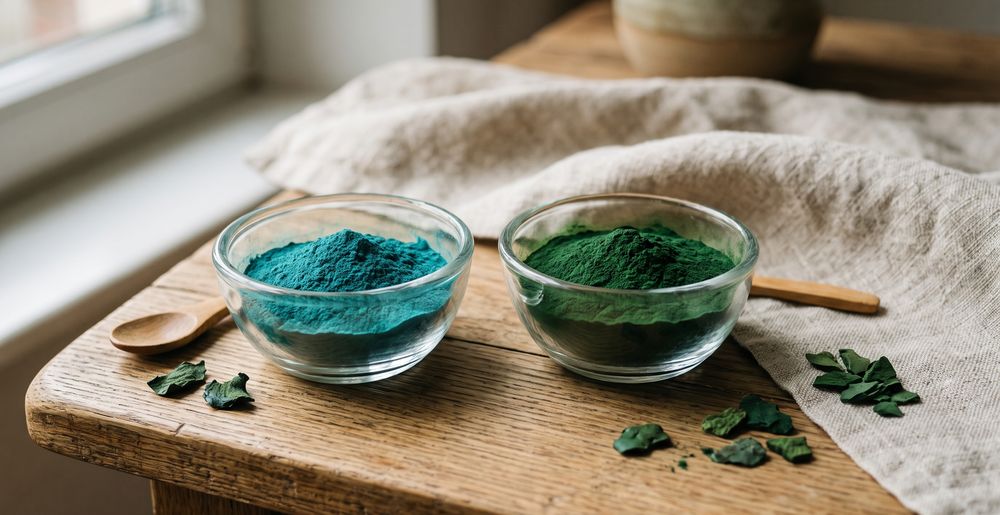
Spirulina and chlorella are both single-celled algae, sold under a shared "superfood greens" banner. But they're biologically quite different organisms. Spirulina (Arthrospira platensis) is technically a cyanobacterium, a blue-green algae closely related to bacteria. Chlorella, by contrast, is a true green algae with a distinct cell structure.1 Both are genuinely nutrient-dense. They offer complete protein, B vitamins, iron, and antioxidant pigments like phycocyanin and chlorophyll, and both have been used as food and feed sources for decades. UK shoppers searching for either ingredient frequently land on products that combine the two in one capsule, tablet or powder. That's why this guide treats "spirulina and chlorella" as a single buying decision rather than two separate ones.
The detail that actually separates a good product from a risky one here isn't potency. It's where the algae was grown, and how carefully it was screened afterwards. Both organisms are cultivated in open or semi-open water. That means they can take up whatever is in that water, including heavy metals from polluted sites. Spirulina carries an extra risk: microcystins, toxins produced by certain cyanobacteria that can co-occur in poorly controlled growing conditions.2 3 A brand that names the actual contaminants it tests for is giving you something you can act on. A brand that only says "pure" or "premium" is not.
Key Takeaways (TL;DR)
- Contamination testing matters more than dose size: named heavy-metal and microcystin screening is the real quality signal for algae supplements, not a bigger gram count.
- Chlorella needs a "broken" or "cracked" cell wall to be digestible, since its natural cellulose wall resists human digestion; spirulina doesn't have this issue and is digestible as-is.4
- Spirulina's B12 is mostly inactive: published analysis found it's predominantly pseudovitamin B12, which doesn't count toward human vitamin B12 status.5 Chlorella's B12 looks more genuinely active, with smaller studies finding real methylcobalamin content.6 7
- Format is a real choice: powder is the most flexible and economical for higher doses, tablets and capsules are more convenient but cap your daily dose lower.
- Evidence for cholesterol and blood pressure benefits is real but modest, mostly from small trials using doses well above what a typical capsule serving provides.8 9
- Organic certification and a named lab are better signals than marketing words like "detox" or "superfood" on their own.
- Most people take 4 to 12 weeks of consistent daily use before judging whether either ingredient is doing anything noticeable.
How We Choose
For spirulina and chlorella specifically, we prioritised whether each product discloses what it actually screens for: heavy metals, microcystins, mycotoxins. A generic "lab tested" or "premium" claim wasn't enough on its own. We then checked whether chlorella-containing products confirm a broken or cracked cell wall, and how the daily serving compares with the gram-level doses used in the human research discussed below. Organic certification and overall manufacturing transparency came next, followed by how each product's value compares against the other five here.
Quick Comparison
Each product's overall rating starts from its real Amazon UK customer rating, then gets adjusted (up to plus or minus 0.5) for dose versus clinical research, extract standardisation, manufacturing quality, and value. Click a product name to jump straight to its full review below.
| Product | Best For | Type | Serving | Purity Testing |
|---|---|---|---|---|
|
Vegavero Organic Spirulina and Chlorella Capsules High Strength 4.8 |
Buyers who want named heavy-metal, microbial and pesticide testing | Capsules | 3 capsules daily (2,000mg combined spirulina and chlorella) | Organic certified, third-party tested for heavy metals, microbial contamination and pesticides |
|
Sevenhills Wholefoods Organic Chlorella & Spirulina Tablets 500mg 4.8 |
Flexible-dose combo tablets with broken-cell-wall chlorella | Tablets | Up to 6 tablets daily (3,000mg), built up gradually | Soil Association organic certified, tested for heavy metals and mycotoxins |
|
Sevenhills Wholefoods Organic Spirulina Powder 500g 4.8 |
Best value bulk spirulina powder with the largest UK review base | Powder | Up to 5g daily stirred into juice or a smoothie | Soil Association organic certified, tested for heavy metals and mycotoxins |
|
VIMERGY Spirulina Powder, Easy to Digest 4.8 |
Highest-rated single-ingredient premium spirulina powder | Powder | Half a teaspoon in water or a smoothie, one to two times daily | Single-ingredient pure powder, described by the brand as triple third-party verified |
|
TheHealthyTree Company Organic Chlorella Tablets, 300 x 500mg 4.8 |
Best chlorella-only tablets with named UK lab testing | Tablets | 4 to 8 tablets daily (2,000-4,000mg) | Broken cell wall, Soil Association organic certified, tested at the brand's own UK laboratory |
|
Solgar Chlorella 520mg Vegetable Capsules 4.3 |
Best established legacy brand for chlorella-only capsules | Capsules | 1 to 3 capsules daily (520-1,560mg) | Broken cell-wall chlorella, no separately disclosed heavy-metal testing claim on the listing |
Vegavero Organic Spirulina and Chlorella Capsules High Strength
Best Overall — Named Contamination Testing
based on 1493 Amazon UK reviews (4.5★), adjusted for formulation quality
What We Love About the Disclosed Testing Panel
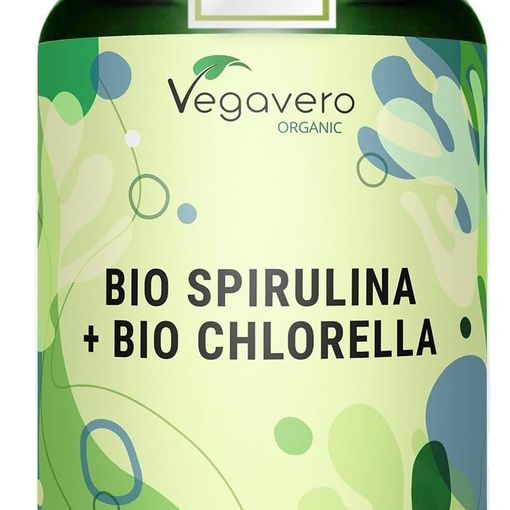
Most spirulina and chlorella listings on Amazon lean on words like "pure" or "premium" without saying what was actually checked. Vegavero states plainly that each batch is third-party tested for microbial contamination, pesticide residues and heavy metals. That's a materially more useful claim, because it tells you which of the real risk categories for this ingredient were screened rather than leaving you to assume. The formula combines organically grown spirulina and chlorella powder in a single capsule with no added fillers. The chlorella component uses the broken-cell-wall form needed for proper digestion.
Combined Formula: All The Details
Each daily serving of three vegan capsules delivers 2,000mg of combined organic spirulina and chlorella powder. The 240-capsule bottle runs to roughly 80 days of use. That's a meaningful dose, though still below the upper end of the gram ranges used in some of the larger cholesterol-focused trials discussed later in this guide. Treat it as a solid daily serving rather than a guaranteed clinical-strength one. With 4.5 stars from nearly 1,500 UK reviews, it has a genuinely established track record, not a newer, thinly reviewed listing.
Sevenhills Wholefoods Organic Chlorella & Spirulina Tablets 500mg
Best for Flexible, Build-Up Dosing
based on 473 Amazon UK reviews (4.5★), adjusted for formulation quality
Why the Build-Up Instructions Stand Out
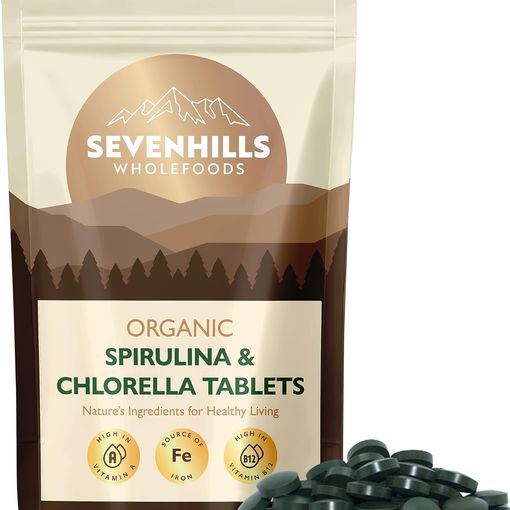
Sevenhills tells you to work up to a full dose of six tablets a day rather than starting there immediately. That's a small detail, but it genuinely matters with a protein- and nutrient-dense food like this. Jumping straight to a high dose is the most common reason people report mild stomach upset when they first try algae supplements. The chlorella portion uses the broken-cell-wall form, and both algae are grown in controlled freshwater conditions rather than open, uncontrolled waterways.
Soil Association-Certified Tablets: All The Details
The 360-tablet pouch (180g) provides up to 3,000mg daily across six 500mg tablets. It carries Soil Association organic certification under code GB-ORG-05, with disclosed testing for heavy metals and mycotoxins. It's resealable and shipped in recyclable packaging. Review volume is solid at 473 ratings and 4.5 stars, a reasonably established track record even though it trails the brand's own spirulina-only powder (below) in total review count.
Sevenhills Wholefoods Organic Spirulina Powder 500g
Best Value Bulk Powder
based on 6336 Amazon UK reviews (4.5★), adjusted for formulation quality
An Easy Way to Reach Research-Level Doses
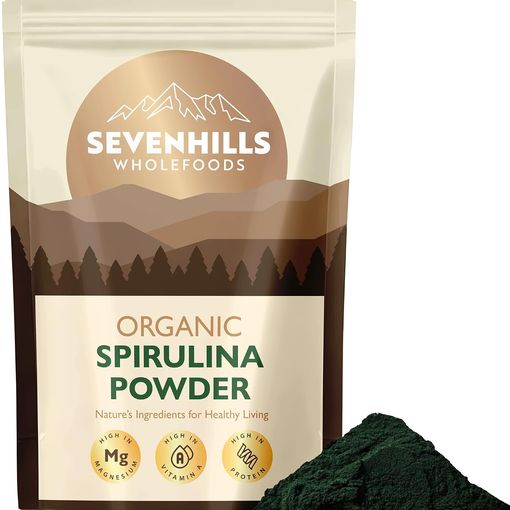
Powder is the only format in this comparison that lets you comfortably reach the higher gram-level doses used in some of the cholesterol and lipid trials, without swallowing a fistful of tablets. A heaped teaspoon stirs into a smoothie, juice or even bread dough. The flavour is milder than some competing brands, according to the bulk of the nearly 6,500 UK reviews behind this listing, by far the largest review base of any product in this guide.
Bulk Organic Powder: All The Details
The label recommends building up to around 5g daily. The powder itself carries Soil Association organic certification, with disclosed testing for heavy metals and mycotoxins, the same standard Sevenhills applies across its range. It's sold in 200g, 500g and 1kg sizes, so the per-gram cost drops noticeably the larger you buy. That makes it one of the more accessible ways to take a meaningful daily spirulina dose. The trade-off against the combo tablets above: this is spirulina only, with no chlorella and no separately disclosed phycocyanin percentage.
VIMERGY Spirulina Powder, Easy to Digest
Best Premium Single-Ingredient Powder
based on 2132 Amazon UK reviews (4.7★), adjusted for formulation quality
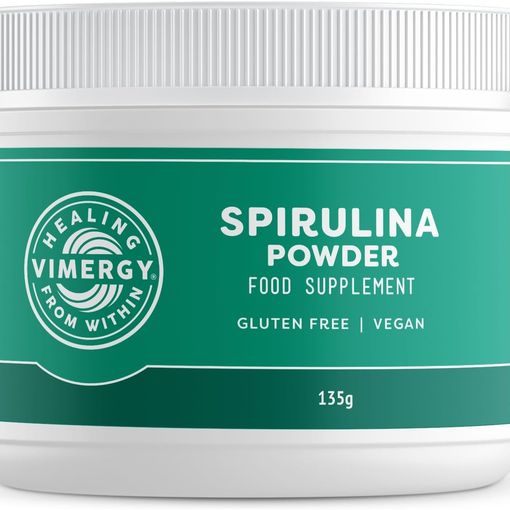
The Highest Rating in This Comparison
Vimergy's listing correctly points out that spirulina, unlike chlorella, doesn't have a tough cellulose cell wall. It's digestible in its natural state without any extra processing. That's a genuine, verifiable biological difference between the two algae, not just marketing language. The brand describes its formula as single-ingredient and free from anti-caking agents, fillers, binders, sugar, colours or flavours. It carries the highest star rating of any product here at 4.7, from over 2,100 UK reviews.
A Smaller, Pricier Jar: All The Details
Directions call for half a teaspoon in water or a smoothie, once or twice daily. In practice, that works out lower and less precisely measured than the capsule and tablet doses elsewhere in this guide. The 135g tub is noticeably smaller than the Sevenhills powder above, putting it toward the premium end of the market on a per-gram basis. Vimergy states the product is gluten-free and describes it as "triple third-party verified." The listing doesn't spell out exactly which three tests that covers, so it's a less specific claim than the explicitly named heavy-metal and pesticide panels on the two combo products above.
TheHealthyTree Company Organic Chlorella Tablets, 300 x 500mg
Best Chlorella-Only Tablets
based on 508 Amazon UK reviews (4.5★), adjusted for formulation quality
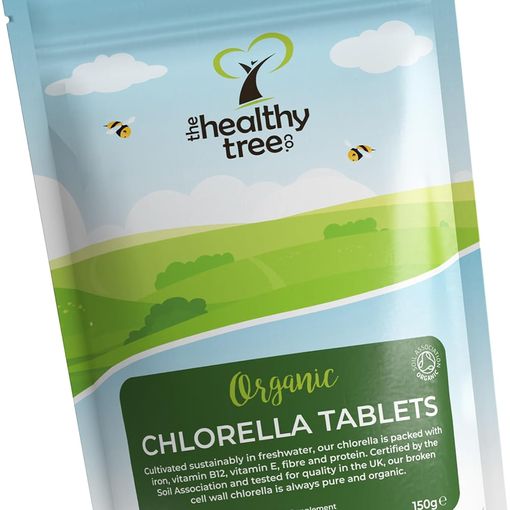
A UK Lab Report Behind the Listing
If you specifically want chlorella without spirulina, this is the clearest-labelled option in the comparison. The listing states the tablets are fully tested at the brand's own UK laboratory, names the broken-cell-wall processing directly, and highlights the B12 and vitamin E content that chlorella is naturally rich in. It's grown on what the brand describes as a small, remote, forest-surrounded site rather than an open commercial pond. That's a meaningful detail, given the cultivation-water contamination risk discussed throughout this guide.
Organic, UK-Tested Tablets: All The Details
The recommended serving is 4 to 8 tablets daily, giving a 2,000-4,000mg range. That comfortably overlaps with the 5g dose used in the chlorella immune-function trial discussed in the FAQ below. Soil Association organic certification backs up the growing and processing claims. At 508 reviews and 4.5 stars, it has a smaller but still credible UK review base. The 300-tablet pack gives a reasonable month-plus supply at the higher end of the dosing range.
Solgar Chlorella 520mg Vegetable Capsules
Best Trusted Legacy Brand
based on 263 Amazon UK reviews (4.3★), adjusted for formulation quality
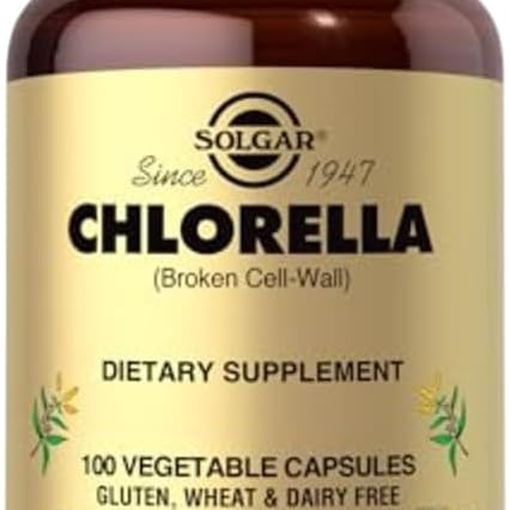
A Familiar Pharmacy-Shelf Name
Solgar has been making supplements since 1947. That long track record counts for something in a category where many competing brands are newer and harder to vet independently. Its chlorella capsules explicitly state they use the broken cell-wall form, are Kosher certified, and are free from gluten, wheat and dairy. The capsules are noticeably smaller in dose than the tablet-based chlorella products above. That suits someone easing into the ingredient rather than someone chasing a specific clinical dose.
A Lower, Easier Dose: All The Details
One to three capsules daily provides 520-1,560mg, the smallest chlorella range in this guide and well below the 5g doses used in some of the human research discussed later. The listing doesn't publish a specific third-party heavy-metal testing claim the way the other five products here do. The purity assurance here rests more on Solgar's broader manufacturing reputation than on a named lab result. At 263 reviews and 4.3 stars, it has a smaller but stable review base for a long-established brand.
Safety and Side Effects
Spirulina and chlorella both have a reasonable safety record in healthy adults at typical supplement doses. The most commonly reported issues are mild digestive upset, nausea or green-tinted stools, especially when starting at a high dose rather than building up gradually. The genuine safety concern with this category isn't the algae itself. It's what the algae may have picked up during cultivation. Both are grown in open or semi-open water, so they can accumulate heavy metals from contaminated sites. Spirulina carries an extra, specific risk: microcystin contamination when it's harvested from, or grown alongside, toxin-producing cyanobacteria.2 A 2000 US analysis of blue-green algae supplements found detectable microcystins in the large majority of tested products, with a substantial share above the researchers' own risk threshold.2 A more recent 2020 European survey of ten microalgae supplements, covering both spirulina and chlorella-type products, detected microcystins or anatoxin-a in three of them. It also flagged heavy metals, particularly lead, as an additional concern. Notably, the paper found organic certification didn't reliably predict which products were affected.3 None of this is a reason to avoid either ingredient outright. But it is the real argument for choosing a product that names the specific contamination categories it screens for, rather than one that only claims to be "pure" or "premium."
Spirulina also contains phenylalanine and shouldn't be used by people with phenylketonuria. Because it can stimulate immune activity, it's generally advised against for people with autoimmune conditions, or those on immunosuppressant medication, without first checking with a doctor. Both algae are rich in vitamin K and iodine. Speak to a GP first if you take warfarin or another vitamin K-sensitive anticoagulant, or if you have a thyroid condition. Neither ingredient is well studied in pregnancy or breastfeeding, so avoid supplementing with either without medical advice in those circumstances.
Best Spirulina and Chlorella Supplement FAQ
What's the actual difference between spirulina and chlorella?
They're different organisms entirely. Spirulina is a cyanobacterium (blue-green algae) with a thin, peptidoglycan-based cell wall and no cellulose. That makes it naturally digestible without processing.4 Chlorella is a true green algae with a tough cellulose cell wall that resists human digestion unless it's mechanically broken. Labels usually describe this as "broken cell wall" or "cracked cell wall."6 Nutritionally the two overlap heavily: both are dense in protein, B vitamins, iron and antioxidant pigments, which is why so many UK products simply combine them.
Is spirulina or chlorella a reliable source of vitamin B12?
This genuinely differs between the two, and it's one of the most commonly misunderstood points about algae supplements. Spirulina's vitamin B12 content is predominantly pseudovitamin B12, an inactive analogue that doesn't function as true B12 in the human body. One direct analysis found it made up around 83% of the measurable B12 in commercial spirulina tablets.5 Chlorella looks genuinely different. Researchers have isolated and quantified real methylcobalamin, the active form of B12, directly from Chlorella vulgaris biomass.7 A small open-label trial also found that daily Chlorella pyrenoidosa supplementation lowered a blood marker of B12 deficiency in vegans and vegetarians.6 If you're relying on a supplement specifically for B12, don't assume a spirulina-only product covers you. Chlorella has better, if still limited, evidence behind it. See our Best Vitamin B12 Supplement UK guide if B12 status is your main concern.
Does spirulina actually help with cholesterol or blood pressure?
There's real evidence here, though it comes with caveats. A 2016 systematic review and meta-analysis of seven randomised trials found spirulina supplementation significantly reduced total cholesterol, LDL cholesterol and triglycerides, while raising HDL cholesterol. Duration of use mattered more than the specific dose used.8 Trials like this typically used doses from roughly 1g up to around 8-19g daily. That's considerably more than the 2,000mg many capsule-based combo products on this page provide in a single serving, so a powder format may suit you better if cholesterol management is your main goal.
What about chlorella's effect on blood pressure and cholesterol?
The evidence is more mixed than spirulina's. A 2012 trial found 8 weeks of 5g daily chlorella supplementation increased natural killer cell activity and certain inflammatory markers in healthy adults, pointing to a genuine immune-modulating effect.10 A more recent 2025 systematic review covering 12 chlorella trials on cardiovascular risk factors found an overall neutral effect on blood pressure and blood lipids. That contrasts with an earlier, smaller analysis that had reported benefit. Treat chlorella's cardiovascular claims as unproven rather than established, while its immune-related research looks more consistent.
Can spirulina help with allergies or hay fever?
There's a reasonably solid small trial behind this specific claim. A double-blind, placebo-controlled study found that spirulina supplementation significantly improved allergic rhinitis symptoms, including nasal discharge, sneezing, congestion and itching, compared with placebo.9 It's a genuinely useful early finding. But it's based on one trial rather than a large, repeated evidence base, so treat it as promising rather than proven.
What dose of spirulina or chlorella should I take?
Human research varies widely: from around 1g up to 19g daily for spirulina depending on the outcome studied, and around 5g daily for the chlorella immune trial discussed above.8 10 Powder formats make it realistic to reach the middle of these ranges. Capsule and tablet products in this comparison mostly cap out lower, in the 1.5g to 4g range. That's still a meaningful daily intake, but worth knowing if you're specifically trying to match a published trial dose.
Is it safe to take spirulina and chlorella alongside mushroom supplements?
Yes, there's no known interaction, and the two categories are commonly combined in general "greens and superfoods" stacks aimed at everyday nutrition and immune support. If general immune and gut health is your main goal, our Best Probiotic Supplement UK guide covers a complementary angle, supporting gut bacteria directly rather than supplying algae-based nutrients.
Are spirulina and chlorella generally well tolerated?
Yes, for most healthy adults, though see Safety and Side Effects above for the full picture, including the genuine contamination risk that makes named testing the most important thing to check before buying, and who should avoid these ingredients altogether.
The Best Spirulina and Chlorella Supplement for You
If you want the clearest contamination-testing disclosure in a single convenient capsule, Vegavero's combined formula is the strongest all-round pick here. Sevenhills' two products are worth a look whether you want tablets or bulk powder, both carry the same Soil Association certification and named heavy-metal testing, just in different formats and price points. Vimergy is the one to choose if a premium, highest-rated, single-ingredient spirulina powder matters more to you than finding the lowest cost per gram. For chlorella specifically, TheHealthyTree Company's UK-tested tablets and Solgar's long-established capsules sit at opposite ends of the dose range, so pick based on whether you want to reach a higher daily intake or ease in gently. Whichever you choose, read the contamination-testing claim before you read anything else on the label, that's the detail that actually protects you with this ingredient.
-
Chemical Composition, Bioactivities, and Applications of Spirulina (Limnospira platensis) in Food, Feed, and Medicine ↩︎
-
Assessing potential health risks from microcystin toxins in blue-green algae dietary supplements ↩︎ ↩︎ ↩︎
-
Are Cyanotoxins the Only Toxic Compound Potentially Present in Microalgae Supplements? Results from a Study of Ecological and Non-Ecological Products ↩︎ ↩︎
-
Chemical Composition, Bioactivities, and Applications of Spirulina (Limnospira platensis) in Food, Feed, and Medicine ↩︎ ↩︎
-
Pseudovitamin B(12) is the predominant cobamide of an algal health food, spirulina tablets ↩︎ ↩︎
-
Nutritional Supplementation with Chlorella pyrenoidosa Lowers Serum Methylmalonic Acid in Vegans and Vegetarians with a Suspected Vitamin B12 Deficiency ↩︎ ↩︎ ↩︎
-
Methylcobalamin--a form of vitamin B12 identified and characterised in Chlorella vulgaris ↩︎ ↩︎
-
A systematic review and meta-analysis of the impact of Spirulina supplementation on plasma lipid concentrations ↩︎ ↩︎ ↩︎
-
Beneficial immunostimulatory effect of short-term Chlorella supplementation: enhancement of natural killer cell activity and early inflammatory response ↩︎ ↩︎