


Best Calcium Supplement UK for Bone Health & Absorption

About the author...
Will founded Supermushrooms after digging into the research behind mushroom and nootropic supplements. Every pick is checked against clinical dosing, extract standardisation, and real buyer reviews, and each star rating starts from a product's real Amazon score before being adjusted for formulation quality. Read more about how ratings are calculated.
Table of contents
- Key Takeaways (TL;DR)
- How We Choose
- Quick Comparison
- Pure Nutrition Ultra Calcium 1000mg with Vit D3 + K
- Vitabiotics Osteocare Original
- Solgar Calcium Citrate with Vitamin D3
- Zenement Calcium Citrate with Vitamin D3 and K2
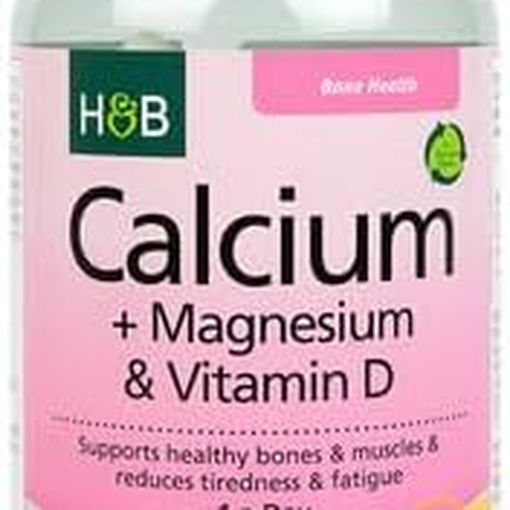
- Holland & Barrett Calcium + Magnesium & Vitamin D
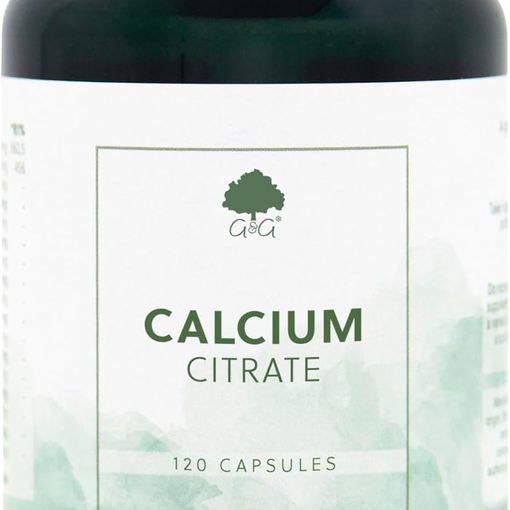
- G&G Vitamins Calcium Citrate Capsules
- Safety and Side Effects
-
Best Calcium Supplement FAQ
- What does calcium actually do in the body?
- Calcium carbonate vs calcium citrate: which absorbs better?
- Does calcium supplementation actually improve bone density or prevent fractures?
- How much calcium do I need, and is there a safe upper limit?
- Can I take calcium alongside iron or zinc supplements?
- Is there a link between calcium supplements and heart problems?
- Should I take calcium alongside vitamin D3 and vitamin K2?
- How long does it take to notice benefits from a calcium supplement?
- The Best Calcium Supplement for You
The best calcium supplement in the UK is currently Pure Nutrition Ultra Calcium 1000mg with Vit D3 + K, praised for packing a full research-level dose of well-absorbed calcium citrate malate, plus D3 and K, into a single daily tablet. See the comparison below for how five other well-reviewed alternatives stack up depending on your priorities.
Calcium is the most abundant mineral in the human body, and around 99% of it lives in bone and teeth, where it forms the structural mineral matrix that keeps a skeleton rigid. The remaining 1% circulates in blood and soft tissue, where it's involved in muscle contraction, nerve signalling and normal blood clotting. Bone isn't a static store either. It's constantly being broken down and rebuilt throughout life, and when dietary calcium falls short, the body pulls what it needs from the skeleton to keep blood calcium stable, gradually weakening bone density if the shortfall becomes chronic. That's the basic mechanism behind osteoporosis risk, and it's why calcium intake matters most in childhood, adolescence and again from midlife onward, particularly for postmenopausal women.
Most people in the UK can get close to what they need through diet: dairy products, fortified plant milks, tinned fish eaten with bones, leafy greens and tofu are all decent sources. A supplement makes sense for anyone with a genuinely low-dairy diet, an increased fracture risk, or a doctor's recommendation, rather than as a routine addition for someone already eating well. When you do buy one, the two things that actually separate a good product from a mediocre one are the calcium salt it uses (carbonate absorbs differently to citrate, and the difference is genuinely relevant to a lot of buyers) and whether the label is honest about how much elemental calcium you're actually getting, since "1000mg" on a bottle can mean very different things depending on the compound.
Key Takeaways (TL;DR)
- Choose calcium citrate if you take antacids or acid-reducing medication, or prefer to take your supplement without food; it doesn't need stomach acid to dissolve.
- Calcium carbonate delivers more elemental calcium per tablet and tends to be cheaper, but absorbs best when taken with a meal.
- Split large doses where you can. The gut absorbs calcium less efficiently above roughly 500mg in one sitting, so two smaller doses beat one big one.
- Separate calcium from iron and zinc supplements by at least two hours; calcium competes with both for absorption in the gut.
- Match your combined diet-plus-supplement total to the NHS's 700mg a day adult guideline, and avoid exceeding 1,500mg a day from supplements alone.
- Pair calcium with vitamin D3 (which raises how much calcium the gut absorbs) and vitamin K2 (which helps direct it into bone rather than arteries) for the fuller picture.
- Bone density changes build over months to years, not weeks. Calcium is a slow, structural nutrient rather than one with a quick subjective effect.
How We Choose
We scored each product on how its elemental calcium dose compares with the NHS's 700mg adult reference intake and the 500-1200mg ranges commonly used in bone-health trials, the calcium salt used and how well documented its absorption profile is, manufacturing standards (UK production, third-party testing, clean labelling), and value relative to the other five products here. Because "elemental calcium" is where so many listings get vague or inflate their headline number, we weighted honest, verifiable dosing more heavily than a big number on the front of the pack.
Quick Comparison
Each product's overall rating starts from its real Amazon UK customer rating, then gets adjusted (up to ±0.5) for dose versus clinical research, calcium form, manufacturing quality, and value. Click a product name to jump straight to its full review below.
| Product | Best For | Type | Serving | Form |
|---|---|---|---|---|
|
Pure Nutrition Ultra Calcium 1000mg with Vit D3 + K 5.0 |
Complete high-dose citrate malate formula in one tablet | Tablets | 1 tablet (1000mg elemental calcium as citrate malate, plus D3, K, magnesium and zinc) | Calcium citrate malate, 1000mg elemental |
|
Vitabiotics Osteocare Original 4.9 |
UK's most trusted, highest-rated calcium brand | Tablets | 2 tablets (800mg calcium as carbonate, plus magnesium, zinc and vitamin D) | Calcium carbonate with magnesium and zinc |
|
Solgar Calcium Citrate with Vitamin D3 4.7 |
Premium pure citrate for stomach-acid-independent absorption | Tablets | 4 tablets (1000mg elemental calcium as citrate, plus 600IU vitamin D3) | Pure calcium citrate, 1000mg elemental |
|
Zenement Calcium Citrate with Vitamin D3 and K2 4.5 |
All-in-one calcium, D3 and K2 bone stack | Capsules | 2 capsules (306mg elemental calcium, 20mcg/800IU D3, 50mcg K2 as MK-7) | Calcium citrate with D3 and K2 (MK-7) |
|
Holland & Barrett Calcium + Magnesium & Vitamin D 4.6 |
Accessible high-street top-up dose | Tablets | 1 tablet (500mg calcium as carbonate, 250mg magnesium, 5mcg/200IU vitamin D) | Calcium carbonate with magnesium |
|
G&G Vitamins Calcium Citrate Capsules 4.5 |
Clean UK-made citrate with no added fillers | Capsules | 2 capsules (200mg elemental calcium as citrate) | Pure calcium citrate, no fillers |
Pure Nutrition Ultra Calcium 1000mg with Vit D3 + K
Best Overall — Complete Citrate Malate Formula
based on 1481 Amazon UK reviews (4.6★), adjusted for formulation quality
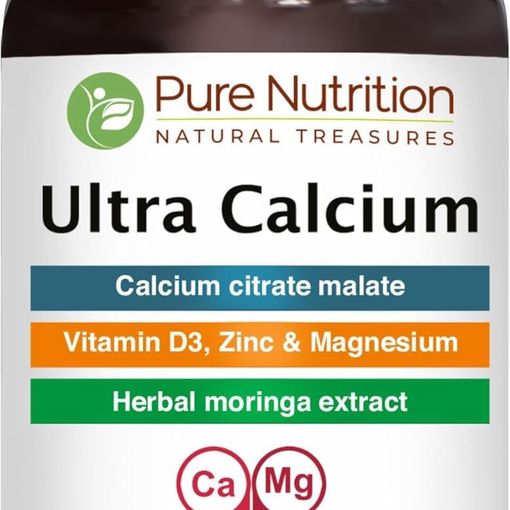
What We Love About the Complete Citrate Malate Formula
Most calcium products make you choose between a high dose and a well-absorbed form. Pure Nutrition doesn't. One tablet delivers 1000mg of elemental calcium as citrate malate, a salt form that dissolves without needing stomach acid the way carbonate does, so it works equally well taken with or without food. Vitamin D3, vitamin K, magnesium and zinc are all folded into the same tablet, which covers most of the bone-health basics in a single daily dose rather than needing three separate bottles.
Nearly 1,500 ratings back up a 4.6-star average, a genuinely strong track record for a formula this comprehensive. The label states the product is tested for purity and potency, and the moringa oleifera addition is a slightly unusual touch that doesn't do any harm even if the evidence for it specifically is thin.
The Complete Citrate Malate Pick: All The Details
Each tablet provides 1000mg of elemental calcium as calcium citrate malate, alongside vitamin D3, vitamin K, magnesium, zinc and moringa oleifera extract. 90 tablets per bottle, a three-month supply at one a day. Non-GMO and gluten-free, vegetarian-suitable.
Vitabiotics Osteocare Original
Best Trusted UK Brand
based on 1914 Amazon UK reviews (4.7★), adjusted for formulation quality
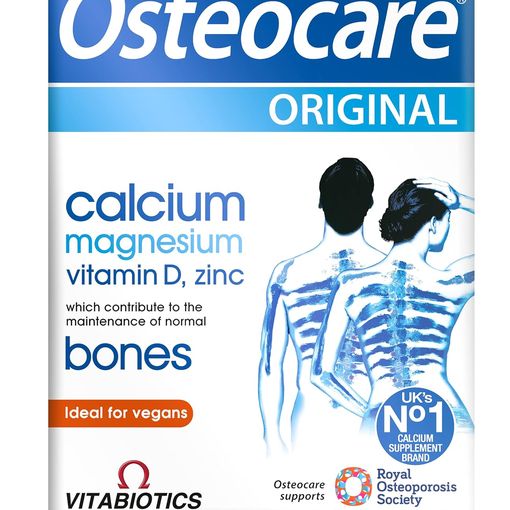
What We Love About the UK's No.1 Calcium Brand
Osteocare has been Vitabiotics' flagship bone-health product for decades, and the packaging's "UK's No.1 Calcium Supplement Brand" claim is backed up here by review numbers few competitors can match: nearly 2,000 ratings at 4.7 stars, the highest of any product in this lineup. The formula pairs calcium carbonate with magnesium, zinc and vitamin D, plus trace copper, manganese, boron and selenium, giving it a broader micronutrient spread than most single-ingredient calcium tablets.
Vitabiotics partners with the Royal Osteoporosis Society, and the tablets are approved by both the Vegan Society and Vegetarian Society, which matters given how many calcium sources (bone-derived or otherwise) aren't suitable for either group. Two tablets a day deliver 800mg of calcium, comfortably above the NHS's daily reference intake.
Osteocare Original: All The Details
Each 2-tablet daily dose provides 800mg calcium (as carbonate), 250mg magnesium, 10mg zinc, 10mcg vitamin D, plus copper, manganese, boron and selenium. 90 tablets per bottle, a 45-day supply. Manufactured by Vitabiotics in the UK, Vegan Society and Vegetarian Society approved.
Solgar Calcium Citrate with Vitamin D3
Best Premium Pure Citrate
based on 1084 Amazon UK reviews (4.4★), adjusted for formulation quality
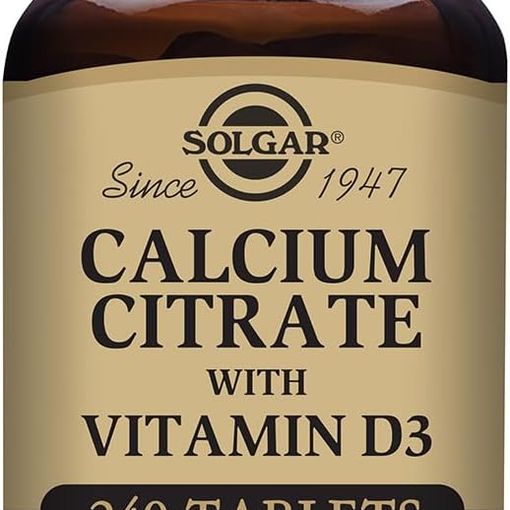
What We Love About the Pure Citrate Pick
Solgar keeps this formula simple: calcium citrate and vitamin D3, nothing else layered on top. Citrate is the form research consistently shows absorbs better than carbonate, particularly for older adults or anyone on medication that reduces stomach acid, since citrate dissolves independently of digestive acid rather than depending on it.12 Four tablets a day deliver 1000mg of elemental calcium and 600IU of D3, a dose that sits squarely within the ranges used in bone-health research.
Solgar has manufactured supplements since 1958 and applies what it calls a "Gold Standard" across its range: small-batch production, gluten-free, non-GMO and kosher-certified. Over 1,000 ratings hold a solid 4.4-star average, and the 240-tablet bottle runs to a full two months at the recommended four-a-day dose.
Solgar Calcium Citrate: All The Details
Each 4-tablet daily dose provides 1000mg of elemental calcium as calcium citrate, plus 600IU (15mcg) vitamin D3. 240 tablets per bottle, a two-month supply at the labelled dose. Manufactured in small batches, gluten-free, non-GMO, kosher.
Zenement Calcium Citrate with Vitamin D3 and K2
Best D3+K2 Stack-in-One
based on 1115 Amazon UK reviews (4.5★), adjusted for formulation quality
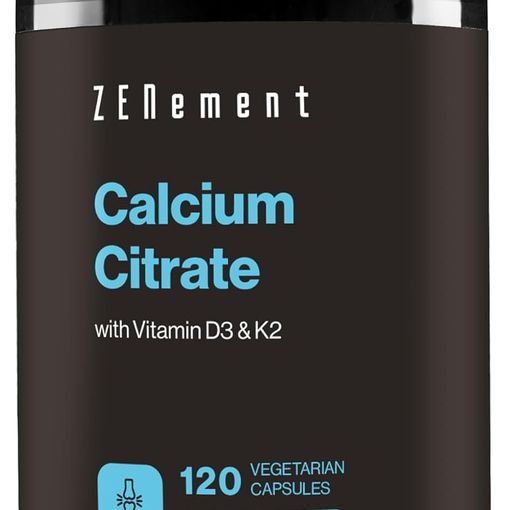
Where the D3+K2 Stack Earns Its Place
This is the only product in the lineup combining calcium citrate with both vitamin D3 and vitamin K2 (as MK-7) in one capsule, mirroring the D3-gets-it-absorbed, K2-directs-it-to-bone stack we cover in our dedicated vitamin D and vitamin K2 guides. Over 1,100 reviews sit at a healthy 4.5 stars, and the 20mcg (800IU) D3 dose plus 50mcg of MK-7 both land within the ranges those individual guides recommend.
Worth being upfront about, though: two capsules provide 306mg of elemental calcium, well under half the NHS's 700mg daily reference intake and below what most bone-health trials use as a standalone calcium dose. That's not a flaw exactly, since it's clearly positioned as a complete micronutrient stack rather than a maximum-dose calcium product, but anyone relying on it as their sole calcium source, without much dietary calcium alongside it, should factor that gap in.
Calcium Citrate with D3 and K2: All The Details
Each 2-capsule daily dose provides 306mg elemental calcium (as citrate), 20mcg (800IU) vitamin D3, and 50mcg vitamin K2 (as MK-7). 120 vegetarian capsules per bottle, a two-month supply. Manufactured in Barcelona, allergen-free.
Holland & Barrett Calcium + Magnesium & Vitamin D
Best Budget High-Street Option
based on 192 Amazon UK reviews (4.5★), adjusted for formulation quality
The Case for the High-Street Familiar Name
Holland & Barrett is a name most UK shoppers already trust, and this one-a-day tablet keeps things genuinely simple. It's a single tablet rather than a two- or four-a-day regimen, which removes a common reason people drop off a supplement routine, and 180 tablets means six months of use from one bottle. Reviews are the smallest sample in this lineup at 192, but the 4.5-star average is consistent with the brand's wider mineral range.
At 500mg calcium and 250mg magnesium per tablet, this sits below several other products here on raw dose, closer to a top-up for someone who already gets some calcium from diet than a full daily replacement. Take it with food, since it uses the carbonate form, and the same absorption logic that applies to Osteocare above applies here too.
Calcium + Magnesium & Vitamin D: All The Details
Each tablet provides 500mg calcium (as carbonate), 250mg magnesium and 5mcg (200IU) vitamin D. 180 tablets per bottle, a six-month supply at one a day. Widely stocked UK high-street brand.
G&G Vitamins Calcium Citrate Capsules
Best Pure UK-Made Citrate
based on 127 Amazon UK reviews (4.4★), adjusted for formulation quality
A Genuinely Clean-Label Citrate Option
G&G is a small Lancashire manufacturer that builds its whole range around minimal formulas, and this capsule is about as plain as calcium citrate gets: no added D3, no fillers, no binders, just calcium citrate in a vegetable cellulose capsule. That simplicity suits anyone who wants full control over their own D3 and K2 dosing rather than accepting whatever ratio a combination product ships with, or anyone who's already covering those separately.
The two-capsule daily dose provides 200mg of elemental calcium, the lowest headline dose in this lineup, so it reads more as a gentle, gut-friendly top-up than a primary calcium source for someone with a real deficiency. Review volume is modest at 127, though the 4.4-star average holds steady.
G&G Calcium Citrate: All The Details
Each 2-capsule daily dose provides 200mg of elemental calcium as calcium citrate. 120 vegan capsules per bottle, a two-month supply. Made in the UK, non-GMO, kosher-approved, no excipients.
Safety and Side Effects
The NHS sets the reference intake for adults aged 19 to 64 (and over) at 700mg a day, an amount most people can reach through diet alone.3 Taking more than 1,500mg a day from supplements could cause stomach pain and diarrhoea, and that figure is a combined daily total across diet and supplements, not something to stack a full dose of each on top of the other.3
Calcium supplements can also reduce absorption of iron and zinc if taken at the same time as those minerals, so spacing doses a few hours apart is sensible if you take other mineral supplements.45 There's an ongoing, unresolved debate in the research about whether high-dose calcium supplements (without vitamin D) modestly raise cardiovascular risk in some populations — the evidence isn't consistent enough to call it a confirmed risk, but it's part of why matching supplemental dose to actual dietary shortfall, rather than taking a large one-size-fits-all dose, is the more cautious approach.6
Best Calcium Supplement FAQ
What does calcium actually do in the body?
Around 99% of the body's calcium is stored in bone and teeth, where it provides structural rigidity, while the remaining 1% circulates in blood and soft tissue and is involved in muscle contraction, nerve signalling and normal blood clotting. Because blood calcium levels are tightly regulated, the body will draw calcium out of bone to maintain them if dietary intake falls short, which over years can measurably weaken bone density.
Calcium carbonate vs calcium citrate: which absorbs better?
Citrate generally wins on bioavailability. A meta-analysis pooling 15 studies found calcium citrate was absorbed roughly 20-27% better than calcium carbonate, whether taken on an empty stomach or with food.1 The gap is even more pronounced in people with reduced stomach acid (achlorhydria, common with age and with long-term acid-reducing medication like PPIs), where one trial found citrate absorption held steady while carbonate absorption nearly collapsed without food.2 Carbonate isn't a poor choice for most people, though. It's cheaper and more calcium-dense by weight, and taken with a meal its absorption is broadly comparable to citrate for anyone with normal digestion.
Does calcium supplementation actually improve bone density or prevent fractures?
The evidence is real but more modest than the marketing around it often suggests. A recent systematic review and meta-analysis of combined calcium and vitamin D supplementation in postmenopausal women with osteoporosis found a measurable improvement in bone mineral density at the hip, but no significant change at the lumbar spine or femoral neck.7 Calcium alongside vitamin D is a genuinely evidence-supported part of bone health management, particularly for people already at risk, but it works best as one part of a broader approach that includes adequate protein, weight-bearing exercise and, where relevant, prescribed osteoporosis treatment, not as a standalone fix.
How much calcium do I need, and is there a safe upper limit?
Adults need 700mg a day per the NHS reference intake — see Safety and Side Effects above for the upper limit and what happens if you go over it.
Can I take calcium alongside iron or zinc supplements?
Not at the same time, ideally. Calcium competes with both minerals for the same absorption pathways in the gut. One controlled trial found calcium supplements taken with a meal reduced absorption of an iron supplement significantly, making it harder to meet daily iron needs if the two are routinely taken together.4 Separately, a trial in postmenopausal women found that a higher calcium intake measurably reduced zinc absorption and overall zinc balance.5 The practical fix is simple: leave a gap of at least two hours between a calcium dose and an iron or zinc supplement, rather than taking them in the same sitting.
Is there a link between calcium supplements and heart problems?
This is a genuinely debated area rather than a settled one. A widely cited 2010 meta-analysis found that calcium supplements taken without vitamin D were associated with a modestly higher risk of heart attack in pooled trial data, an increase researchers described as small in absolute terms but statistically significant.6 The finding prompted real caution in clinical practice, though later analyses and professional bodies have not reached a firm consensus, and the signal appears specific to high-dose supplemental calcium taken as a single large daily amount rather than to calcium from food. If you have existing cardiovascular risk factors, it's worth discussing calcium supplementation, including dose and whether to split it, with your GP rather than defaulting to the highest dose on the shelf.
Should I take calcium alongside vitamin D3 and vitamin K2?
Yes, and this is one of the more genuinely sensible supplement pairings available. Vitamin D3 increases how efficiently the gut absorbs the calcium you take in, while vitamin K2 activates proteins that help direct that calcium into bone and teeth rather than leaving it to accumulate in arterial walls and soft tissue. Calcium is the raw material, D3 gets it absorbed, and K2 helps make sure it ends up where you want it. See our best vitamin D supplement guide and best vitamin K2 supplement guide for dedicated product comparisons of the other two legs of that stack.
How long does it take to notice benefits from a calcium supplement?
There's nothing to feel day to day; calcium doesn't produce a subjective effect the way a stimulant or sleep aid might. Blood calcium levels stay tightly regulated regardless of intake, so what actually changes over time is bone mineral density, and that's a slow structural process. Clinical trials measuring bone density improvements typically track participants for a year or more before seeing meaningful change, so a calcium supplement is best thought of as a long-term maintenance habit rather than something to expect a quick result from.
The Best Calcium Supplement for You
If you want one tablet that covers the most bases, Pure Nutrition's citrate malate formula does the most work per dose, folding D3, K, magnesium and zinc in alongside a full 1000mg of elemental calcium. Vitabiotics Osteocare is the safer default if you'd rather buy from the brand with the longest track record and the largest review base in this list, and Solgar's pure citrate suits anyone prioritising absorption above all else, particularly if stomach acid is a concern. Zenement's D3+K2 stack and G&G's minimal citrate both work well as part of a wider routine rather than a sole calcium source, while Holland & Barrett offers the simplest, most accessible way to top up what your diet doesn't already cover.
Whichever you pick, remember that calcium works as part of a system rather than in isolation. Pairing it with adequate vitamin D3, and vitamin K2 if bone health is a specific priority, keeping doses split rather than piled into one large tablet, and spacing it away from iron or zinc supplements will do more for your results than switching between brands ever will.
-
Meta-analysis of calcium bioavailability: a comparison of calcium citrate with calcium carbonate ↩︎ ↩︎
-
High dietary calcium intakes reduce zinc absorption and balance in humans ↩︎ ↩︎
-
Effect of calcium supplements on risk of myocardial infarction and cardiovascular events: meta-analysis ↩︎ ↩︎
-
The effects of combined calcium and vitamin D supplementation on bone mineral density and fracture risk in postmenopausal women with osteoporosis: a systematic review and meta-analysis of randomized controlled trials ↩︎