


Performance Lab Multi Review UK: Men's & Women's Formulas

About the author...
Will founded Supermushrooms after digging into the research behind mushroom and nootropic supplements. Every pick is checked against clinical dosing, extract standardisation, and real buyer reviews, and each star rating starts from a product's real Amazon score before being adjusted for formulation quality. Read more about how ratings are calculated.
Table of contents
- Key Takeaways (TL;DR)
- What Is NutriGenesis Multi?
- The Full Ingredient Breakdown
- Manufacturing and Quality
- Where It Falls Short
- Who It's For
- Price and Value
- Verdict
-
FAQ
- Is Performance Lab's NutriGenesis Multi actually the best multivitamin?
- What's actually different between the Men's and Women's formulas?
- Does the NutriGenesis process actually improve absorption?
- Is 25mcg of vitamin D enough, or too much?
- Should I take this instead of a single-ingredient iron or magnesium supplement?
- How long before I'd notice a difference?
Performance Lab's NutriGenesis Multi is the best multivitamin we've reviewed on this site, built around two genuinely tailored formulas (not just relabelled packaging) with every one of the 24 nutrients in each formula disclosed at an exact dose, a UK-appropriate 25mcg vitamin D amount, and no proprietary blends to guess at.
Some links in this review are affiliate links. If you buy through one, we may earn a small commission at no extra cost to you, which goes toward the research and testing behind guides like this one. It has no bearing on the verdict below or which products we recommend. Full details in our Advertiser Disclosure.
Performance Lab is part of the Performance Lab Group, the same company behind Opti-Nutra's Mind Lab Pro, which we've reviewed in detail separately. NutriGenesis Multi is its flagship general-health multivitamin, sold as two distinct formulas rather than a single unisex blend: NutriGenesis Multi for Men and NutriGenesis Multi for Women. Both use the brand's NutriGenesis process, in which vitamins and minerals are grown in live cultures with natural cofactors (fibre, enzymes, antioxidants) rather than synthesised directly, delivered in a plant-based NutriCaps capsule made from pullulan fermented from tapioca.
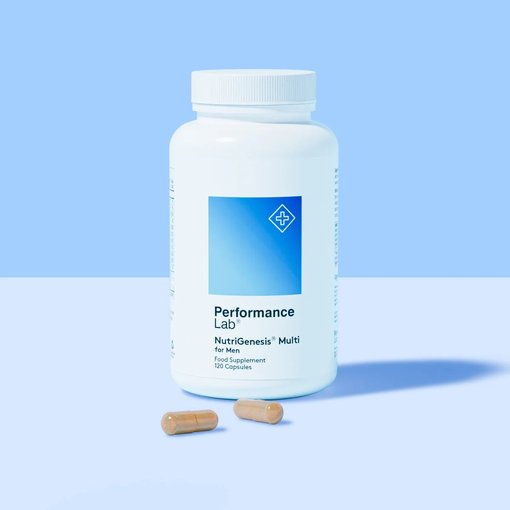
This review goes through both formulas nutrient by nutrient at the doses actually printed on the label, flags exactly where the Men's and Women's versions diverge, and weighs the brand's NutriGenesis process claims against what's independently verifiable.
Key Takeaways (TL;DR)
- Fully disclosed dosing: all 24 ingredients on each formula listed at an exact amount, not a proprietary blend total.
- Genuinely tailored, not just relabelled: five of the 24 nutrients differ by sex. The Women's formula carries double the iron (8mg vs 4mg) and 50% more biotin; the Men's formula carries more vitamin A, zinc, and selenium. The other 19 nutrients, including magnesium, are dosed identically.
- Vitamin D at 25mcg sits well above the NHS's general 10mcg/day recommendation and comfortably under the 100mcg safe upper limit, a sensible UK-specific choice.
- Mineral forms aren't disclosed: neither label states whether iron, zinc, or magnesium use a chelated form like glycinate or citrate, the differentiator most single-mineral products lean on.
- Iron and magnesium are dosed at insurance level, not therapeutic level, on both versions, which is normal for an all-in-one multi but worth knowing if you have a diagnosed deficiency in either.
- Give it a few weeks to a couple of months before expecting to notice anything, consistent with how slowly most vitamin and mineral status actually shifts.
What Is NutriGenesis Multi?
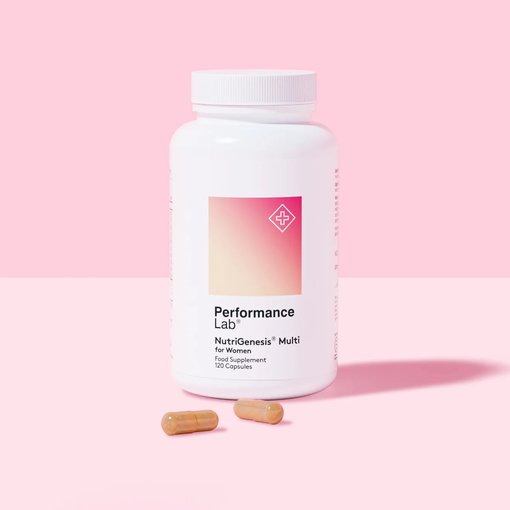
Both formulas ship as 120 capsules per bottle, a 30-day supply at the stated serving of 4 NutriCaps daily. The headline manufacturing claim is the NutriGenesis process itself: rather than using standard synthetic vitamin and mineral forms, Performance Lab grows them in live cultures alongside natural cofactors, aiming to more closely resemble how nutrients occur in whole food. The brand's own marketing ties this to Albert Szent-Gyorgyi's Nobel Prize-winning discovery of vitamin C in the 1930s. That reference is accurate as a piece of nutritional history, but it's a discovery citation, not a study of this specific manufacturing process. We looked for an independent, third-party trial comparing NutriGenesis-cultured nutrients to standard forms for absorption or bioavailability and didn't find one published; treat the "enhanced bioavailability" framing as the brand's own claim rather than something externally verified.
What both formulas do get right is disclosure. Every one of the 24 ingredients in each formula is listed with an exact milligram or microgram amount and a %NRV figure, with no combined "proprietary blend" total hiding individual doses, the same transparency standard we look for in every product on this site.
The Full Ingredient Breakdown
Fat-Soluble Vitamins (A, D, E, K)
Vitamin A is dosed slightly higher on the Men's formula: 600mcg against 500mcg on the Women's, both sourced as beta-carotene rather than a retinol blend. Vitamin D sits at 25mcg (500% NRV) on both. That's comfortably above the NHS's general 10mcg/day recommendation and well under its 100mcg safe upper limit, a sensible dose given how common low vitamin D status is in the UK. Vitamin E and vitamin K are identical on both formulas, at 12mg and 100mcg (split between K1 and K2) respectively.
B-Complex
Biotin is the one real point of difference in the B-complex: 200mcg (400% NRV) on the Men's formula against 300mcg (600% NRV) on the Women's, a plausible nod to the hair and nail health biotin gets marketed for. Every other B-vitamin is dosed identically on both formulas: B1 and B2 at 2mg, niacin at 20mg, B6 at 4mg, folate at 400mcg, B12 at 10mcg, and pantothenic acid at 10mg. All of these sit well within established safety margins. There's no EU-set upper limit for B12, and biotin's upper limit isn't established either. The brand's own product page cites an uncontrolled magazine-style reader trial claiming 86% of participants saw increased nail strength after a month on the Women's formula. That's a real result worth mentioning. But it's not a randomised, placebo-controlled study, so treat it as a marketing data point rather than clinical evidence. Separately, a large randomised trial of a general multivitamin-mineral supplement in older adults found a statistically significant benefit on global cognition and memory over three years, particularly in people with a history of cardiovascular disease.1 That's an encouraging data point for daily multivitamin use generally, even though it wasn't run on this specific product.
Trace Minerals
Iron is the clearest point of difference among the minerals, and it follows the pattern you'd expect rather than defying it: the Women's formula carries double the Men's amount, 8mg (57% NRV) against 4mg (36% NRV), a sensible nod to menstrual iron losses. Magnesium, by contrast, is dosed identically on both at 40mg (11% NRV). Neither iron dose is meant to be therapeutic. Standalone iron supplements for diagnosed deficiency typically run 14-65mg. Our own Best Iron Supplement UK and Best Magnesium Glycinate UK guides cover single-ingredient options at those higher, clinically-relevant doses. Treat both minerals here as general dietary insurance, not a fix for a known deficiency.
Zinc and selenium both run somewhat higher on the Men's formula: zinc at 15mg (150% NRV) against 10mg (100% NRV) on the Women's, and selenium at 150mcg (273% NRV) against 100mcg (182% NRV). Both stay at sensible, non-excessive amounts on either version, well short of a dose that would raise a safety concern. Iodine, copper, manganese, GTF Chromium, and molybdenum are all dosed identically on both formulas, at 150mcg, 1mg, 2mg, 40mcg, and 50mcg respectively. A well-designed randomised trial of chromium picolinate in healthy, non-obese older adults found no significant change in insulin sensitivity, lipids, or body composition compared with placebo.2 So it's reasonable to view GTF Chromium as another insurance-level inclusion, not one likely to produce a noticeable effect in someone who isn't already chromium-deficient. Neither formula includes calcium or potassium.
Neither label states whether any of these minerals are delivered in a specific chelated form, such as bisglycinate or citrate. That's a genuine point of contrast with several single-mineral products we've reviewed, where the chelate form is usually the headline differentiator. NutriGenesis Multi's pitch rests on its overall culturing process rather than on any one mineral's delivery form specifically.
Inositol and Boron
Both formulas include 25mg of inositol and 1mg of boron, identical across Men's and Women's versions. Neither carries an established NRV, and both sit at general-support doses well below the amounts used in dedicated single-ingredient research (our Best Inositol Supplement UK guide covers doses in the gram range for its studied use cases). These read as minor supporting additions rather than doing meaningful independent work at this level.
Manufacturing and Quality
NutriGenesis Multi is manufactured in a GMP-certified facility, and Performance Lab states both formulas are third-party tested for purity and potency, Clean Label Project certified, vegan, non-GMO, and free from soy, gluten, and the common allergens (egg, fish, shellfish, dairy, peanuts, tree nuts, wheat). The Women's formula's product page also notes B Corp certification for the wider company. We haven't independently audited batch-level certificates of analysis ourselves, so treat these as the manufacturer's stated claims rather than something we've verified directly, the same caveat we apply to every brand's self-reported quality claims.
Where It Falls Short
The formula itself is well-dosed and honestly labelled. The main criticisms here are about what isn't said, rather than what's wrong. The "enhanced bioavailability" pitch behind NutriGenesis leans on a historical Nobel Prize reference, not a published trial on this specific process. Neither label discloses the actual chemical form behind its mineral doses. Iron and magnesium are the two nutrients most likely to matter if you have a real dietary gap. Both are dosed at general-insurance levels on both formulas, not a therapeutic amount. None of that makes it a bad multivitamin. It's a genuinely well-designed one. It just means the marketing framing occasionally outruns what's independently verifiable. Go in expecting a solid daily-insurance multivitamin, not a targeted fix for a specific deficiency.
Who It's For
NutriGenesis Multi suits someone who wants one well-labelled, sex-specific daily multivitamin, without cross-checking a proprietary blend or guessing which version fits. It's a good match if you're comfortable with general nutritional insurance rather than a therapeutic mineral dose. It's a weaker fit if you have a diagnosed iron or magnesium deficiency specifically. Both sit well below the levels used in dedicated single-ingredient products aimed at correcting a real shortfall. If you'd rather compare individually-scored multivitamins available on Amazon UK, including several with disclosed chelated mineral forms, see our Best Multivitamin UK comparison.
Price and Value
NutriGenesis Multi sits toward the premium end of the multivitamin category. That tracks with using a proprietary cultured-nutrient process and a plant-based capsule shell, rather than generic synthetic forms in a standard capsule. Whether it's worth it depends on what you value. Buyers who want a single well-labelled, sex-specific formula with no proprietary blend to decode will find the price defensible. Buyers chasing the lowest cost per nutrient, or a therapeutic iron or magnesium dose specifically, may get better value from a more targeted single-ingredient product instead.
Verdict
NutriGenesis Multi earns its place as our top overall multivitamin pick on the strength of its transparency and genuine sex-specific tailoring. Every nutrient is disclosed at an exact dose. Vitamin D is dosed at a properly UK-appropriate amount. The Men's and Women's formulas carry real, meaningful differences, not cosmetic rebranding. The trade-off: its headline bioavailability claim rests more on brand storytelling than independent evidence, mineral forms aren't disclosed, and iron and magnesium are both insurance-level rather than therapeutic doses on either version. For general daily coverage, it's a well-built, honestly-labelled choice. For a specific, diagnosed deficiency in iron or magnesium, pair it with (or replace it with) a dedicated single-ingredient product dosed for that purpose.
FAQ
Is Performance Lab's NutriGenesis Multi actually the best multivitamin?
Among the multivitamins we've reviewed, it stands out for disclosing every ingredient at an exact dose across two genuinely tailored formulas, plus a properly UK-appropriate vitamin D amount. It isn't perfect: mineral chelate forms aren't disclosed, and iron and magnesium sit at insurance level rather than therapeutic level on both versions. A large randomised trial of general multivitamin-mineral supplementation in older adults found a statistically significant cognitive benefit over three years, which supports daily multivitamin use broadly, though it wasn't conducted on this specific product.1
What's actually different between the Men's and Women's formulas?
Only five of the 24 nutrients actually differ. The Women's formula carries double the iron (8mg vs 4mg) and 50% more biotin (300mcg vs 200mcg). The Men's formula carries more vitamin A (600mcg vs 500mcg), zinc (15mg vs 10mg), and selenium (150mcg vs 100mcg). The other 19 nutrients, including vitamin D, magnesium, and every other B-vitamin, are dosed identically across both.
Does the NutriGenesis process actually improve absorption?
That's the brand's own claim, tied to Albert Szent-Gyorgyi's Nobel Prize-winning discovery of vitamin C. That reference describes real nutritional history, not a published trial on this specific culturing process's bioavailability versus standard vitamin and mineral forms. We couldn't find an independent, third-party study confirming the enhanced-absorption claim, so treat it as unverified marketing framing rather than settled evidence.
Is 25mcg of vitamin D enough, or too much?
It's a well-chosen dose. The NHS recommends 10mcg a day for the general adult population, and sets a safe upper limit of 100mcg a day. At 25mcg, NutriGenesis Multi sits comfortably above the baseline recommendation and well clear of the upper limit, a sensible middle-ground choice for a UK audience.
Should I take this instead of a single-ingredient iron or magnesium supplement?
Not if you have a diagnosed deficiency in either. Both minerals are dosed at general dietary-insurance levels here (4mg iron on the Men's formula, 8mg on the Women's; 40mg magnesium on both), well below the doses used in single-ingredient products aimed at correcting an actual shortfall. See our Best Iron Supplement UK and Best Magnesium Glycinate UK guides for options dosed for that purpose specifically.
How long before I'd notice a difference?
Vitamin and mineral status typically shifts gradually rather than acutely, so give it several weeks to a couple of months of consistent daily use before judging whether it's made a difference, particularly for anything tied to general energy or immune support rather than a specific measurable marker.