

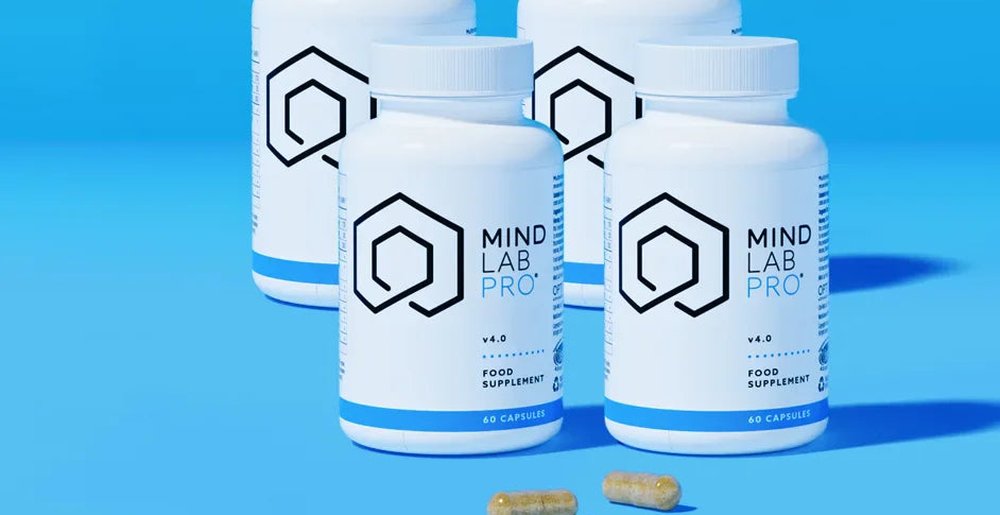
Mind Lab Pro Review UK: Ingredients, Evidence & Verdict

About the author...
Will founded Supermushrooms after digging into the research behind mushroom and nootropic supplements. Every pick is checked against clinical dosing, extract standardisation, and real buyer reviews, and each star rating starts from a product's real Amazon score before being adjusted for formulation quality. Read more about how ratings are calculated.
Table of contents
- Key Takeaways (TL;DR)
- What Is Mind Lab Pro?
-
The Full Ingredient Breakdown
- Citicoline (as Cognizin®) — 250mg
- Phosphatidylserine — 100mg (sunflower-derived)
- Bacopa Monnieri — 150mg full-spectrum extract (24% bacosides)
- Organic Lion's Mane Mushroom — 500mg (fruiting body)
- Maritime Pine Bark Extract (Pycnogenol) — 75mg (95% proanthocyanidins)
- L-Theanine — 100mg
- N-Acetyl L-Tyrosine (NALT) — 175mg
- Rhodiola Rosea — 50mg root (3% rosavins, 1% salidrosides)
- Vitamin B6, B9 (Folate) & B12 — 2.5mg, 100mcg, 7.5mcg (NutriGenesis)
- The Evidence Behind Mind Lab Pro Itself
- A UK-Specific Regulatory Note on the Lion's Mane Component
- Manufacturing and Quality
- Where the Formula Falls Short
- Who It's For, and Who Should Look Elsewhere
- Price and Value
- Verdict
- FAQ
Mind Lab Pro is a clean-label, all-in-one nootropic with eleven disclosed-dose ingredients and genuine clinical backing behind most of them, making it a strong choice for general-purpose cognitive support. Two ingredients, Rhodiola Rosea and Maritime Pine Bark, are dosed below the levels used in the trials backing them.
Some links in this review are affiliate links. If you buy through one, we may earn a small commission at no extra cost to you, which goes toward the research and testing behind guides like this one. It has no bearing on the verdict below or which products we recommend. Full details in our Advertiser Disclosure.
Mind Lab Pro is one of the most established names in the all-in-one nootropic category. It launched in 2015 and has gone through several formula revisions since, rather than riding a single viral moment. Made by Opti-Nutra, now part of the Performance Lab Group, it markets itself as the "Universal Nootropic": one formula, eleven ingredients, no stimulants. The pitch aims at anyone from students to older adults, rather than a specific use case. That positioning is unusual. Most nootropic stacks pick a lane (energy, focus, or calm), and Mind Lab Pro instead tries to cover all of them at once.
I use Mind Lab Pro myself day to day, and it's genuinely one of my favourite products in this category. The clean label is a big part of that: no proprietary blends, no unnecessary fillers, just eleven ingredients at disclosed doses. In practice I've noticed sharper focus and real mental clarity through the working day, and it's become an easy, reliable part of my everyday routine rather than something I have to remember to take. That said, personal results are personal results, not proof, so the rest of this review holds the formula to the same evidence-based standard as everything else we write.

This review goes through the formula ingredient by ingredient at the actual doses used, weighs that against the independent clinical literature on each compound, and looks separately at the research Mind Lab Pro itself commissions and cites. There's also a UK-specific point on the Lion's Mane sourcing worth knowing, covered in detail further down.
Key Takeaways (TL;DR)
- Clean label: all 11 ingredients disclosed at exact doses — no proprietary blends or hidden totals.
- Most ingredients are dosed well (Citicoline, Phosphatidylserine, Bacopa), but Rhodiola (50mg) and Maritime Pine Bark (75mg) are meaningfully underdosed versus their own supporting research.
- Lion's Mane is sourced as fruiting body only, which is UK-legal — some competing formulas use unauthorised mycelium blends instead.
- The brand's own commissioned studies are real, university-conducted research, but two of the three completed ones were funded by its own parent company, not an independent body.
- Best fit for someone who wants one straightforward daily stack rather than assembling several single-ingredient supplements; a weaker fit if you specifically want Rhodiola or Pine Bark at full clinical strength.
- Give it 2-3 weeks for effects to become noticeable, based on informal user reports rather than a controlled study.
What Is Mind Lab Pro?
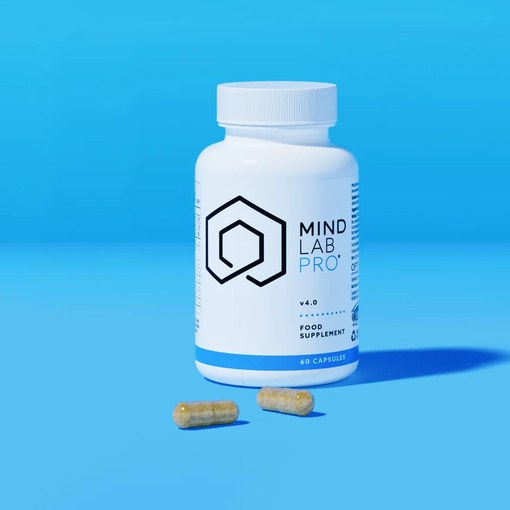
The current version, marketed as v4.0, is the latest in a series of formula revisions since launch. It's sold directly by Opti-Nutra rather than through third-party retailers like Amazon, delivered in what the company calls NutriCaps, a plant-based, pullulan-derived capsule shell rather than standard gelatin or HPMC, marketed as more easily absorbed and naturally prebiotic.
The formula's main selling point, and it's a legitimate one, is that every ingredient and dose is disclosed on the label. Proprietary blends, where a supplement lists a total milligram figure for a group of ingredients without breaking down individual amounts, are common in this category and make it impossible to know whether any single ingredient is dosed meaningfully. Mind Lab Pro doesn't do this. All 11 ingredients are listed with exact milligram amounts, which is what allows the ingredient-by-ingredient comparison below in the first place.
The Full Ingredient Breakdown
Citicoline (as Cognizin®) — 250mg
Citicoline is a choline donor that also raises levels of uridine and supports phosphatidylcholine synthesis in neuronal membranes, and Cognizin is the specific branded, patented form used here. 250mg sits comfortably within the range used in citicoline research generally, and a randomised, double-blind, placebo-controlled trial in healthy older adults found measurable memory improvements at doses in this range over a 12-week period.1 This is one of the better-dosed ingredients in the stack relative to the evidence behind it. We cover citicoline in more depth, including product-specific options, in our Best Citicoline Supplement UK guide.
Phosphatidylserine — 100mg (sunflower-derived)
Phosphatidylserine is a phospholipid that's a structural component of neuronal cell membranes, and supplementation has one of the longer clinical track records of any ingredient in this formula. A frequently cited 1991 trial in 149 elderly patients with age-associated memory impairment found improvements in learning and recall measures at broadly comparable doses.2 Mind Lab Pro's PS is sourced from sunflower lecithin rather than the soy lecithin used in older formulations, which avoids a soy allergen concern without changing the active compound. 100mg is a reasonable, evidence-consistent dose. See our Best Phosphatidylserine UK guide for single-ingredient options at comparable doses.
Bacopa Monnieri — 150mg full-spectrum extract (24% bacosides)
Bacopa is one of the more consistently supported cognitive herbs in the clinical literature, with a meta-analysis of randomised controlled trials finding improved cognitive performance, particularly measures of attention speed, across multiple studies.3 150mg standardised to 24% bacosides is a reasonable middle-of-the-road dose; some single-ingredient products go higher, but this isn't an underdosed inclusion. Bacopa's effects also tend to build gradually over 8-12 weeks rather than acutely, which is worth knowing if you're evaluating whether the stack is "working" after a week or two. See our Best Bacopa Monnieri UK guide for further detail.
Organic Lion's Mane Mushroom — 500mg (fruiting body)
Lion's Mane is included for its nerve growth factor (NGF) stimulation, driven here by hericenones, the compound class associated with the fruiting body specifically. Mind Lab Pro's UK formula sources this ingredient as fruiting body only rather than a mycelium blend, which is worth noting given the UK regulatory point covered below. A double-blind, placebo-controlled trial in adults with mild cognitive impairment, using whole mushroom powder at a considerably higher daily dose (around 3g) than the 500mg here, found improved cognitive scores over 16 weeks.4 The main caveat on this ingredient is dose rather than sourcing: 500mg is well below what that trial and most Lion's Mane cognition research actually used. See our Best Lion's Mane Capsules UK guide for single-ingredient options at higher, more clinically-aligned doses.
Maritime Pine Bark Extract (Pycnogenol) — 75mg (95% proanthocyanidins)
Pine bark extract is an antioxidant compound with a genuinely large clinical evidence base: Pycnogenol's manufacturer, Horphag Research, cites more than 450 published studies on the ingredient, though the studies most directly relevant to cognitive performance in healthy adults have generally used higher doses than the 75mg included here. One trial specifically measuring cognitive function, attention, and mental performance in healthy professionals used 150mg per day, double Mind Lab Pro's dose.5 This is one of the two ingredients in the formula we'd flag as meaningfully underdosed relative to the specific research cited to support it. We cover Maritime Pine Bark in more depth, including product-specific options at a properly clinical dose, in our Best Pycnogenol Supplement UK guide.
L-Theanine — 100mg
L-theanine is an amino acid found in tea that promotes a calm, alert state without sedation, generally attributed to increased alpha brainwave activity. A randomised crossover trial in healthy adults found improvements in stress, sleep quality, and cognition at 200mg daily over four weeks.6 Mind Lab Pro's 100mg dose is at the lower end of what's typically studied, roughly half the dose used in several of the stronger trials, though still within a range some studies have used for milder calming effects. See our Best L-Theanine UK guide if you want a higher, more clinically-aligned single-ingredient dose.
N-Acetyl L-Tyrosine (NALT) — 175mg
Tyrosine is a precursor to dopamine and noradrenaline, and the evidence for it centres specifically on performance under acute stress, sleep deprivation, cold, or multitasking demand, rather than everyday baseline cognition. The clinical trials behind it are smaller and more mixed than most other ingredients in this stack, spanning conditions like narcolepsy and Parkinson's disease rather than healthy-adult nootropic use specifically. Most also used doses in the multi-gram range, well above the 175mg included here as N-Acetyl-Tyrosine — the acetylated form often marketed as more bioavailable than plain L-Tyrosine, though the human data behind that specific claim is thin and mixed rather than settled. This is a plausible, low-risk inclusion rather than one of the formula's stronger evidence-backed components. We cover NALT in more depth, including whether the "more bioavailable" acetylated-form claim actually holds up against plain L-Tyrosine, in our Best NALT Supplement UK guide.
Rhodiola Rosea — 50mg root (3% rosavins, 1% salidrosides)
Rhodiola is an adaptogen studied primarily for stress resilience and mental and physical fatigue, with reviews covering more than a dozen placebo-controlled trials in both healthy volunteers and stressed populations.7 The issue here is dose. Most Rhodiola RCTs, including the trial behind that citation, use somewhere between 200mg and 680mg daily, and our own research into single-ingredient Rhodiola products found the typical effective clinical range sits around 400-600mg. At 50mg, Mind Lab Pro's inclusion is roughly a tenth of a typical studied dose. It's reasonable to treat this as a minor, supporting-cast ingredient in the formula rather than one doing meaningful independent work. See our Best Rhodiola Rosea UK guide for options dosed at the level the research actually used.
Vitamin B6, B9 (Folate) & B12 — 2.5mg, 100mcg, 7.5mcg (NutriGenesis)
These are included as cofactors for neurotransmitter synthesis and homocysteine metabolism, sourced via Opti-Nutra's NutriGenesis lab-cultured, food-form process rather than standard synthetic vitamins. The evidence for B-vitamin supplementation improving cognition in the general population is genuinely mixed. Benefits tend to concentrate in people with low baseline B-vitamin status rather than appearing uniformly, and homocysteine-lowering effects are well established without translating cleanly into measurable cognitive or cardiovascular outcomes in most trials. These are reasonable insurance-level doses, unlikely to be doing much heavy lifting on their own in someone who isn't deficient. If you suspect a genuine B12 deficiency rather than just wanting general insurance, see our Best Vitamin B12 Supplement UK guide for options at a properly therapeutic dose.
The Evidence Behind Mind Lab Pro Itself
Separate from the ingredient-level research above, Mind Lab Pro cites its own commissioned studies on the finished product, all conducted by the University of Leeds and published on the brand's studies page. One trial, published in the Biomedical Journal of Scientific & Technical Research, reported a 47% reduction in information processing time. A second, published in Human Psychopharmacology: Clinical and Experimental and using the Wechsler Memory Scale, reported 28% improvement in immediate recall and 26% in delayed recall. A third, published in the journal Brain Sciences, used EEG brain-mapping to look at inter-region synergy during decision-making tasks. A fourth, described as a large publicly-driven nootropics study, is still in development.
Worth knowing plainly: two of these three completed studies list Performance Lab Group as the funder, which is the same parent company that owns Opti-Nutra and Mind Lab Pro. That doesn't make the findings false, but it does mean they're not independent, third-party research in the way a university-funded or government-funded trial would be, and they should be read with that in mind rather than treated as equivalent to the independent ingredient-level literature covered above.
A UK-Specific Regulatory Note on the Lion's Mane Component
This is worth flagging specifically for UK buyers, because it's a nuance most reviews of this product don't cover, and here it counts in Mind Lab Pro's favour. Under the UK's retained novel food regulation, Lion's Mane fruiting body and standard fruiting body extract are not novel foods and can be sold freely, but dehydrated mycelium powder specifically is classified separately and remains an unauthorised novel food requiring FSA authorisation that hasn't been completed. Some competing formulas still use mycelium, or a mycelium-and-fruiting-body blend, often without making the distinction clear on the label. We cover this split status, and the equivalent situation for Reishi, Turkey Tail, Cordyceps and NMN, in detail on our UK Novel Food Tracker.
Mind Lab Pro's UK-facing formula lists its Lion's Mane as fruiting body only, which puts it on the compliant side of that line without any caveat needed. It's a genuinely useful point of differentiation for a UK buyer who's tried to check this on other nootropic stacks and come up short on clarity.
Manufacturing and Quality
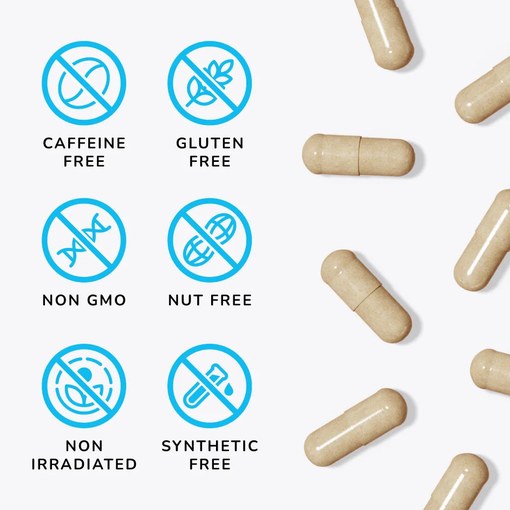
Mind Lab Pro is manufactured in GMP-certified facilities. The company states that incoming ingredients are tested for potency and screened for allergens, GMOs, microbial contamination, and pesticide residue before use, and that finished batches are re-tested for potency and purity plus dissolution testing. The brand also states certificates of analysis are available to customers via batch number, and cites third-party recognitions including Clean Label Project certification and Vegan Society approval. We haven't independently verified batch-level certificates of analysis ourselves, so treat these as the manufacturer's stated claims rather than something we've audited directly — but they're consistent with what a well-run supplement manufacturer's quality process should look like on paper.
Where the Formula Falls Short
The honest criticism of Mind Lab Pro isn't that any ingredient is a poor choice — every one of the 11 has a real, plausible evidence base behind it in isolation. It's that a handful are dosed well below the level used in the research cited to justify their inclusion. Rhodiola at 50mg and Maritime Pine Bark at 75mg are the two clearest examples. Both sit at roughly a third to a tenth of typical clinical doses for those specific ingredients. Citicoline, Phosphatidylserine, and Bacopa, by contrast, are dosed much more defensibly.
This is a common trade-off in "everything in one formula" products: fitting 11 active ingredients into two capsules per serving forces compromises somewhere, and Mind Lab Pro's compromises land on the adaptogen and antioxidant ingredients rather than the ones with the strongest standalone cognitive evidence. Whether that matters to you depends on what you're actually optimising for.
Who It's For, and Who Should Look Elsewhere
Mind Lab Pro suits someone who wants one straightforward daily stack covering multiple angles (mental energy, memory support, and mild stress buffering) without assembling five or six separate single-ingredient bottles themselves, and who values full label transparency over rock-bottom cost per ingredient. Anecdotal reports across nootropics forums and independent review sites converge on a similar pattern: a 2-3 week adjustment period before effects become noticeable, and a general sense that it amplifies existing good habits rather than compensating for poor sleep, diet, or stress management on its own. Treat this as informal user sentiment rather than data — there's no controlled study behind it.
It's a weaker fit for anyone specifically chasing Rhodiola's stress-adaptogen effects or Pine Bark's antioxidant effects at clinically-studied strength, since both are underdosed here relative to a dedicated single-ingredient product.
Price and Value
Mind Lab Pro sits at the premium end of the nootropic stack category rather than the budget end, which tracks with using 11 branded, standardised ingredient forms (Cognizin, Sharp-PS-style sunflower phosphatidylserine, standardised extracts) rather than generic raw materials. Subscription options bring the effective per-bottle cost down meaningfully versus a one-off purchase, and a larger multi-bottle bundle brings it down further still. Whether that represents good value depends on what you'd otherwise be buying. Against five or six separate single-ingredient supplements of comparable quality, the convenience and combined cost can work out reasonably. Against just one or two of the better-evidenced ingredients bought individually at a properly clinical dose, a single-ingredient product is likely the more cost-effective route to the specific effect you're after.
Verdict
Mind Lab Pro earns its reputation honestly on transparency: no proprietary blends, every dose disclosed, sensible sourcing choices (sunflower PS, branded Cognizin citicoline), and a genuinely broad ingredient list that touches memory, mental energy, and stress in one product. The trade-off is that breadth comes at the expense of depth on two ingredients specifically: Rhodiola and Pine Bark, both dosed well under the level their own supporting research used. The company's own commissioned studies are worth reading, but should be weighed as brand-funded research rather than independent third-party findings — two of the three completed studies were funded by the product's own parent company.
For someone who wants one well-labelled, well-manufactured all-in-one stack and doesn't want to assemble and dose five separate supplements themselves, it's a reasonable, defensible choice. For someone specifically chasing Rhodiola's stress-adaptogen effects or Pine Bark's antioxidant effects at full clinical strength, a dedicated single-ingredient product will get you there more directly.
FAQ
Does Mind Lab Pro actually work?
The individual ingredients have real, independently-published clinical support behind them, particularly citicoline, phosphatidylserine, and Bacopa monnieri, all dosed at levels consistent with that research.123 Two ingredients, Rhodiola and Pine Bark, are dosed well below typical clinical trial amounts, so expecting their specific standalone effects at full strength from this formula would be optimistic. User reports generally describe a gradual, cumulative effect over several weeks rather than an immediate one.
Is Mind Lab Pro safe?
The individual ingredients all have established safety profiles at the doses used, and the formula is stimulant-free, which avoids the tolerance and dependency concerns that come with caffeine-based nootropics. As with any supplement, check for interactions if you're on prescription medication, particularly anticoagulants (relevant to several ingredients in this category generally) or MAOI antidepressants (relevant to tyrosine).
Is Mind Lab Pro's Lion's Mane legal in the UK?
Yes. The UK formula lists Lion's Mane as fruiting body only, which is not a novel food and is unrestricted. This matters because dehydrated mycelium specifically is classified as an unauthorised novel food under UK law, an issue that affects some other Lion's Mane and Reishi products on the market that use mycelium or an undisclosed mycelium blend. See our UK Novel Food Tracker for the full picture across every mushroom ingredient we track.
How does Mind Lab Pro compare to buying the ingredients separately?
Buying Citicoline, Phosphatidylserine, Bacopa, Lion's Mane, Rhodiola, and L-Theanine as six separate single-ingredient supplements would let you dose each one at full clinical strength, particularly Rhodiola and Pine Bark, which Mind Lab Pro underdoses. It costs more in total bottles, though, and requires more label-reading and dose-management yourself. Mind Lab Pro trades some of that ingredient-level dosing precision for convenience and one consistent, fully-disclosed label.
How long does it take to notice an effect?
User reports converge on roughly 2-3 weeks before effects become noticeable, consistent with the gradual mechanisms behind several of its slower-acting ingredients like Bacopa monnieri, which builds measurable effects over 8-12 weeks in clinical trials rather than working acutely.3
-
Citicoline and Memory Function in Healthy Older Adults: A Randomized, Double-Blind, Placebo-Controlled Clinical Trial ↩︎ ↩︎
-
Effects of phosphatidylserine in age-associated memory impairment ↩︎ ↩︎
-
Meta-analysis of randomized controlled trials on cognitive effects of Bacopa monnieri extract ↩︎ ↩︎ ↩︎
-
Improving effects of the mushroom Yamabushitake (Hericium erinaceus) on mild cognitive impairment: a double-blind placebo-controlled clinical trial ↩︎
-
Pycnogenol improves cognitive function, attention, mental performance and specific professional skills in healthy professionals aged 35-55 ↩︎
-
Effects of L-Theanine Administration on Stress-Related Symptoms and Cognitive Functions in Healthy Adults ↩︎
-
A randomized trial of Rhodiola rosea extract on capacity for mental work and fatigue in healthy adults ↩︎