

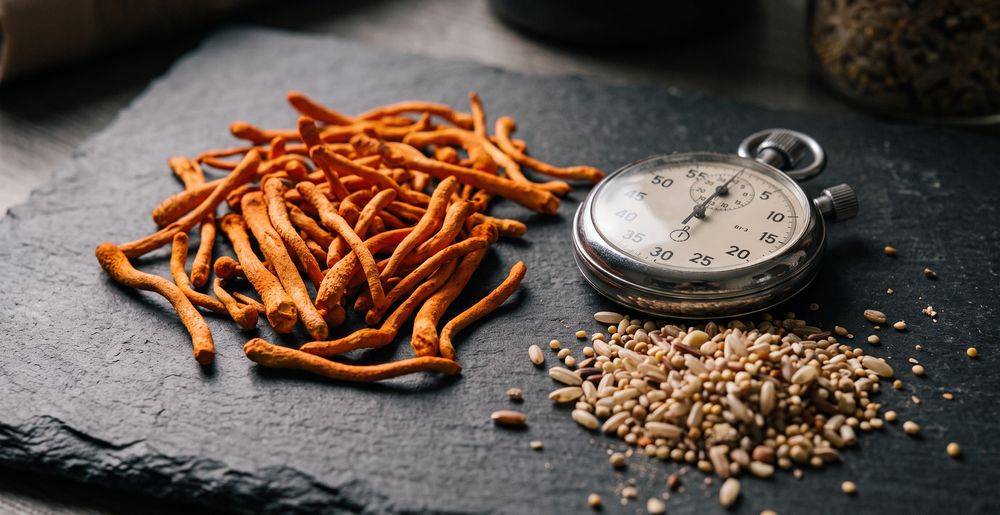
Cordyceps Militaris UK: Why It's Restricted and Where to Buy

About the author...
Will founded Supermushrooms after digging into the research behind mushroom and nootropic supplements. Every pick is checked against clinical dosing, extract standardisation, and real buyer reviews, and each star rating starts from a product's real Amazon score before being adjusted for formulation quality. Read more about how ratings are calculated.
Table of contents
- Key Takeaways (TL;DR)
- What Is Cordyceps Militaris?
- The UK Novel Foods Regulation
- Why Cordyceps Militaris Is Affected
- The Research Case: Cordycepin, AMPK, and Exercise Performance
- The Current Reality: Products Still Available
- Other Mushrooms Under Similar Restrictions
- What Might Change: The Future Outlook
- FAQ
- Conclusion
Cordyceps built a reputation in UK sports nutrition circles as one of the more evidence-backed mushrooms for endurance and stamina. For a while it was easy to find on the shelves of mainstream supplement retailers, alongside creatine and beta-alanine. That is no longer the case. Mainstream UK stockists have been quietly pulling Cordyceps militaris products since 2023. By 2025 the removals had accelerated to the point that awareness of the issue spread well beyond the supplement industry itself, with small UK mushroom producers publicly pushing back against the classification behind it. The mushroom itself has not changed. Its legal status has.
Cordyceps militaris is classified as a novel food under UK law — the same regulatory category responsible for Turkey Tail's disappearance from UK shelves. That classification is not a verdict on safety or effectiveness. It is a food-history technicality. Understanding it explains both why the product you might have bought two years ago is harder to find now, and what your realistic options are if you still want to use it.
Just looking for where to buy Cordyceps in the UK? We have reviewed the products still available to UK buyers, including the cultivated C. militaris and CS-4 fermented options least affected by supply disruption — see our full Cordyceps guide here.
Key Takeaways (TL;DR)
- Cordyceps militaris is classified as an unauthorised novel food in the UK — no FSA authorisation currently exists.
- The restriction is a food-history technicality (no documented EU consumption before 15 May 1997), not a safety finding.
- CS-4 fermented mycelium and cultivated C. militaris extract have genuine trial evidence for exercise performance and cordycepin/AMPK activity.
- Mainstream UK retailers have withdrawn it; third-party Amazon sellers still list it in a legal grey area.
- A registered medical herbalist or TCM practitioner can legally prescribe and dispense it after a consultation.
- Turkey Tail faces an identical restriction for the same regulatory reason.
- Authorisation is possible but slow and expensive — no confirmed timeline for change.
What Is Cordyceps Militaris?
Cordyceps is a genus of parasitic fungi, historically best known through Cordyceps sinensis, the wild Himalayan species that grows by infecting ghost moth larvae at high altitude. It has been used in Traditional Chinese Medicine for centuries as a kidney and lung tonic. Wild C. sinensis is genuinely rare and extraordinarily expensive, routinely selling for more per gram than gold, which has made it impractical as a mainstream supplement ingredient.
Cordyceps militaris is a different, more common species that can be commercially cultivated on a grain substrate rather than wild-harvested. That's why it is the species behind almost every Cordyceps supplement actually sold in the UK and elsewhere. It contains the same key active compounds as C. sinensis, cordycepin and adenosine in particular, and in fact tends to contain higher cordycepin levels than wild-harvested C. sinensis. A third product category, CS-4, is a fermented mycelium extract developed in China specifically to replicate C. sinensis biochemistry without wild harvesting. It's used extensively in the clinical research behind Cordyceps supplementation.
Western interest in Cordyceps as a mainstream sports and energy supplement is a comparatively recent phenomenon, building through the 2010s and accelerating alongside the broader functional mushroom trend. That timing turns out to matter enormously for its UK legal status.
The UK Novel Foods Regulation
The mechanism affecting Cordyceps militaris is the UK's retained version of EU Regulation 2015/2283, administered by the Food Standards Agency in Great Britain. The regulation applies a single test: if a food or ingredient was not consumed to a significant degree in the UK or EU before 15 May 1997, it is classified as novel and requires pre-market FSA authorisation before it can be sold as a food supplement.
Authorisation requires a company to submit safety data, toxicology studies, and evidence of intended use and composition. The FSA then evaluates this before listing the ingredient on its register of authorised novel foods. The process is neither quick nor cheap: industry estimates put a complete application well into six figures and multiple years of assessment time. That favours large companies with dedicated regulatory teams over the small specialist producers who make up much of the UK medicinal mushroom market.
This framework, covered in more detail in our Turkey Tail regulatory guide, does not evaluate whether an ingredient is safe or effective. It evaluates a single historical fact: was this specific food consumed in Europe before 1997.
Why Cordyceps Militaris Is Affected
Cordyceps sinensis has genuine centuries-deep use in Traditional Chinese Medicine, but that use was concentrated in Asia, and was largely medicinal and ceremonial rather than a routine part of the diet. Critically, it has no meaningful history of consumption in Europe of any kind before 1997. Cordyceps militaris has an even shorter documented history as a commercial supplement ingredient anywhere, since the cultivation techniques that make it viable at scale are comparatively modern.
The FSA's test does not ask whether an ingredient has a long history of traditional use somewhere in the world. It asks specifically whether it was eaten as food in the UK or EU before the cutoff. Neither species clears that bar. The FSA has applied the novel food classification to Cordyceps militaris on the same basis as Turkey Tail: no documented European food consumption record before 1997, so no ingredient can be sold as a supplement without going through authorisation first.
Enforcement followed a similar arc to Turkey Tail. Retailer withdrawals began appearing through 2023 and 2024, and by 2025 the pace had picked up considerably. Public awareness of the issue spread well beyond the supplement industry as small UK producers spoke out about the impact on their businesses. The underlying legal position — an unauthorised novel food that cannot lawfully be sold as a supplement — has not meaningfully changed. What has changed is how consistently the FSA and downstream retailers, payment processors, and marketplaces have acted on it.
The Research Case: Cordycepin, AMPK, and Exercise Performance
The regulatory position sits awkwardly alongside a genuinely solid evidence base, smaller than Turkey Tail's but well-targeted at a specific, measurable outcome: exercise capacity.
The mechanism centres on cordycepin, the signature active compound in both Cordyceps species. Cordycepin activates AMPK, a central cellular enzyme that governs how the body manages energy.1 AMPK activation switches on the metabolic pathways that generate cellular energy, and switches off energy-consuming processes. That's the plausible mechanism behind Cordyceps's effects on stamina and recovery.
That mechanism has translated into measurable results in controlled trials. A randomised, placebo-controlled study found that Cordyceps militaris supplementation improved tolerance to high-intensity exercise following both acute and chronic dosing.2 In older adults specifically, a 12-week double-blind, placebo-controlled trial of Cs-4 found significant improvements in metabolic threshold (up 10.5%) and breathing efficiency (up 8.5%) during incremental exercise testing, though maximal oxygen uptake itself did not change.3 Beyond exercise performance, Cordyceps militaris extracts and cordycepin itself have documented immune-modulating effects — an active and still-developing area of research.4
None of this evidence has any bearing on the FSA's classification. The novel food framework does not weigh clinical results against the 1997 food-history test, and a mushroom with a genuinely useful exercise-performance profile can still fail that test if it lacks the specific European consumption record the regulation asks for.
The Current Reality: Products Still Available
Mainstream UK retailers have followed the same pattern seen with Turkey Tail: gradual withdrawal from 2023 onward, accelerating through 2025 as enforcement tightened. Despite that, Cordyceps products continue to appear on Amazon UK. These are generally listed by third-party marketplace sellers, rather than by UK-based supplement brands operating in full compliance with novel food rules.
The legal footing of these listings is the same grey area covered in our Turkey Tail guide. Products explicitly marketed as food supplements for human consumption are technically subject to novel food rules regardless of the seller's location, but enforcement capacity is limited and inconsistent across individual listings. Presence on a marketplace is not evidence of regulatory approval.
If you are buying from this market, a few quality markers are worth checking regardless of the legal question. Cultivated Cordyceps militaris fruiting body extract or CS-4 fermented mycelium extract are both reasonable choices. Avoid vague "Cordyceps blend" labelling that does not specify species or extraction method. A stated cordycepin percentage, where disclosed, is a useful transparency signal, though many products do not specify one. Third-party lab testing is a further marker of a more credible seller in an otherwise inconsistent market.
The same professional exemption that applies to Turkey Tail applies here: a registered medical herbalist or Traditional Chinese Medicine practitioner can legally obtain, prescribe, and dispense Cordyceps following an individual patient consultation. That remains a legitimate route for buyers who want professional oversight.
We have reviewed the Cordyceps products currently available to UK buyers, including which listings represent the more credible options in a genuinely inconsistent market: Best Cordyceps Supplement UK.
Other Mushrooms Under Similar Restrictions
Cordyceps militaris is not an isolated case. Turkey Tail (Trametes versicolor) faces an identical novel food classification for the same underlying reason, covered in full in our dedicated Turkey Tail guide.
The picture for other well-known medicinal mushrooms is more mixed than a simple legal/restricted split suggests. Lion's Mane and Reishi are legal in their standard fruiting body and extract forms, which have documented pre-1997 European consumption. But dehydrated mycelium powder from either species carries its own separate, unresolved novel food classification — a nuance most buyers never hear about. Chaga has no restriction in any commonly sold form. NMN, a longevity ingredient rather than a mushroom, currently sits under active FSA assessment rather than in either the restricted or authorised category. We track the current status of all of these, including Cordyceps and Turkey Tail, on our UK Novel Food Tracker, which we update as the FSA's position on each ingredient develops.
What Might Change: The Future Outlook
Novel food authorisation remains a real, if slow and expensive, pathway available to any company willing to fund a complete application. The FSA is not blocking Cordyceps militaris on principle. Nobody has yet completed an authorisation for it. If an application were submitted and assessed favourably, the resulting authorisation would apply to every seller using that specification, not just the applicant, since authorisation attaches to the ingredient rather than the brand.
Vitamin D2 mushroom powder is a working example that this pathway does conclude in practice, having been authorised through the same FSA/EU process now facing Cordyceps and Turkey Tail. The realistic barrier is cost and time, rather than any principled objection. That's precisely why the smaller specialist producers who dominate the UK medicinal mushroom market have not attempted it independently. Any change here is more likely to arrive through a larger industry body or a legal challenge, similar to the one Bristol Fungarium has pursued around Turkey Tail's classification, than through a single small brand's application.
The most realistic near-term outlook is a continuation of the current grey market, with some third-party listings persisting online and mainstream UK retailers staying clear. We update our Novel Food Tracker whenever the FSA's position shifts, so that page rather than this one is the place to check for the current state of play.
FAQ
Is Cordyceps actually banned in the UK?
Not in the conventional sense of an outright prohibition, but the practical effect is similar. Cordyceps militaris, the cultivated species behind almost every UK Cordyceps supplement, is classified as a novel food under UK law. That means it cannot legally be sold as a food supplement without FSA authorisation, and no such authorisation currently exists. The classification stems from an absence of documented pre-1997 European food consumption, not from any safety finding.
Is Cordyceps safe to consume?
The available clinical evidence does not raise safety concerns at standard supplemental doses. Trials of both Cordyceps militaris and CS-4 fermented extract in exercise-performance research have not reported meaningful adverse effects.23 The FSA's novel food classification is unrelated to safety; it is a food-history test that Cordyceps fails regardless of its safety profile.
What does the research on Cordyceps actually show?
The clearest evidence is in exercise performance. A randomised, placebo-controlled trial found improved tolerance to high-intensity exercise with Cordyceps militaris supplementation.2 A separate 12-week trial in healthy older adults found significant improvements in metabolic and ventilatory exercise thresholds with Cs-4 supplementation, though VO2 max itself did not change.3 The proposed mechanism is cordycepin's activation of AMPK, the cellular enzyme governing energy metabolism.1 Cordyceps militaris extracts also show documented immunomodulatory effects, an active area of ongoing research.4
Can I still buy Cordyceps supplements in the UK?
Yes, with the same caveats that apply to Turkey Tail. Products remain available through third-party sellers on Amazon UK, typically imported rather than sold by UK-compliant brands, operating in a regulatory grey area rather than a clearly authorised one. Quality and legal footing both vary considerably between listings; see our Best Cordyceps Supplement UK guide for the more credible options currently available.
Which other mushrooms face similar restrictions?
Turkey Tail faces an identical novel food classification for the same reason. Lion's Mane and Reishi are legal in fruiting body and standard extract form but not as dehydrated mycelium powder specifically. Chaga carries no restriction. Our UK Novel Food Tracker covers the current status of every ingredient we track in one place.
Will Cordyceps militaris ever be legally available in the UK?
Possibly, but on no confirmed timeline. Authorisation is a genuine pathway, demonstrated in practice by Vitamin D2 mushroom powder's successful authorisation through the same process, but it requires a company or industry body to fund and complete a lengthy, expensive application that nobody has yet finished for Cordyceps. A shift toward open, authorised sale is plausible over time but is not guaranteed within any specific near-term window.
Conclusion
Cordyceps militaris has a genuinely useful, well-targeted evidence base behind it, concentrated on exercise performance and energy metabolism through cordycepin's activation of AMPK. Its restriction in the UK has nothing to do with that evidence, and everything to do with a food-history technicality: no documented significant consumption in the UK or EU before May 1997.
For UK buyers, the practical position mirrors Turkey Tail's: limited supply through grey-market marketplace listings, an uncertain and tightening regulatory environment, and no confirmed timeline for change. Buyers who go this route should prioritise clearly labelled cultivated C. militaris or CS-4 extract, from sellers offering third-party testing.
For the current options actually available to UK buyers, see our full guide: Best Cordyceps Supplement UK. For the current legal status of every mushroom and longevity ingredient we track, see the UK Novel Food Tracker.
-
Cordycepin activates AMP-activated protein kinase (AMPK) via interaction with the γ1 subunit ↩︎ ↩︎
-
Cordyceps militaris Improves Tolerance to High-Intensity Exercise After Acute and Chronic Supplementation ↩︎ ↩︎ ↩︎
-
Effect of Cs-4 (Cordyceps sinensis) on exercise performance in healthy older subjects: a double-blind, placebo-controlled trial ↩︎ ↩︎ ↩︎
-
Trends in the Immunomodulatory Effects of Cordyceps militaris: Total Extracts, Polysaccharides and Cordycepin ↩︎ ↩︎