

Best Supplements for Joint & Bone Health UK: Which Fits You

About the author...
Will founded Supermushrooms after digging into the research behind mushroom and nootropic supplements. Every pick is checked against clinical dosing, extract standardisation, and real buyer reviews, and each star rating starts from a product's real Amazon score before being adjusted for formulation quality. Read more about how ratings are calculated.
Table of contents
- Key Takeaways (TL;DR)
- Which Supplement Fits Your Situation
- How to Stack These Sensibly
-
FAQ
- What's the real difference between a "joint" supplement and a "bone" supplement?
- Which single supplement should I try first for osteoarthritis knee pain?
- Does vitamin K2 actually help prevent osteoporosis?
- Does collagen actually help joints, or is it mainly a skin supplement?
- Can I take glucosamine and chondroitin if I'm on warfarin or another blood thinner?
- How long before I'd notice a difference from any of these?
- The Bottom Line
There is no single best joint and bone health supplement, because joint pain and bone density are different problems with different biology. Cartilage-related osteoarthritis pain responds best to glucosamine and chondroitin or turmeric curcumin; bone density depends mainly on vitamin D paired with vitamin K2; collagen supports connective tissue and skin rather than either one directly.
That distinction matters more than most marketing lets on. Nearly 9 million people in the UK live with osteoarthritis, and roughly one in ten adults has a symptomatic, clinically diagnosed case, most commonly in the knee. Separately, around 3.5 million people in the UK have osteoporosis, and half of women and a fifth of men over 50 will break a bone because of it. These are two distinct conditions affecting different tissue, cartilage in one case, mineral density in bone itself in the other, and a supplement built for one rarely does much for the other.
This guide walks through five supplements that regularly get lumped together under a vague "joint and bone health" label: glucosamine and chondroitin, vitamin K2, turmeric and curcumin, collagen, and vitamin D. Each has a genuinely different mechanism and a different evidence base, and each has its own dedicated review on this site with specific product picks. The job here is to help you work out which one, or which combination, actually fits your situation, rather than presenting all five as interchangeable options on a shelf.
Key Takeaways (TL;DR)
- Osteoarthritis knee or hip pain: glucosamine and chondroitin has genuine, if modest, trial evidence at the dose used in the GAIT trial (1,500mg glucosamine sulfate + 1,200mg chondroitin sulfate).
- Bone density and osteoporosis risk: vitamin D plus vitamin K2 is the better-evidenced pairing; NICE does not currently recommend K2 as a standalone osteoporosis treatment.
- General joint inflammation: turmeric and curcumin work through anti-inflammatory pathways, with the clearest trial evidence sitting around osteoarthritis symptoms specifically.
- Skin and connective tissue: collagen's strongest evidence is for skin elasticity, with joint-comfort evidence a smaller, separate body of research.
- Nearly 9 million UK adults have osteoarthritis; roughly 3.5 million have osteoporosis, two distinct conditions needing different supplements.
- These five ingredients are not interchangeable: match the supplement to the tissue and symptom, not the category label on the bottle.
- Give any of them 8-12 weeks minimum, and expect bone-density changes specifically to take 6 months to several years to show up in a scan.
Which Supplement Fits Your Situation
Before picking a product, it helps to be honest about which problem you're actually trying to solve. Four situations cover most people reaching for a "joint and bone" supplement, and they point toward different ingredients.
Diagnosed or suspected osteoarthritis, usually knee or hip pain that's worse after activity. This is cartilage wear, and the two supplements with the most direct trial evidence are glucosamine and chondroitin (tested specifically in this population) and turmeric curcumin (tested against both placebo and, in some trials, low-dose ibuprofen for the same symptoms). Neither is a dramatic fix, but both have a plausible mechanism and real, if mixed, clinical data behind them.
General bone density concern, family history of osteoporosis, or you're postmenopausal. This is a mineral-metabolism problem, not a cartilage one, and it calls for vitamin D (which increases calcium absorption from the gut) paired with vitamin K2 (which helps direct that calcium into bone rather than arteries and soft tissue). Glucosamine, chondroitin, and turmeric have essentially nothing to offer here; they don't touch bone mineral density.
Skin ageing alongside general joint stiffness, or you're already taking a collagen supplement for skin. Collagen is the connective-tissue and skin play, with the strongest evidence in cosmetic and dermal research and a smaller, separate body of evidence for joint comfort specifically in athletes and active people. It's a reasonable complement to the other four, not a substitute for any of them.
Broad, low-grade inflammation alongside joint discomfort, rather than a specific osteoarthritis diagnosis. Turmeric curcumin's anti-inflammatory mechanism is the most general-purpose of the five, which is why it shows up in joint-health stacks even outside a formal osteoarthritis diagnosis. It's not a replacement for medical assessment if pain is new, severe, or one-sided, but it's the most flexible starting point of the group.
Many people reasonably end up combining two of these, vitamin D with K2 for bone, plus glucosamine or turmeric for joint symptoms, since they act on genuinely different tissue and don't compete with each other. What rarely makes sense is taking all five at once on the assumption that more joint-related ingredients automatically means more benefit.
Vitamin D — The Foundation for Bone Health
Vitamin D is the nutrient underpinning almost every other bone-health conversation, because without adequate vitamin D, the body can't absorb enough dietary calcium to build or maintain bone in the first place. The UK's latitude means skin can't synthesise vitamin D from sunlight for roughly half the year, which is why the NHS recommends a daily supplement for most adults during autumn and winter, and year-round for several higher-risk groups. Despite that guidance, uptake remains low: only around a quarter of UK adults take a daily supplement even though most say they understand why it matters.
For bone health specifically, vitamin D's role is upstream of everything else in this guide. It doesn't reduce osteoarthritis pain and it doesn't rebuild cartilage, but a genuine deficiency undermines the foundation that calcium, vitamin K2, and weight-bearing exercise all depend on. Correcting a shortfall is one of the cheapest, best-evidenced steps available in UK nutrition, and it's the sensible starting point before layering on any of the more specialised supplements below.
D3 (cholecalciferol) is the form to look for over D2 (ergocalciferol), since it raises and sustains blood vitamin D levels more effectively.1 Dose depends on whether you're maintaining an adequate level or correcting a known shortfall, and a blood test is the only reliable way to know which situation you're in.
Find a product: Best Vitamin D Supplements UKVitamin K2 — Directing Calcium Into Bone
Vitamin K2 doesn't build bone on its own; it activates proteins, chiefly osteocalcin and matrix Gla-protein, that guide calcium already absorbed from the diet into bone and teeth, while helping keep it out of arterial walls and soft tissue.2 That's a genuinely different job from vitamin D's, and it's why the two are so often paired in one product rather than sold separately.
The evidence for K2 and bone density is real but still developing rather than settled. A three-year randomised, placebo-controlled trial in postmenopausal women with osteopenia found MK-7 supplementation improved bone mineral density and microarchitecture markers compared with placebo.3 It's worth being upfront, though, that NICE does not currently recommend vitamin K or K2 supplementation as a standard treatment or prevention strategy for osteoporosis, and it isn't part of NHS fracture-risk management pathways. Treat K2 as a plausible, low-risk complementary nutrient, not a replacement for calcium, bone-density scanning, or prescribed osteoporosis medication where these are clinically indicated.
MK-7 is the form to look for over MK-4, thanks to a longer half-life that keeps blood levels more stable across the day, and most bone-health trials use doses between 90mcg and 200mcg daily.
Find a product: Best Vitamin K2 Supplements UKGlucosamine & Chondroitin — Cartilage-Specific Support for Osteoarthritis
Glucosamine and chondroitin are two natural components of cartilage itself, sold together far more often than separately because that's how they were tested in the trial that made them famous. The GAIT trial, the largest study on this pairing, found no statistically significant benefit across its overall population of nearly 1,600 people with knee osteoarthritis, but did find a significant improvement in the subgroup with moderate-to-severe pain when the two were combined.4 A later network meta-analysis pooling multiple trials found the pooled effect on pain was too small to be considered clinically meaningful.5 That mixed picture is worth sitting with rather than glossing over.
What this means practically is that dose and salt form matter more here than in most supplement categories. Glucosamine sulfate at close to the GAIT trial's combined dose, 1,500mg glucosamine sulfate plus 1,200mg chondroitin sulfate daily, has a defensible reason to expect a result. A product using an unspecified salt form at a fraction of that dose is asking for faith rather than offering evidence.
This is a cartilage-specific intervention, unlike vitamin D and K2, which target bone mineral density, and unlike collagen, which is more broadly evidenced for skin. If your main issue is diagnosed osteoarthritis pain, this is one of the two supplements in this guide with the most directly relevant trial data behind it.
Find a product: Best Glucosamine & Chondroitin Supplements UKTurmeric & Curcumin — Anti-Inflammatory Support for Joint Pain
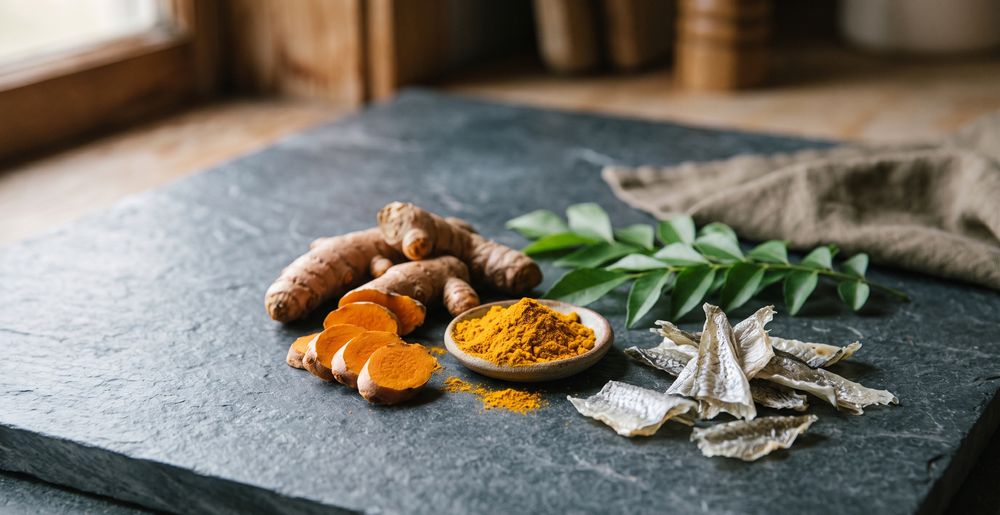
Curcumin, the active polyphenol in turmeric, works through anti-inflammatory and antioxidant pathways rather than by supplying cartilage building blocks directly. That's the core mechanistic difference from glucosamine and chondroitin: curcumin doesn't aim to rebuild cartilage, it aims to calm the inflammatory processes that drive pain and stiffness around a joint. A systematic review and meta-analysis of randomised clinical trials found turmeric extracts and curcumin produced a meaningful reduction in arthritis symptoms compared with placebo, with some trials showing effects comparable to low-dose ibuprofen over several weeks.6
The catch with this category isn't the evidence, it's the labelling. Raw turmeric powder contains only 2 to 5% curcuminoids by weight and curcumin is poorly absorbed alone, so a product's real-world usefulness depends on a concentrated, standardised extract paired with something to aid absorption, commonly piperine (BioPerine), a phytosome formulation, or liposomal delivery. A capsule that just says "turmeric" without a curcuminoid percentage could be delivering a fraction of what any trial actually tested.
Turmeric curcumin is the most general-purpose of the five supplements covered here, useful for broad joint inflammation as well as more specifically diagnosed osteoarthritis, and it pairs reasonably with glucosamine and chondroitin since the two work through different mechanisms rather than competing for the same job.
Find a product: Best Turmeric & Curcumin Supplements UKCollagen — Connective Tissue and Skin, With Modest Joint Evidence
Collagen is the most abundant protein in the body and forms the structural scaffolding of skin, tendons, cartilage, and bone, but its supplement evidence base skews heavily toward skin rather than joints. Multiple trials have found oral collagen peptides improve skin hydration, elasticity, and wrinkle depth over 8 to 12 weeks.7 The joint-specific evidence is smaller and more targeted: a 24-week study in athletes with activity-related joint pain found collagen hydrolysate supplementation improved joint comfort during activity compared with placebo, though this trial was conducted in an athletic population rather than people with diagnosed osteoarthritis.8
That distinction is worth being precise about. Collagen supplies amino acids the body can use to build various connective tissues, including cartilage, but it isn't the targeted cartilage intervention that glucosamine and chondroitin are, and it hasn't been tested in the same osteoarthritis-specific trial designs. Most formulas also include vitamin C, a cofactor the body needs to synthesise new collagen from the raw amino acids supplied.
Collagen makes the most sense as a complement to one of the other four supplements here rather than a substitute for any of them, particularly for anyone already taking it for skin and wanting a plausible secondary benefit for connective tissue generally.
Find a product: Best Collagen Supplements UKHow to Stack These Sensibly
The five supplements in this guide split cleanly into a bone pair and a joint pair, with collagen sitting alongside either. Vitamin D and vitamin K2 work together on calcium metabolism and are the combination with the clearest shared mechanism; many UK products now combine both in a single tablet. Glucosamine/chondroitin and turmeric/curcumin both target joint symptoms but through different routes, cartilage components versus anti-inflammatory action, so combining them is a reasonable bet rather than duplication.
Collagen can sit alongside either pairing without much risk of overlap, since its main evidence lies in skin and general connective tissue rather than competing directly with any of the other four. What's rarely worth doing is stacking all five simultaneously without a clear reason: if your issue is specifically bone density, glucosamine and turmeric won't move that needle, and if your issue is specifically cartilage pain, vitamin D and K2 won't touch it either. Match the stack to the actual problem, introduce one new supplement at a time so you can trace any effect (or side effect) back to its source, and give the combination a full 8 to 12 weeks before judging whether it's working.
FAQ
What's the real difference between a "joint" supplement and a "bone" supplement?
Joint supplements like glucosamine, chondroitin, and turmeric curcumin target cartilage and inflammation around a joint, most often the knee or hip in osteoarthritis.4 Bone supplements like vitamin D and vitamin K2 target mineral density inside the bone itself, a separate tissue with separate biology.2 The two problems can coexist, especially with age, but a supplement built for one doesn't meaningfully treat the other.
Which single supplement should I try first for osteoarthritis knee pain?
Of the five covered here, glucosamine and chondroitin has the most directly relevant trial evidence, though it's genuinely mixed rather than uniformly positive: the GAIT trial found a benefit mainly in people with moderate-to-severe pain, not the general population.4 Turmeric curcumin is a reasonable alternative or addition, with meta-analysis evidence showing a meaningful reduction in arthritis symptoms.6 Neither is dramatic, and both need a full 8 to 12 weeks before you can fairly judge them.
Does vitamin K2 actually help prevent osteoporosis?
The evidence is promising but not settled. A three-year randomised trial in postmenopausal women with osteopenia found MK-7 improved bone mineral density and microarchitecture compared with placebo.3 That said, NICE does not currently recommend vitamin K2 as a standard treatment or preventive measure for osteoporosis, and it isn't part of NHS fracture-risk pathways. Treat it as a complementary nutrient alongside vitamin D, calcium, and weight-bearing exercise, not a replacement for any of them.
Does collagen actually help joints, or is it mainly a skin supplement?
Mainly skin, with joint benefit as a smaller, separate finding. The strongest and most consistent collagen trial data is for skin hydration and elasticity.7 A 24-week study in athletes with activity-related joint pain did find improved joint comfort during activity with collagen hydrolysate, but that trial population was physically active people, not diagnosed osteoarthritis patients, so it's a narrower result than the skin evidence.8
Can I take glucosamine and chondroitin if I'm on warfarin or another blood thinner?
This needs a conversation with your GP or anticoagulation clinic before starting, not a decision made from a product label alone. There's published case-report evidence of glucosamine increasing INR in people taking warfarin, which affects how the drug is dosed and monitored.9 Anyone on an anticoagulant should flag any of the five supplements in this guide to their prescriber first, since several (particularly high-dose vitamin K2 and glucosamine) have genuine, documented interaction potential.
How long before I'd notice a difference from any of these?
It depends entirely on which tissue you're targeting. Joint-symptom supplements (glucosamine, chondroitin, turmeric, collagen) are typically assessed over 8 to 12 weeks in trials, with the GAIT trial running a full 24 weeks before final assessment.4 Bone-density changes are a much slower story: the vitamin K2 trial referenced above ran three full years before reporting results, and meaningful bone-density shifts on a DEXA scan generally take six months to several years to show up.3 None of these five supplements produce a fast, subjectively obvious result the way, say, a painkiller does.
The Bottom Line
Five supplements, five different jobs. If diagnosed or suspected osteoarthritis is the issue, start with glucosamine and chondroitin or turmeric curcumin, both with genuine (if modest) trial evidence for cartilage and joint inflammation specifically. If bone density or osteoporosis risk is the concern, vitamin D paired with vitamin K2 is the better-evidenced route, working on calcium metabolism rather than cartilage at all. Collagen fits alongside either as a connective-tissue and skin supplement with a smaller, separate body of joint evidence, useful as an addition rather than a first choice for joint pain specifically.
Don't buy into the idea that any single "joint and bone" product covers all of this at once. Nearly 9 million people in the UK live with osteoarthritis and 3.5 million with osteoporosis, two genuinely different conditions, and matching the right supplement to the right tissue matters more here than in most categories on this site. Give whichever combination you choose a realistic 8 to 12 weeks for joint symptoms, and months rather than weeks for anything bone-density related, before deciding whether it's working.
-
Comparison of vitamin D2 and vitamin D3 supplementation in raising serum 25-hydroxyvitamin D status: a systematic review and meta-analysis ↩︎
-
Proper Calcium Use: Vitamin K2 as a Promoter of Bone and Cardiovascular Health ↩︎ ↩︎
-
The effect of vitamin MK-7 on bone mineral density and microarchitecture in postmenopausal women with osteopenia, a 3-year randomized, placebo-controlled clinical trial ↩︎ ↩︎ ↩︎
-
Glucosamine, chondroitin sulfate, and the two in combination for painful knee osteoarthritis ↩︎ ↩︎ ↩︎ ↩︎
-
Effects of glucosamine, chondroitin, or placebo in patients with osteoarthritis of hip or knee: network meta-analysis ↩︎
-
Efficacy of Turmeric Extracts and Curcumin for Alleviating the Symptoms of Joint Arthritis: A Systematic Review and Meta-Analysis of Randomized Clinical Trials ↩︎ ↩︎
-
Oral intake of specific bioactive collagen peptides reduces skin wrinkles and increases dermal matrix synthesis ↩︎ ↩︎
-
24-Week study on the use of collagen hydrolysate as a dietary supplement in athletes with activity-related joint pain ↩︎ ↩︎
-
Potential glucosamine-warfarin interaction resulting in increased international normalized ratio: case report and review of the literature and MedWatch database ↩︎