


Best Zinc Supplement UK for Immune Support

About the author...
Will founded Supermushrooms after digging into the research behind mushroom and nootropic supplements. Every pick is checked against clinical dosing, extract standardisation, and real buyer reviews, and each star rating starts from a product's real Amazon score before being adjusted for formulation quality. Read more about how ratings are calculated.
Table of contents
- Key Takeaways (TL;DR)
- How We Choose
- Quick Comparison
- Solgar Zinc Picolinate 22mg
- Thorne Zinc Picolinate 15mg
- WeightWorld Zinc Bisglycinate 25mg
- Varsons Zinc Bisglycinate With Copper 25mg
- Lindens Zinc Citrate 50mg
- Solgar Zinc Citrate 30mg
- Safety and Side Effects
- Best Zinc Supplement FAQ
- The Best Zinc Supplement for You
The best zinc supplement in the UK is currently Solgar Zinc Picolinate 22mg, praised for its well-absorbed chelated form and a dose that sits comfortably within UK safety guidance. See the comparison below for how five other well-reviewed alternatives stack up depending on your priorities.
Zinc is a trace mineral involved in immune-cell function, wound healing, DNA synthesis and the senses of taste and smell, and it's one of the most commonly supplemented minerals in the UK. Unlike some ingredients on this site, though, the honest starting point here isn't a deficiency epidemic. Outright zinc deficiency is rare in a well-fed UK population, and most adults eating a varied diet with meat, dairy, shellfish or legumes get enough from food alone. The real differentiator between products on the shelf isn't whether you're deficient. It's whether the zinc compound a brand has chosen actually gets absorbed once you swallow it.
That distinction matters because not all zinc compounds behave the same way in the gut. Cheap zinc oxide, the form used to bulk out many budget multivitamins, has measurably lower absorption than chelated forms like picolinate, citrate or bisglycinate, where the zinc ion is bound to an organic acid or amino acid that helps it cross the gut wall. When you're choosing a standalone zinc supplement, form quality, clear labelling of how much elemental zinc you're actually getting, and a sensible dose relative to UK safety guidance matter far more than a big number on the front of the pack.
Key Takeaways (TL;DR)
- Favour a chelated form (picolinate, citrate or bisglycinate) over plain zinc oxide, which absorbs less efficiently.
- Check the elemental zinc figure, not just the compound weight; a "50mg" label can mean far less usable zinc than it implies.
- Stay near the UK 25mg/day guidance level for long-term supplemental zinc unless advised otherwise by a clinician.
- True deficiency is rare in the UK, but vegans, vegetarians and older adults have a genuinely higher risk.
- Look for third-party tested, GMP-manufactured products with a clear per-serving breakdown.
- A zinc-copper pairing helps offset the copper depletion that can follow sustained higher-dose zinc use.
- Give a maintenance dose 4-8 weeks before expecting any noticeable change; zinc isn't a same-day fix outside acute cold-lozenge use.
How We Choose
We start from each product's live Amazon UK rating, then weigh the elemental zinc dose against UK safety guidance and the amounts used in general supplementation research, check whether the chelate form and elemental content are clearly disclosed, and look at manufacturing standards such as GMP certification and third-party testing. Value is judged relative to the other five products in this list, not the wider market.
Quick Comparison
Each product's overall rating starts from its real Amazon UK customer rating, then gets adjusted (up to ±0.5) for dose versus clinical research, extract standardisation, manufacturing quality, and value. Click a product name to jump straight to its full review below.
| Product | Best For | Type | Serving | Form |
|---|---|---|---|---|
|
Solgar Zinc Picolinate 22mg 5.0 |
Well-absorbed daily zinc for most adults | Tablets | 1 tablet (22mg elemental zinc) | 22mg elemental zinc, chelated picolinate form |
|
Thorne Zinc Picolinate 15mg 5.0 |
Clinical-grade brand, gentle everyday dose | Capsules | 1 capsule (15mg elemental zinc) | 15mg elemental zinc, chelated picolinate form |
|
WeightWorld Zinc Bisglycinate 25mg 4.6 |
Best value long-term supply | Tablets | 2 tablets (50mg zinc bisglycinate) | 25mg zinc bisglycinate per tablet, amino-acid chelate |
|
Varsons Zinc Bisglycinate With Copper 25mg 4.7 |
Long-term use without copper depletion risk | Tablets | 1 tablet (25mg elemental zinc + 1mg copper) | 25mg elemental zinc bisglycinate + 1mg copper bisglycinate |
|
Lindens Zinc Citrate 50mg 4.9 |
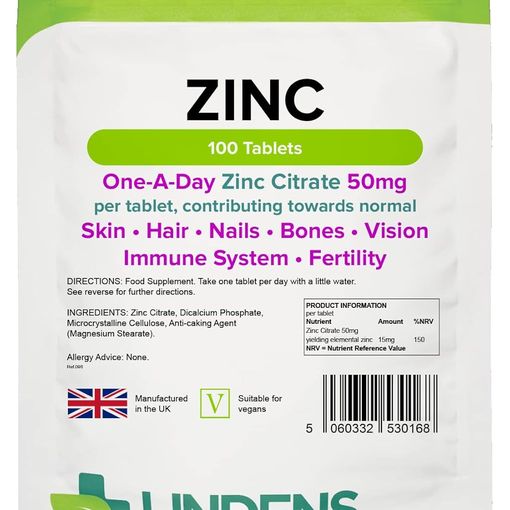
Budget-friendly UK-made daily zinc | Tablets | 1 tablet (50mg zinc citrate, yielding 15mg elemental zinc) | 50mg zinc citrate compound, 15mg elemental zinc (150% NRV) |
|
Solgar Zinc Citrate 30mg 4.8 |
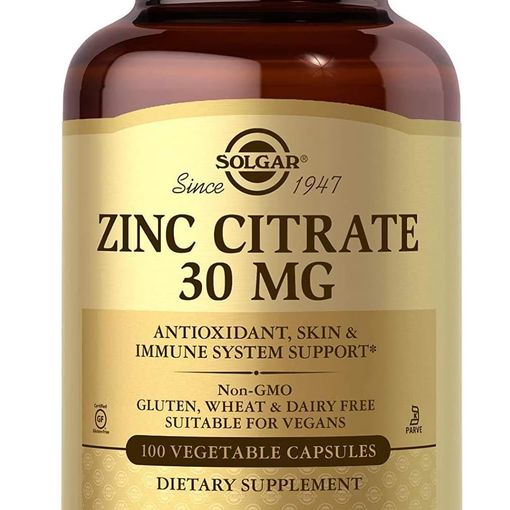
Citrate form for sensitive stomachs | Capsules | 1 capsule (30mg elemental zinc) | 30mg elemental zinc, citrate chelate |
Solgar Zinc Picolinate 22mg
Best Overall Zinc Supplement
based on 9159 Amazon UK reviews (4.7★), adjusted for formulation quality
What We Love About the Overall Pick
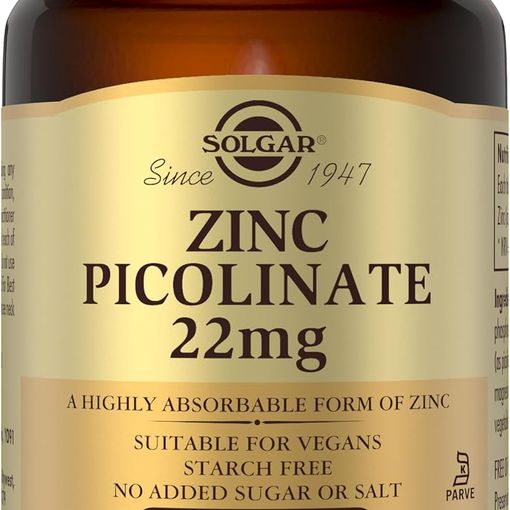
Nearly 9,200 UK reviews sit behind this one at 4.7 stars, the deepest track record of any product in this lineup. One tablet delivers 22mg of elemental zinc bound to picolinic acid, a dose that lands comfortably under the UK Expert Group on Vitamins and Minerals' 25mg/day guidance level for long-term supplemental use, so there's no need to second-guess whether daily use is sensible.
Solgar has been making supplements since 1947 and states the elemental zinc content directly on the label rather than hiding it behind a compound weight, which is a small but genuinely useful transparency point when you're comparing against other brands on this list.
Solgar Picolinate: All The Details
Each amber glass bottle holds 100 vegan tablets, giving roughly three months' supply at one tablet daily. The picolinate chelate is Solgar's flagship zinc form, manufactured to what the brand calls its "Gold Standard," and the tablets are starch-free with no added sugar or salt. Worth knowing: the evidence that picolinate specifically outperforms other chelates rests mainly on one small, unreplicated 1987 crossover trial in 15 volunteers, not a large modern body of research, so treat the "best absorbed" marketing claim with a degree of caution even though picolinate is still a perfectly solid chelated form1.
Thorne Zinc Picolinate 15mg
Best Clinical-Grade, Gentle Everyday Dose
based on 5794 Amazon UK reviews (4.7★), adjusted for formulation quality
Why the Gentle Dose Earns Its Place
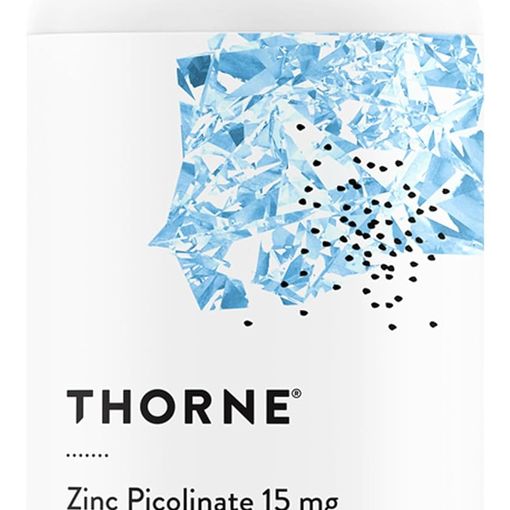
Thorne built its reputation on evidence-based formulation and third-party tested, GMP-certified manufacturing, and it shows here. One capsule provides 15mg of elemental zinc in picolinate form, a dose closer to the amounts used in classic deficiency-correction research than the higher-strength options elsewhere in this lineup. It's suitable for vegetarians and free from soy, dairy, shellfish and fish.
If you want a daily maintenance dose you can take indefinitely without worrying about approaching the UK guidance ceiling, this is the more conservative pick between the two picolinate options here.
Thorne Picolinate: All The Details
The 60-capsule bottle covers two months at one capsule daily. Thorne states the product is crafted to support immune function, eye health and connective tissue integrity, and the brand's manufacturing runs to the same evidence-based, GMP-certified standard across its range that's made it a favourite among clinicians. The trade-off against the Solgar pick above is a smaller pack size and a premium price bracket typical of this brand.
WeightWorld Zinc Bisglycinate 25mg
Best Value for a Long-Term Supply
based on 13290 Amazon UK reviews (4.4★), adjusted for formulation quality
What Stands Out About This 400-Tablet Pack
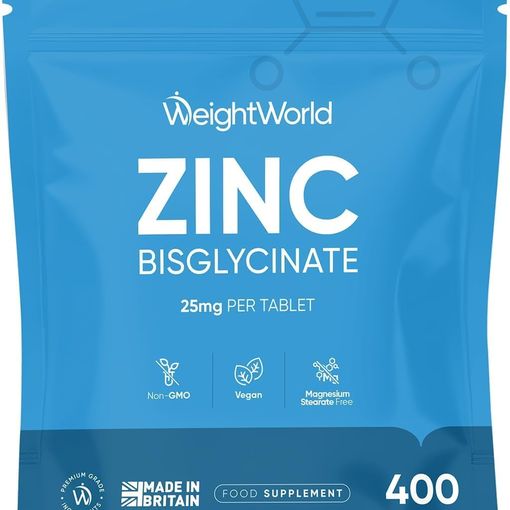
Over 13,000 UK reviews make this the most-reviewed product on this list, and 400 tablets in a single pouch works out to more than six months' supply even at the labelled two-tablet daily serving. Zinc bisglycinate, where zinc is bound to two glycine molecules, is absorbed through the same peptide transport channels the body uses for dietary protein, and comparative studies have found it raises plasma and red-cell zinc levels efficiently2.
There's a genuine caveat worth flagging, though. The label's recommended serving of two tablets works out to 50mg of zinc bisglycinate a day, double the UK 25mg/day guidance level for long-term supplemental intake. Many buyers would be better served taking a single tablet daily for ongoing maintenance and reserving the full two-tablet dose for short periods, rather than following the printed serving indefinitely.
WeightWorld Bisglycinate: All The Details
Made in Britain to a non-GMO standard and free from magnesium stearate, this is a straightforward, no-frills bisglycinate tablet without the added vitamins or blends some competitors include. The huge pack size is what earns its spot here: cost per day of supply is the lowest in this lineup by a clear margin, though the manufacturing credentials on the listing are lighter than the two clinical-focused brands above.
Varsons Zinc Bisglycinate With Copper 25mg
Best for Sustained Long-Term Use
based on 237 Amazon UK reviews (4.4★), adjusted for formulation quality
Why the Copper Pairing Matters Here
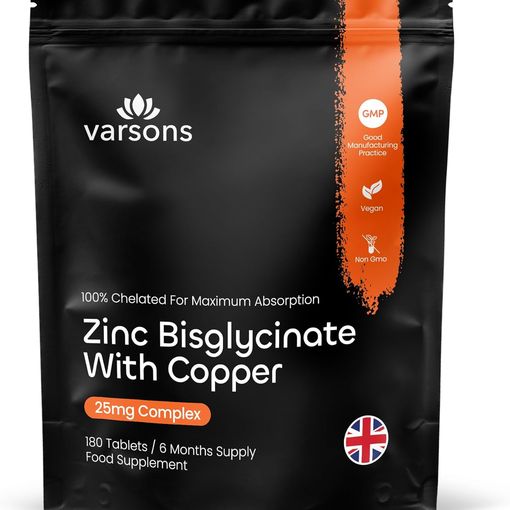
One tablet a day provides 25mg of elemental zinc as bisglycinate, sitting right at the UK guidance ceiling rather than over it, plus 1mg of copper bisglycinate. That second ingredient addresses a real, published problem: sustained higher-dose zinc supplementation competes with copper for absorption via the same intestinal transport protein, and case reports have linked long-term unsupervised zinc use to genuine copper deficiency, including anaemia and neurological symptoms3. Building the copper safeguard directly into the formula is a sensible design choice for anyone planning to take zinc daily for months rather than weeks.
Manufactured in the UK to GMP standards and lab tested, with a cleaner formula that skips magnesium stearate.
Varsons Bisglycinate + Copper: All The Details
The 180-tablet pouch covers six months at one tablet daily, a single easy-to-swallow serving rather than the two-tablet dosing some bisglycinate competitors use. It's vegan, non-GMO, and the brand states an "up to 43% higher absorption" claim for bisglycinate over gluconate, broadly consistent with the comparative bioavailability literature on chelated zinc forms even if that specific percentage is a marketing figure rather than a cited trial result.
Lindens Zinc Citrate 50mg
Best Budget-Friendly UK-Made Pick
based on 2159 Amazon UK reviews (4.7★), adjusted for formulation quality
Why This Budget Pick Still Earns Trust
Here's a genuinely useful lesson in reading labels carefully. The pouch says "Zinc Citrate 50mg," which sounds like a much higher dose than most products here, but the small print clarifies that 50mg is the weight of the citrate compound, not the elemental zinc. One tablet actually yields 15mg of elemental zinc, or 150% of the UK Nutrient Reference Value. Lindens discloses this clearly on the pack rather than leaving buyers to guess, which is exactly the kind of transparency worth rewarding even at this end of the price range.
Manufactured in the UK and letterbox-friendly for easy delivery.
Lindens Citrate: All The Details
A 100-tablet pouch lasts over three months at one tablet daily. The ingredient list is short: zinc citrate, dicalcium phosphate, microcrystalline cellulose and magnesium stearate as an anti-caking agent, with no artificial additions beyond that. It's suitable for vegans and sits at the most accessible price point in this entire lineup, making it a sensible pick for anyone who just wants a straightforward, correctly-dosed daily zinc tablet without paying for a premium brand name.
Solgar Zinc Citrate 30mg
Best Citrate Option for Sensitive Stomachs
based on 3084 Amazon UK reviews (4.6★), adjusted for formulation quality
What Sets This Citrate Pick Apart
Solgar markets zinc citrate specifically for people with digestive sensitivity, and citrate does carry a reasonable evidence base behind that positioning: a double-isotope tracer study found zinc citrate absorption comparable to zinc gluconate and significantly higher than plain zinc oxide4. One capsule delivers 30mg of elemental zinc, non-GMO and gluten-free certified.
That dose is worth a quick caveat. Thirty milligrams sits above the UK 25mg/day guidance level for indefinite long-term use, so this is better suited to shorter courses, periods of higher demand, or use under professional advice than an open-ended daily habit.
Solgar Citrate: All The Details
The 100-capsule bottle covers around three months at one capsule daily. Solgar applies the same "Gold Standard" manufacturing process here as its picolinate line, in 100% recyclable amber glass, and the capsules are vegan, vegetarian and Kosher. It's a reasonable choice for anyone who's found zinc oxide or gluconate hard on the stomach and wants to try a citrate-based alternative instead, so long as the higher dose fits how long you actually plan to take it.
Safety and Side Effects
At doses within UK guidance, daily zinc is generally well tolerated. The main documented risk from higher, sustained intakes is copper deficiency, since zinc and copper compete for absorption in the gut; case reports describe this causing anaemia and, in more severe cases, neurological symptoms after months of unsupervised high-dose use.3
Zinc can also reduce the absorption of certain antibiotics if taken at the same time, so it's worth spacing them a couple of hours apart, and anyone on prescription medication should check with a pharmacist. As with any supplement, pregnant or breastfeeding women should seek medical advice first.
Best Zinc Supplement FAQ
What does zinc actually do in the body? Zinc is a cofactor for hundreds of enzymes and plays a central role in immune cell development and signalling, wound healing, DNA and protein synthesis, and normal taste and smell. Both zinc deficiency and zinc excess disrupt immune function, so the goal with supplementation is adequacy, not maximisation5.
Is zinc deficiency actually common in the UK? No, not in the way marketing sometimes implies. Severe zinc deficiency is rare in a well-nourished population, though a milder, marginal shortfall is thought to affect a meaningful minority, particularly in deprived communities. The clearer risk groups are vegans and vegetarians, since plant-based diets tend to be lower in zinc and higher in phytates, which bind zinc and reduce its absorption. Even so, several studies find vegetarians maintain similar blood zinc levels to meat-eaters despite lower intake, likely because the body adapts by absorbing and retaining zinc more efficiently over time6. Older adults and anyone with a restrictive diet or malabsorption condition are the other groups worth paying attention to.
Which zinc form absorbs best: picolinate, citrate, bisglycinate or oxide? Zinc oxide is consistently the weakest performer in absorption studies, with one tracer study putting its fractional absorption at around 50%, compared with roughly 60-61% for citrate and gluconate4. Bisglycinate has shown strong plasma and red-cell zinc uptake in comparative testing2. Picolinate's reputation rests mainly on a small 1987 human trial that's never been replicated at scale, so while it's a legitimate chelated form, its specific superiority claim is weaker evidence than the citrate and bisglycinate data1. In practice, any of the three chelated forms is a reasonable choice over plain oxide.
How much zinc should I take daily? The UK Reference Nutrient Intake is around 9.5mg/day for men and 7mg/day for women, most of which a varied diet already supplies. For supplemental zinc taken on top of diet, the UK Expert Group on Vitamins and Minerals sets a guidance level of 25mg/day for long-term use without medical supervision. Several products in this comparison sit at or below that figure; a couple sit modestly above it and are better suited to shorter-term use.
Does zinc actually help with colds, or is that a myth? There's real trial evidence for a specific, narrower claim than "boosts immunity" in general. A meta-analysis of placebo-controlled trials using high-dose zinc acetate lozenges (well above typical daily supplement doses, and only for the duration of the illness) found colds resolved roughly 33% faster on average, with shorter nasal discharge, congestion and cough7. A separate Cochrane review reached a more cautious overall verdict on zinc for cold prevention and treatment, reflecting mixed quality across the wider evidence base8. This is a different use case to daily maintenance dosing, and it's specifically about short-course, high-dose lozenges taken at the first sign of a cold, not an ongoing capsule.
Is it safe to take zinc long-term, and does it interact with anything? Yes at guideline doses — see Safety and Side Effects above for the copper-deficiency risk at higher intakes.
Can I take zinc alongside mushroom supplements like lion's mane or reishi? Yes. There's no known interaction between zinc and adaptogenic mushroom extracts, and the two work through entirely different systems. Many people combine a daily zinc supplement with a mushroom blend as part of a broader immune or wellness routine, introducing one new product at a time so any effects are easier to trace back to their source.
The Best Zinc Supplement for You
Solgar's Zinc Picolinate 22mg is the safest default for most people: a well-absorbed chelated form, a huge review history, and a dose that fits UK guidance without a second thought. Thorne suits anyone wanting a more clinical brand at a gentler dose, while WeightWorld and Lindens cover the budget end at very different price-to-supply ratios, so long as you're mindful of the actual serving sizes involved. Varsons is worth a closer look if you're planning to take zinc for months at a time and want the copper safeguard built in, and Solgar's citrate option is there for anyone whose stomach doesn't get on with other forms. Whichever you choose, remember that zinc is one piece of a wider immune and diet picture rather than a substitute for it.
-
Comparative absorption of zinc picolinate, zinc citrate and zinc gluconate in humans ↩︎ ↩︎
-
Comparative Absorption and Bioavailability of Various Chemical Forms of Zinc in Humans: A Narrative Review ↩︎ ↩︎
-
Copper Deficiency Mimicking Myelodysplastic Syndrome: Zinc Supplementation in the Setting of COVID-19 ↩︎ ↩︎
-
Zinc absorption by young adults from supplemental zinc citrate is comparable with that from zinc gluconate and higher than from zinc oxide ↩︎ ↩︎
-
Dietary and Physiological Effects of Zinc on the Immune System ↩︎
-
Zinc lozenges may shorten the duration of colds: a systematic review ↩︎