

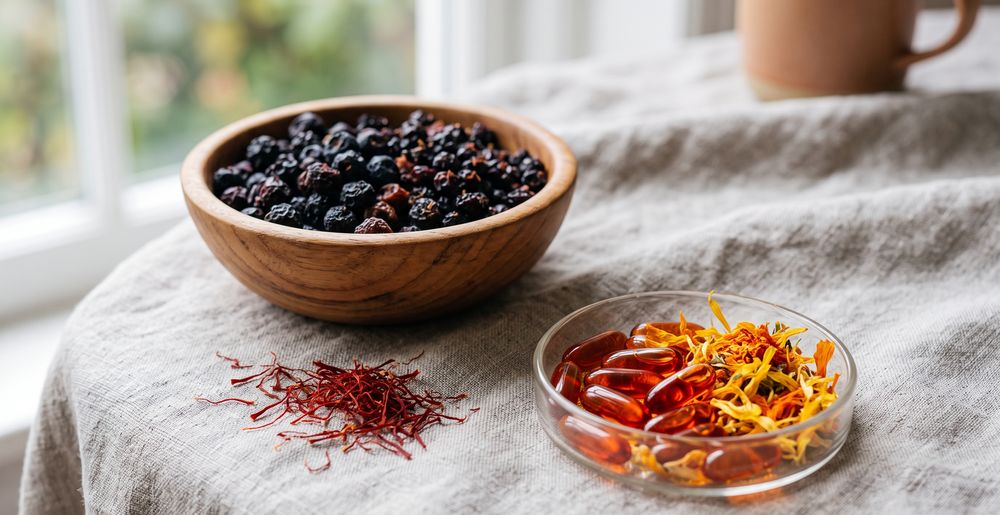
Performance Lab Vision Review UK: Ingredients, Evidence & Verdict

About the author...
Will founded Supermushrooms after digging into the research behind mushroom and nootropic supplements. Every pick is checked against clinical dosing, extract standardisation, and real buyer reviews, and each star rating starts from a product's real Amazon score before being adjusted for formulation quality. Read more about how ratings are calculated.
Table of contents
- Key Takeaways (TL;DR)
- What Is Performance Lab Vision?
-
The Full Ingredient Breakdown
- Lutein (10mg) and Zeaxanthin (2mg) — The AREDS2 Ratio
- Astaxanthin (4mg) — Haematococcus pluvialis Algae Extract
- European Bilberry Extract (25mg, 25% Anthocyanosides) — Weaker Than Its Reputation
- Saffron (10mg, 0.3% Safranal) — Real but Under-Dosed for AMD
- Freeze-Dried Blackcurrant (300mg) and Blackcurrant Extract (25mg, 25% Anthocyanins)
- Manufacturing and Quality
- Where It Falls Short
- Who It's For
- Price and Value
- Verdict
-
FAQ
- Does Performance Lab Vision actually work?
- Is the "improves night vision" claim on Performance Lab Vision true?
- How does Performance Lab Vision compare to buying lutein, zeaxanthin and astaxanthin separately?
- Is Performance Lab Vision safe?
- How long before I'd notice a difference?
- Is Performance Lab Vision worth the price over a basic lutein supplement?
Performance Lab Vision is a seven-ingredient eye-health formula built around lutein and zeaxanthin dosed at the 10mg-to-2mg amounts tested in the AREDS2 trial, alongside astaxanthin, bilberry and saffron. The lutein and zeaxanthin dose has the best evidence behind it in this formula, though even that evidence is more modest than the marketing implies, and several of the other claims made for the product are thinner still.
Some links in this review are affiliate links. If you buy through one, we may earn a small commission at no extra cost to you, which goes toward the research and testing behind guides like this one. It has no bearing on the verdict below or which products we recommend. Full details in our Advertiser Disclosure.
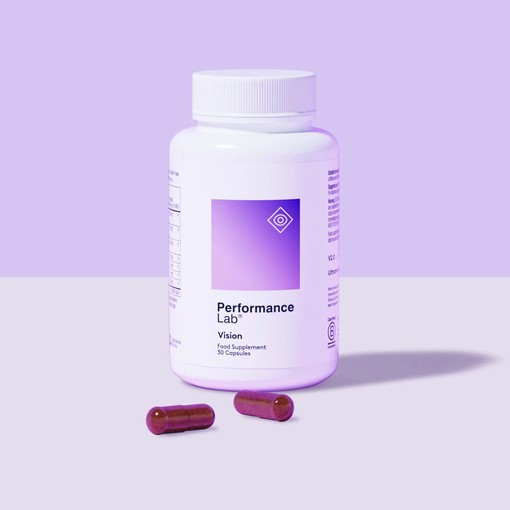
Performance Lab is part of the Performance Lab Group. That's the same company behind Opti-Nutra's Mind Lab Pro, which we've reviewed in detail separately, and behind the NutriGenesis Multi vitamins we've also covered here. Vision is the group's dedicated eye-health product. It's currently in its second formula revision (v2), sold direct rather than through Amazon. Age-related macular degeneration is one of the most common causes of severe sight loss in UK adults over 65. It's also the specific condition the strongest evidence in this formula, the AREDS2 carotenoid combination, was designed to slow.1
This review goes through the formula ingredient by ingredient at the doses actually printed on the label, weighs each one against the independent research specific to eye health rather than general antioxidant claims, and is honest about which of the brand's marketing lines (night vision, motion detection, "benefits from 30 minutes") hold up and which don't.
Key Takeaways (TL;DR)
- Lutein (10mg) and zeaxanthin (2mg) match the dose and 5:1 ratio tested in the AREDS2 trial, the most-studied piece of this formula, though the trial's primary analysis found no significant benefit and a 10-year follow-up found a modest one.12
- Astaxanthin at 4mg has genuine RCT support for digital eye strain and accommodation, though most of that evidence comes from smaller Japanese trials rather than large independent replications.34
- Bilberry's famous "night vision" claim doesn't hold up in rigorous placebo-controlled trials; its better-supported use is reducing eye fatigue from screen work, at a higher dose than Vision includes.56
- Saffron has a real but modest AMD evidence base (20-30mg/day in trials), and Vision's 10mg dose sits below the amounts actually studied.78
- No proprietary blend: all seven ingredients are disclosed at an exact milligram amount, matching the transparency standard of Mind Lab Pro and NutriGenesis Multi.
- Treat the "benefits from 30 minutes" and "night vision" marketing claims with real skepticism; the underlying research supports a gradual, weeks-to-months effect on measurable eye strain and macular markers, not an acute perceptual boost.
- At one capsule a day for around a month per bottle, it's simple to take but sits at the premium end of the eye-health supplement category.
What Is Performance Lab Vision?
Each bottle holds 30 NutriCaps, a one-month supply at the stated serving of one capsule daily, taken with a fat-containing meal since several of the actives (astaxanthin, lutein, zeaxanthin) are fat-soluble carotenoids that absorb better alongside dietary fat. The capsule shell itself is Performance Lab's usual NutriCaps: pullulan fermented from tapioca, with rice concentrate (branded Nu-FLOW) as a flow agent, rather than gelatin or HPMC.
The formula leans on carotenoids and anthocyanins almost exclusively, which is a coherent choice given what the eye-health literature actually studies. Every ingredient is disclosed at an exact dose rather than folded into a proprietary blend total, the same transparency standard we look for across every product on this site, and the same one Mind Lab Pro and NutriGenesis Multi meet.
The Full Ingredient Breakdown
Lutein (10mg) and Zeaxanthin (2mg) — The AREDS2 Ratio
Lutein and zeaxanthin are xanthophyll carotenoids. They concentrate specifically in the macula, the part of the retina responsible for sharp central vision, where they're thought to filter high-energy blue light and act as localised antioxidants. This is the best-studied pairing in the whole formula, though best-studied is not the same as proven. The Age-Related Eye Disease Study 2 (AREDS2) was a large randomised clinical trial run by the US National Eye Institute. It tested 10mg lutein plus 2mg zeaxanthin daily in people at high risk of advanced AMD. In the primary analysis, adding them to the original AREDS formula did not significantly reduce progression to advanced disease (hazard ratio 0.90, P = .12), but the researchers concluded they were an appropriate substitute for beta-carotene, which was linked to more lung cancers in former smokers.1 A 10-year follow-up found a small but statistically significant reduction in progression with lutein and zeaxanthin (hazard ratio 0.91, 95% CI 0.84-0.99).2 Vision's label uses that exact 10:2 ratio. That's a genuine point of differentiation from many eye-health products that either omit zeaxanthin entirely or use a token amount. If you'd rather compare dedicated products, our lutein and zeaxanthin supplement comparison covers the alternatives.
Worth being precise about what AREDS2 actually showed. It was a trial in people who already had AMD, aimed at slowing progression, not a study of prevention in people with healthy eyes. It also tested lutein and zeaxanthin as one part of a larger multi-nutrient formula, rather than in isolation. That doesn't undermine the dose choice here. But it means "clinically studied dose" is a fair claim, while "proven to prevent AMD" would overstate what the trial found: even in the at-risk people it did study, the benefit was small and only clear on long-term follow-up.
Astaxanthin (4mg) — Haematococcus pluvialis Algae Extract
Astaxanthin is a carotenoid antioxidant extracted from the microalgae Haematococcus pluvialis. It's the one ingredient in this formula with decent evidence for acute eye-strain relief specifically, rather than just long-term structural eye health. A randomised, double-blind, placebo-controlled Japanese trial combined astaxanthin, lutein and anthocyanin. It found measurable improvements in eye function markers, including pupillary response, after visual display terminal use.3 A separate randomised, placebo-controlled trial used astaxanthin alongside lutein and zeaxanthin, and found improved eye-hand coordination and smooth-pursuit eye movement following screen use.4 Both are genuine RCTs. But both are also relatively small, Japanese-population studies rather than large independent Western replications, so treat the effect size as plausible rather than firmly settled.
At 4mg, Vision's astaxanthin dose is at the low end of the 4-12mg range used in astaxanthin trials generally, and a little below the 6mg (taken with the same 10mg lutein and 2mg zeaxanthin) used in one of the eye-function trials cited here4. The other combination trial's abstract doesn't state its astaxanthin dose, so we can't say Vision matches it.3 It's a lower dose than several single-ingredient astaxanthin products, which is not necessarily a flaw, since no trial shows eye function needs more, but it means the 4mg figure is a reasonable dose rather than a proven eye-health dose. Our dedicated Best Astaxanthin Supplement UK guide compares it with the single-ingredient options.
Find a product: Best Astaxanthin Supplements UKEuropean Bilberry Extract (25mg, 25% Anthocyanosides) — Weaker Than Its Reputation
Bilberry's eye-health reputation rests heavily on a World War II-era anecdote about RAF pilots and night vision. That anecdote never had a rigorous trial behind it. A systematic review of placebo-controlled trials on bilberry anthocyanosides for night vision found something telling: the most methodologically rigorous studies were consistently negative, while positive results clustered in older, less rigorous trials.5 That's a genuinely important distinction. The "improves night vision" claim doesn't hold up under proper controlled testing, whatever the marketing copy implies.
Bilberry's better-supported use is different: reducing subjective eye fatigue from prolonged screen work. A randomised controlled trial in Japanese video display terminal workers found that 480mg of bilberry extract daily significantly reduced eye fatigue symptoms and improved accommodative function after eight weeks versus placebo.6 That's nearly 20 times the 25mg dose Vision includes. At this level, bilberry is best read as a minor supporting ingredient rather than one doing independent clinical work. It's definitely not a night-vision enhancer. Our bilberry supplement comparison covers products with a dedicated dose.
Saffron (10mg, 0.3% Safranal) — Real but Under-Dosed for AMD
Saffron's active compounds, crocin and crocetin, have a genuine, if modest, clinical evidence base in age-related macular degeneration specifically. That sets it apart from most "eye health" herbal add-ins that have no disease-specific trials at all. A randomised clinical trial in adults with mild-to-moderate AMD found that oral saffron improved measures of visual function over several months of supplementation.7 A separate longitudinal follow-up study in early AMD found the improvement in retinal function was sustained over time, rather than a short-lived effect.8
The dose is the sticking point. Both of those trials used 20-30mg of saffron daily. Vision includes 10mg, roughly a third to a half of what's actually been studied for this specific use. That doesn't make the inclusion pointless. Saffron at lower doses has supporting evidence in mood and other areas we cover in our Best Saffron Supplement UK guide. But for the AMD-specific claim implied by pairing it with lutein, zeaxanthin and astaxanthin, 10mg is a meaningfully lighter dose than the trials behind that claim.
Find a product: Best Saffron Supplements UKFreeze-Dried Blackcurrant (300mg) and Blackcurrant Extract (25mg, 25% Anthocyanins)
Blackcurrant contributes anthocyanins, the same broad compound class as bilberry's anthocyanosides. It's the largest single ingredient in the formula by weight: 300mg whole fruit powder plus a 25mg standardised extract. The eye-health evidence here is narrower than for lutein/zeaxanthin or saffron. A two-year randomised, placebo-controlled trial of blackcurrant anthocyanins in people with normal-tension glaucoma found a statistically significant benefit on visual field progression compared with placebo. That's a meaningful finding, but one specific to glaucoma rather than general eye strain or AMD.9 There's no trial we could find testing blackcurrant on its own for the digital eye-strain or macular-health claims Vision makes more broadly. Read it as a plausible antioxidant contributor riding alongside the better-evidenced carotenoids, not an ingredient with its own dedicated eye-health trial behind Vision's specific claims.
Manufacturing and Quality
Performance Lab Vision is manufactured to GMP standards and the brand states it's third-party tested, though as with every brand's self-reported quality claims, we haven't independently audited batch-level certificates of analysis ourselves. It's vegan, non-GMO, Clean Label Project Certified, and free from soy, wheat, gluten, caffeine and artificial additives, with the wider Performance Lab company holding B Corp certification, the same broader ethical accreditation we noted on the Multi review. On Performance Lab's own site (Vision isn't sold on Amazon), it currently holds a 4.75/5 rating from 50 reviews, a real but comparatively small sample next to the thousands of Amazon reviews behind some of the single-ingredient astaxanthin and saffron products we cover elsewhere.
Where It Falls Short
The honest gap here isn't ingredient choice. Every compound in this formula has some genuine eye-health research behind it. The real gap is dose versus marketing claim. Lutein and zeaxanthin are dosed exactly as in AREDS2, which is a real strength. Astaxanthin's 4mg is within the usual trial range but a little below the 6mg used in one eye-function trial. But saffron sits at roughly a third to a half of the amount used in the AMD trials cited to justify its inclusion. Bilberry sits at around 1/19th of the dose shown to reduce eye fatigue in the strongest trial behind it. The brand's own marketing language ("night vision," "motion detection," "benefits from 30 minutes") leans considerably further than what the underlying research actually demonstrates. The night vision claim specifically runs against the most rigorous bilberry trials available, which found no effect.5
None of that means the formula is dishonestly built. It means the label transparency (every dose disclosed) doesn't extend to the marketing copy, which is worth knowing before you decide how much weight to put on the more dramatic claims.
Who It's For
Vision suits someone who wants one well-labelled daily formula covering the carotenoids the macular-health research actually studies together, rather than buying lutein, zeaxanthin, astaxanthin, bilberry and saffron as five separate bottles. It's a particularly sensible pick if AMD risk reduction is your main concern, since the lutein/zeaxanthin dose matches the trial that established that specific benefit. It's a weaker fit if you're chasing the "night vision" or "motion detection" claims specifically, since that evidence doesn't hold up under controlled testing. It's also a weaker fit if you want saffron or bilberry at their own clinically-studied doses, since both are diluted here relative to the trials behind them.
Price and Value
Performance Lab Vision sits at the premium end of the eye-health supplement category, whether bought as a one-off month's supply or on a rolling subscription. A longer multi-bottle subscription brings the effective monthly cost down meaningfully versus a single one-off purchase, in line with how Performance Lab prices its other subscription tiers. The comparison that matters is against assembling lutein, zeaxanthin, astaxanthin, bilberry and saffron as five separate single-ingredient products. That's what replicating this exact stack would otherwise require. Buyers who specifically want AREDS2-ratio lutein and zeaxanthin, without decoding a proprietary blend, will likely find the price defensible. Buyers who mainly want saffron or bilberry at full clinical strength will get better value from a dedicated single-ingredient product at the correct dose.
Verdict
Performance Lab Vision's strongest claim to credibility is the one it doesn't have to shout about: 10mg lutein and 2mg zeaxanthin, the exact dose and ratio tested in the AREDS2 trial, which found no significant benefit in its primary analysis but a modest one at 10-year follow-up. Astaxanthin at 4mg is within the usual trial range, though a little below the 6mg used in one eye-function trial. Saffron and bilberry are both real, evidence-backed inclusions. Both are diluted well below the amounts their own cited research actually used. Several of the brand's more dramatic marketing claims, night vision and motion detection in particular, don't survive contact with the best available trials.
For someone specifically slowing AMD progression with a properly disclosed carotenoid dose matching the one studied in AREDS2, it's a defensible, well-labelled choice. For someone chasing the fuller list of vision-enhancement claims on the product page, or wanting saffron or bilberry at their own clinically-studied strength, the marketing outruns the evidence.
FAQ
Does Performance Lab Vision actually work?
The lutein and zeaxanthin dose matches the dose tested in AREDS2, whose primary analysis found no significant benefit but whose 10-year follow-up found a modest one, which makes it the formula's best-studied claim rather than a proven one.12 Astaxanthin has decent supporting RCTs for digital eye strain specifically.34 Saffron and bilberry both have genuine research behind them, but at doses below what those specific trials used, so don't expect their full studied effect from this formula alone.5678
Is the "improves night vision" claim on Performance Lab Vision true?
Not according to the most rigorous evidence available. A systematic review of placebo-controlled bilberry trials found the studies with the strongest methodology consistently failed to show a night vision benefit, while positive results came from older, less controlled research.5 Treat this specific claim with real skepticism regardless of which brand makes it.
How does Performance Lab Vision compare to buying lutein, zeaxanthin and astaxanthin separately?
Buying lutein, zeaxanthin, astaxanthin, bilberry and saffron individually would let you dose saffron and bilberry at the full amounts used in their own supporting trials, both of which Vision under-doses. It costs more in total bottles, though, and requires tracking five separate labels. Vision trades some of that ingredient-level precision for one consistent, fully-disclosed formula built around the best-evidenced pairing (lutein and zeaxanthin) at the correct dose.
Is Performance Lab Vision safe?
The individual ingredients all have established safety profiles at these doses, and the formula is stimulant-free and third-party tested. As with any supplement built around fat-soluble carotenoids, take it with a meal containing some fat for proper absorption. Check with a pharmacist or GP if you're on medication. High-dose carotenoid supplementation has specific caveats for smokers in some contexts, relevant to beta-carotene rather than lutein or zeaxanthin directly, but worth a quick check if you smoke.
How long before I'd notice a difference?
The strongest evidence behind this formula, the AREDS2 lutein and zeaxanthin result on AMD progression, operates on a timescale of years, not days: the effect only became clear at 10-year follow-up.2 The astaxanthin eye-strain trials showed measurable improvements over four to twelve weeks of daily use.34 Treat any claim of a noticeable effect within 30 minutes as marketing framing rather than something the underlying research supports.
Is Performance Lab Vision worth the price over a basic lutein supplement?
That depends on what you want. A basic lutein-only product will be cheaper but won't include the AREDS2-matched zeaxanthin ratio, astaxanthin, or the saffron and bilberry inclusions. If matching the AREDS2 dosing is genuinely your priority, check that any alternative you're comparing against actually includes zeaxanthin in a similar ratio, not just lutein alone, since several budget lutein products omit zeaxanthin entirely. For how this formula fits among the other eye-health options, see our guide to the best supplements for eye health.
-
Lutein + zeaxanthin and omega-3 fatty acids for age-related macular degeneration: the Age-Related Eye Disease Study 2 (AREDS2) randomized clinical trial ↩︎ ↩︎ ↩︎ ↩︎
-
Long-term Outcomes of Adding Lutein/Zeaxanthin and ω-3 Fatty Acids to the AREDS Supplements on Age-Related Macular Degeneration Progression: AREDS2 Report 28 ↩︎ ↩︎ ↩︎ ↩︎
-
Effects of anthocyanin, astaxanthin, and lutein on eye functions: a randomized, double-blind, placebo-controlled study ↩︎ ↩︎ ↩︎ ↩︎ ↩︎
-
Effects of Astaxanthin, Lutein, and Zeaxanthin on Eye-Hand Coordination and Smooth-Pursuit Eye Movement after Visual Display Terminal Operation in Healthy Subjects: A Randomized, Double-Blind Placebo-Controlled Intergroup Trial ↩︎ ↩︎ ↩︎ ↩︎ ↩︎
-
Anthocyanosides of Vaccinium myrtillus (bilberry) for night vision: a systematic review of placebo-controlled trials ↩︎ ↩︎ ↩︎ ↩︎ ↩︎
-
Bilberry extract supplementation for preventing eye fatigue in video display terminal workers ↩︎ ↩︎ ↩︎
-
Saffron therapy for the treatment of mild/moderate age-related macular degeneration: a randomised clinical trial ↩︎ ↩︎ ↩︎
-
A longitudinal follow-up study of saffron supplementation in early age-related macular degeneration: sustained benefits to central retinal function ↩︎ ↩︎ ↩︎
-
Two-year randomized, placebo-controlled study of black currant anthocyanins on visual field in glaucoma ↩︎