

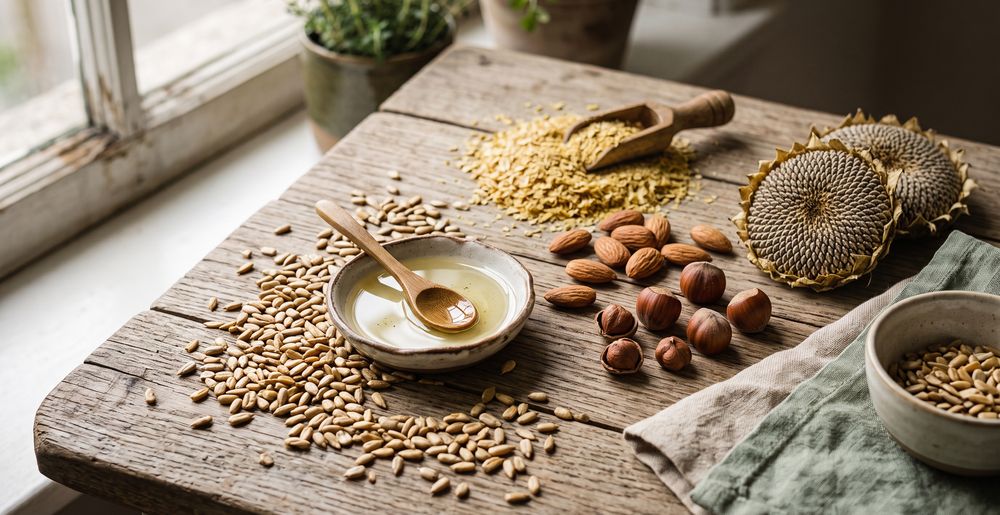
Best Vitamin E Supplement UK for Skin & Cell Protection

About the author...
Will founded Supermushrooms after digging into the research behind mushroom and nootropic supplements. Every pick is checked against clinical dosing, extract standardisation, and real buyer reviews, and each star rating starts from a product's real Amazon score before being adjusted for formulation quality. Read more about how ratings are calculated.
Table of contents
- Key Takeaways (TL;DR)
- How We Choose
- Quick Comparison
- Now Foods Advanced Gamma-E Complex
- Natures Aid Vitamin E 1000iu
- Solgar Natural Source Vitamin E 268mg
- Nutravita Vitamin E 400IU
- NATURELO Natural Vitamin E from Sunflower
- WeightWorld Vitamin E 400IU
- Safety and Side Effects
-
Best Vitamin E Supplement FAQ
- What is vitamin E and what does it actually do in the body?
- What's the difference between natural and synthetic vitamin E?
- What does "mixed tocopherols" mean, and is it always accurate?
- What are tocotrienols, and are they worth looking for?
- What are the proven benefits of taking a vitamin E supplement?
- Is it possible to take too much vitamin E?
- How long does it take to notice a difference?
- Does vitamin E pair well with mushroom supplements?
- The Best Vitamin E Supplement for You
The best vitamin E supplement in the UK right now is Now Foods Advanced Gamma-E Complex, praised for genuinely disclosing a full spectrum of mixed tocopherols and tocotrienols rather than the single isolated isomer most cheap listings contain. See the comparison below for how five other well-reviewed alternatives stack up depending on your priorities, from highest single-dose strength to the most accessible price point.
Vitamin E is a fat-soluble antioxidant vitamin, and the name actually covers a family of eight related compounds: four tocopherols (alpha, beta, gamma, delta) and four tocotrienols. Most UK supplements contain only one of these, alpha-tocopherol, because it's the form the body preferentially retains in blood plasma and the one most food-labelling regulations are built around. That single-isomer focus isn't wrong exactly, but it does mean a shopper reading "natural vitamin E" or "mixed tocopherols" on the front of a bottle can end up with a very different product to what the label implies, since neither phrase is legally defined in the way "organic" or "gluten-free" are.
The clearest, most consistently overlooked distinction in this category is natural versus synthetic sourcing. Natural vitamin E is written as d-alpha-tocopherol on an ingredients panel; the synthetic version is dl-alpha-tocopherol (or dl-alpha-tocopheryl acetate once esterified for stability), made up of eight different stereoisomer forms instead of the single one the body actually uses efficiently. One extra letter on the label separates a compound your body retains well from one it mostly excretes unused. A step above both sits genuine full-spectrum vitamin E: products that keep the gamma, delta and beta tocopherols alongside tocotrienols, closer to how the vitamin actually occurs in sunflower, wheatgerm or palm oil. Below, we break down where each of our six picks sits on that spectrum so you can match the product to what you're actually trying to buy.
Key Takeaways (TL;DR)
- Check for "d-alpha" not "dl-alpha" on the ingredients panel: the "dl-" prefix means synthetic, lower-retention vitamin E.
- True full-spectrum products disclose gamma, delta and beta tocopherols or tocotrienols by name, not just a vague "mixed tocopherols" claim.
- 400 IU is a standard maintenance dose; 1000 IU products sit at the higher end used in some immune-function research.
- NHS guidance puts the safe upper limit for vitamin E supplements at 540mg (800 IU) a day.1
- Manufacturing checks (independent lab testing, GMP facilities, clear sourcing) separate reliable brands from vague listings.
- Vitamin E is fat-soluble, so take it with a meal containing some fat for better absorption.
- Give it 8-12 weeks of consistent daily use before judging any effect on skin, hair or general antioxidant markers.
How We Choose
We score each vitamin E product on four factors: whether the dose sits within the range used in the relevant clinical research, whether the tocopherol form (natural single-isomer, synthetic, or genuine full-spectrum) is clearly and honestly disclosed, the manufacturing and testing credentials behind the brand, and value relative to the other products in this comparison. Full methodology is on our About page.
Quick Comparison
Each product's overall rating starts from its real Amazon UK customer rating, then gets adjusted (up to plus or minus 0.5) for dose versus clinical research, extract standardisation, manufacturing quality, and value. Click a product name to jump straight to its full review below.
| Product | Best For | Type | Serving | Standardisation |
|---|---|---|---|---|
|
Now Foods Advanced Gamma-E Complex 4.4 |
Full-spectrum mixed tocopherols and tocotrienols | Softgels | 2 softgels (450 IU alpha-tocopherol plus mixed tocopherols and tocotrienols) | 600mg total tocopherols with 200mg gamma-tocopherol, plus a 10mg Tocomin mixed tocotrienol complex |
|
Natures Aid Vitamin E 1000iu 4.7 |
Highest-strength single-isomer dose | Softgels | 1 softgel (1000 IU / 670mg) | Natural d-alpha tocopherol acetate, single isomer |
|
Solgar Natural Source Vitamin E 268mg 4.6 |
Trusted heritage brand, small-batch quality | Softgels (Vegetable) | 1 softgel (268mg / 400 IU) | Natural d-alpha tocopherol, single isomer |
|
Nutravita Vitamin E 400IU 4.7 |
UK-made, vegan, highly absorbable | Capsules (Vegan) | 1 capsule (400 IU) | Natural d-alpha tocopheryl acid succinate, single isomer |
|
NATURELO Natural Vitamin E from Sunflower 4.7 |
Soy-free, vegan, whole-food sourced | Capsules (Vegan) | 1 capsule (180mg) | Natural d-alpha tocopherol from sunflower, single isomer |
|
WeightWorld Vitamin E 400IU 4.5 |
Best budget option for a 6-month supply | Softgels (Vegan) | 1 softgel (400 IU) | Synthetic dl-alpha-tocopheryl acetate, single isomer |
Now Foods Advanced Gamma-E Complex
Best Full-Spectrum Vitamin E
based on 28 Amazon UK reviews (4.1★), adjusted for formulation quality
What We Love About the Full Spectrum
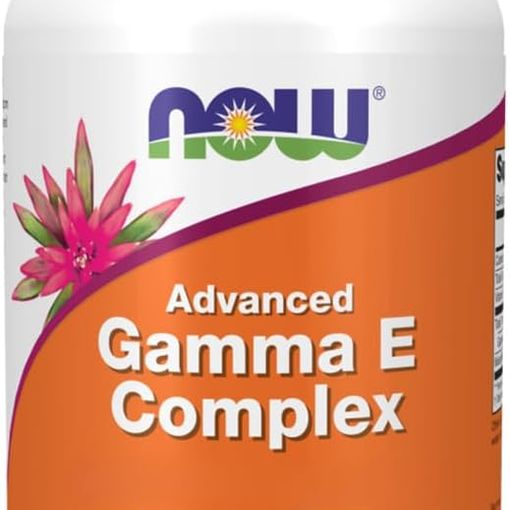
This is the only product in our lineup that genuinely earns the word "complex." Instead of isolating one tocopherol, NOW built the formula around 600mg of total tocopherols per two-softgel serving, including 200mg of gamma-tocopherol specifically, alongside a 10mg dose of Tocomin, a branded, standardised mixed tocotrienol extract. Gamma-tocopherol and the tocotrienols are largely stripped out of the alpha-only products that dominate this category, even though both have their own distinct antioxidant activity that alpha-tocopherol alone doesn't replicate. If matching how vitamin E naturally occurs in whole foods matters more to you than a big headline IU number, this is the pick to reach for.
Full-Spectrum Complex: All The Details
Each two-softgel serving delivers 450 IU of vitamin E as d-alpha-tocopherol, plus the broader 600mg tocopherol blend and the 10mg Tocomin tocotrienol complex named above. The 120-count bottle is a two-month supply at that serving size. Softgels are independently lab-tested for purity, gluten-free and produced without genetic engineering. Its review count is the smallest of the six here, so weigh that against the ingredient quality it offers.
Natures Aid Vitamin E 1000iu
Best High-Strength Vitamin E
based on 2925 Amazon UK reviews (4.5★), adjusted for formulation quality
What We Love About the 1000 IU Dose
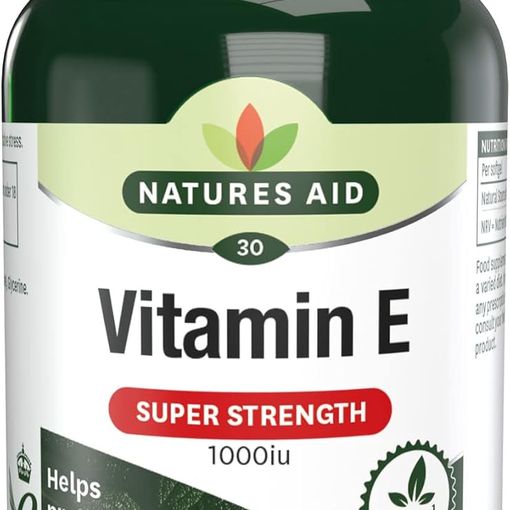
Natures Aid packs the highest single-capsule dose of the six products here, at 1000 IU of natural d-alpha tocopherol per softgel. That puts it toward the upper end of doses used in the immune-function research on older adults, without approaching the NHS's 800 IU supplemental safe upper limit. Nearly 3,000 reviews at a 4.5-star average is the strongest review base in this lineup outside the two budget vegan capsules, and the softgels are made in the UK to GMP and pharmaceutical manufacturing standards.
1000 IU Softgel: All The Details
Each softgel provides 1000 IU (670mg) of natural-source d-alpha tocopherol acetate, sourced from soya. Take one softgel daily with food. It's a single-isomer product rather than a full-spectrum one, so the trade-off here is dose strength over breadth of tocopherol coverage. The 30-count bottle is a one-month supply at the labelled serving.
Solgar Natural Source Vitamin E 268mg
Best Heritage Brand Vitamin E
based on 351 Amazon UK reviews (4.5★), adjusted for formulation quality
Small-Batch Quality Since 1947
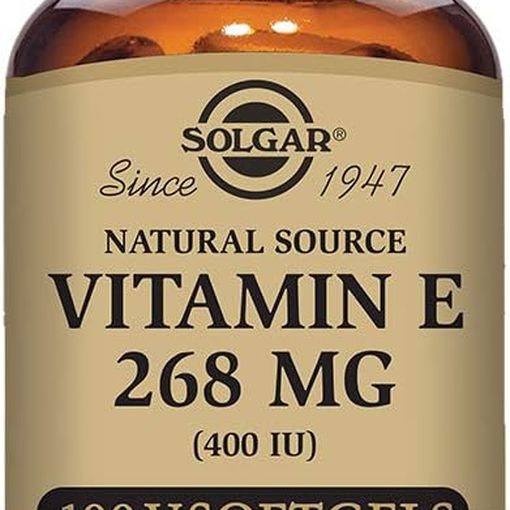
Solgar has been making vitamins since 1947, and this bottle reflects that long track record rather than any unusual formulation trick. It's a straightforward natural d-alpha-tocopherol softgel at a standard 400 IU maintenance dose, made in small batches the company says helps keep bottle-to-bottle consistency tight. The amber glass bottle is fully recyclable, a small but genuine sustainability detail most competitors skip in favour of plastic.
Solgar's Small-Batch Approach: All The Details
Each vegetable-based softgel delivers 268mg (400 IU) of natural-source vitamin E as d-alpha-tocopherol, described on the label simply as "alpha tocopherol." The 100-count bottle covers just over three months at one softgel daily. It's vegan and gluten-free, and Solgar states products meet its internally branded "Gold Standard" for naturally sourced ingredients, though as with any proprietary quality claim, that's a manufacturer statement rather than an independently verified certification.
Nutravita Vitamin E 400IU
Best UK-Made Vitamin E
based on 1213 Amazon UK reviews (4.6★), adjusted for formulation quality
Made in the UK, Made for Vegans
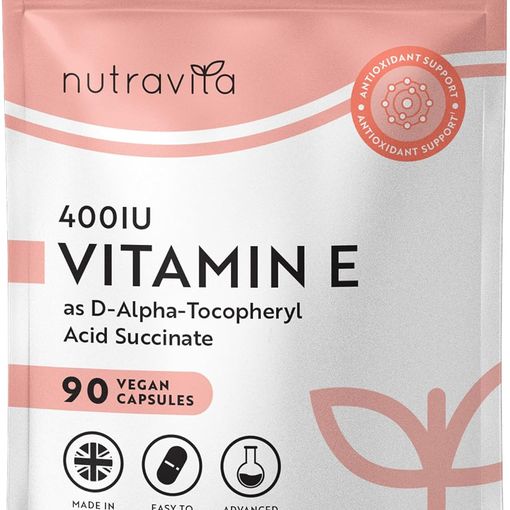
Nutravita has built a loyal UK following since 2014, and this capsule earns its spot with over 1,200 reviews at a 4.6-star average, the second-highest review count in this comparison. The active ingredient is d-alpha-tocopheryl acid succinate, a natural-source ester form chosen for stability and manufactured in the UK rather than imported. Worth a look if provenance and vegan-friendly capsules matter to you as much as the dose itself.
UK-Made Succinate Form: All The Details
Each vegan capsule provides 400 IU of vitamin E as natural d-alpha-tocopheryl acid succinate. The 90-capsule pouch is a three-month supply at one capsule daily. Nutravita states the product is free from soya, dairy, gluten, nuts and artificial additives, and manufacturing takes place in UK-based facilities rather than being white-labelled from an overseas supplier.
NATURELO Natural Vitamin E from Sunflower
Best Soy-Free Vitamin E
based on 2151 Amazon UK reviews (4.6★), adjusted for formulation quality
Why It Skips Soy Entirely
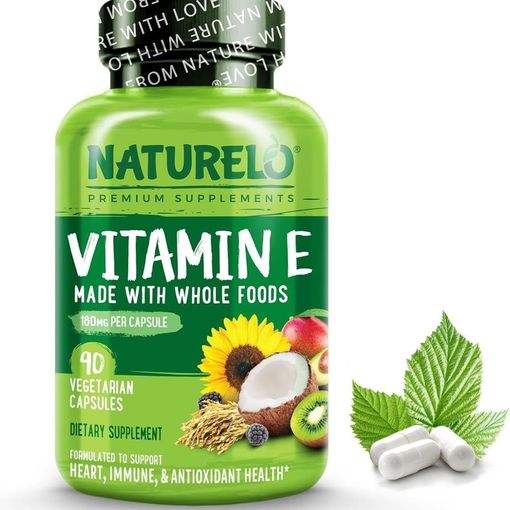
Most natural vitamin E on UK shelves is extracted from soybean oil, which rules it out for anyone avoiding soy for allergy or preference reasons. NATURELO sources its d-alpha-tocopherol from sunflower instead, and packs it into a vegetable cellulose capsule rather than the gelatin softgel used by most competitors here. With over 2,100 reviews and a 4.6-star average, it's the most-reviewed capsule (as opposed to softgel) format in this lineup.
Sunflower-Sourced Capsule: All The Details
Each capsule contains 180mg of natural d-alpha-tocopherol derived from sunflower, held in a powder form inside a plant-based capsule shell rather than suspended in oil. The 90-capsule bottle is a three-month supply at one capsule daily with a meal. It's vegan, gluten-free and made without soy, artificial colours or preservatives, manufactured in the United States.
WeightWorld Vitamin E 400IU
Best Value Vitamin E
based on 3232 Amazon UK reviews (4.6★), adjusted for formulation quality
The Honest Case for the Budget Pick
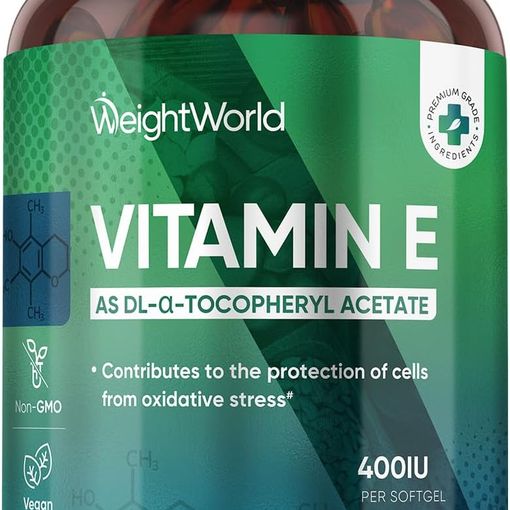
WeightWorld has the highest review count of any product on this list, over 3,200 ratings at a 4.6-star average, and 180 softgels stretches to six months at one a day. It's genuinely the cheapest way to cover a daily 400 IU dose in this lineup. There's a catch worth stating plainly, though: this is dl-alpha-tocopheryl acetate, the synthetic form. WeightWorld discloses that clearly on the front label rather than hiding it, which is more than some competitors manage, but it's still the lower-retention form the differentiator at the top of this page is warning shoppers to check for.
The Synthetic Form: All The Details
Each softgel delivers 400 IU of vitamin E as dl-alpha-tocopheryl acetate, a stable, oil-based, non-GMO synthetic form. Softgels use a vegetable-based coating and the product is manufactured in the EU. If budget and supply length are the deciding factors and you're comfortable with the synthetic form, this covers the most days for the least outlay of anything reviewed here.
Safety and Side Effects
At the doses found in food and standard multivitamins, vitamin E is very safe. The real risk is specific to high-dose supplementation: vitamin E has a mild blood-thinning effect, and this is amplified when combined with anticoagulant or antiplatelet medication such as warfarin or aspirin, meaningfully raising bleeding risk.2 Anyone on blood-thinning medication, or with a bleeding disorder, should check with a GP before taking vitamin E above the amount in a standard multivitamin.
Very high doses (into four figures of mg daily) have been linked in some studies to an increased risk of haemorrhagic stroke, particularly in people who already have cardiovascular risk factors. Standard single-ingredient doses in this category sit well under that threshold, but it's still worth avoiding unnecessarily high doses without a specific reason.
Best Vitamin E Supplement FAQ
What is vitamin E and what does it actually do in the body?
Vitamin E is a fat-soluble vitamin that functions as the body's main lipid-soluble antioxidant, protecting cell membranes from oxidative damage caused by free radicals. It's not one single compound but a family of eight related molecules: four tocopherols and four tocotrienols, of which alpha-tocopherol is the form most tightly regulated in human blood plasma.
What's the difference between natural and synthetic vitamin E?
Natural vitamin E (labelled d-alpha-tocopherol) is a single stereoisomer that the body's alpha-tocopherol transfer protein preferentially binds and retains. Synthetic vitamin E (labelled dl-alpha-tocopherol or dl-alpha-tocopheryl acetate) is a mixture of eight different stereoisomer forms produced by chemical synthesis, only one of which matches the natural form exactly. Research comparing the two using isotope-labelled tocopherols found meaningfully different relative bioavailability between natural and synthetic formulations in human subjects, with the natural form retained more efficiently at an equivalent dose.3
What does "mixed tocopherols" mean, and is it always accurate?
Genuine mixed-tocopherol products contain measurable amounts of beta, gamma and delta tocopherols alongside alpha-tocopherol, not just the single alpha isomer with a marketing label attached. Because "mixed tocopherols" isn't a legally defined term on UK food labels, it pays to check the ingredients panel for named amounts of gamma or delta tocopherol rather than trusting the phrase on the front of the pack alone.
What are tocotrienols, and are they worth looking for?
Tocotrienols are the less common half of the vitamin E family, structurally similar to tocopherols but with an unsaturated side chain that gives them different antioxidant and cholesterol-related activity. A systematic review of tocotrienol research found consistent evidence for cholesterol-lowering effects, along with early but more limited human data on cardiovascular and cognitive outcomes.4 They're worth seeking out if you want the broadest antioxidant coverage, though most human trial data remains smaller in scale than the alpha-tocopherol evidence base.
What are the proven benefits of taking a vitamin E supplement?
The clearest evidence sits around immune function in older adults: one placebo-controlled trial found that vitamin E supplementation improved several measures of immune response, including delayed-type hypersensitivity skin reactions, in healthy elderly participants.5 Vitamin E also plays a supporting antioxidant role in skin health, working alongside other antioxidants like vitamin C and selenium to help protect against oxidative stress in skin tissue.6 It's important to be realistic, though: vitamin E is not a proven treatment for heart disease prevention in the general population, and some of the early enthusiasm from observational studies didn't hold up in later randomised trials.
Is it possible to take too much vitamin E?
Yes. The NHS states that taking 540mg (800 IU) or less a day of vitamin E supplements is unlikely to cause harm, but there isn't enough evidence to know the effects of higher daily doses.1 Separately, a widely cited meta-analysis found that high-dosage vitamin E supplementation, generally defined as 400 IU per day or more taken long-term, was associated with a small increase in all-cause mortality risk in the pooled trial data, though this finding has been debated and not all subsequent re-analyses have reached the same conclusion.7 None of the products in this comparison exceed the NHS's supplemental threshold at their labelled serving size.
How long does it take to notice a difference?
Because vitamin E works by rebuilding antioxidant capacity and correcting any shortfall rather than acting acutely, most people give it 8 to 12 weeks of consistent daily use before judging any change in skin condition, hair, or general wellbeing. True dietary vitamin E deficiency is genuinely rare in otherwise healthy adults and is almost always linked to a fat-malabsorption condition rather than diet alone, so most supplement users are topping up an already adequate intake rather than correcting a deficiency.8
Does vitamin E pair well with mushroom supplements?
Reasonably well. Vitamin E's fat-soluble antioxidant role complements the water-soluble antioxidant compounds and beta-glucans found in mushrooms like Reishi and Chaga, and neither competes for the same absorption pathway, so there's no need to separate dosing times. If you're building a wider antioxidant stack, our Selenium supplement review is a natural pairing too, since selenium and vitamin E work through linked, complementary antioxidant enzyme systems in the body.
The Best Vitamin E Supplement for You
Now Foods Advanced Gamma-E Complex earns the top spot for actually delivering what most "natural vitamin E" bottles only imply, a genuine spread of tocopherols and tocotrienols rather than one isolated isomer. If you want the single highest per-capsule dose, Natures Aid's 1000 IU softgel is the strongest option here, while Solgar suits anyone who values a long-established, small-batch brand over a headline claim. Nutravita and NATURELO both cover the natural single-isomer middle ground well, from UK manufacturing to a soy-free sunflower source, and WeightWorld remains a genuinely reasonable budget choice as long as you go in knowing it's the synthetic form. Whichever you pick, check the label for "d-alpha" rather than "dl-alpha," take it with a meal, and give it a couple of months before judging the results.
-
Vitamin E serum levels and bleeding risk in patients receiving oral anticoagulant therapy: a retrospective cohort study ↩︎
-
Relative bioavailabilities of natural and synthetic vitamin E formulations containing mixed tocopherols in human subjects ↩︎
-
Vitamin E ingestion improves several immune functions in elderly men and women ↩︎
-
On the Potential Role of the Antioxidant Couple Vitamin E/Selenium Taken by the Oral Route in Skin and Hair Health ↩︎
-
Meta-analysis: high-dosage vitamin E supplementation may increase all-cause mortality ↩︎