


Best Hawthorn Berry Supplement UK for Heart Health Support

About the author...
Will founded Supermushrooms after digging into the research behind mushroom and nootropic supplements. Every pick is checked against clinical dosing, extract standardisation, and real buyer reviews, and each star rating starts from a product's real Amazon score before being adjusted for formulation quality. Read more about how ratings are calculated.
Table of contents
- Key Takeaways (TL;DR)
- How We Choose
- Quick Comparison
- Vegavero Organic Hawthorn Berry Capsules 2800mg (4:1 Extract)
- Hepatica Hawthorn Berry Extract 20:1, Standardised to 1.5% Flavonoids
- Zipvit Hawthorn Berry Leaf 1000mg, High Strength 10:1 Extract
- Solgar Hawthorne Berry Vegetable Capsules
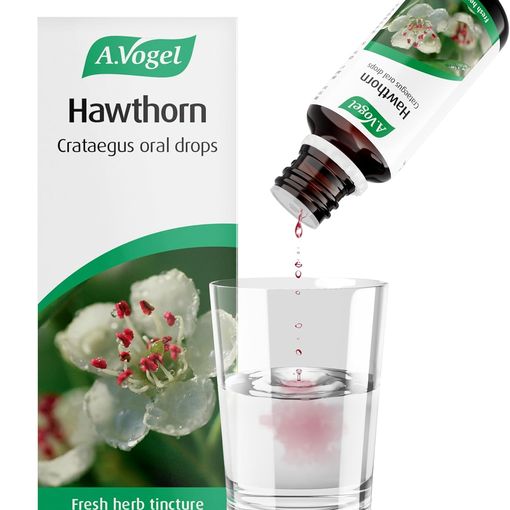
- A.Vogel Hawthorn Crataegus Drops
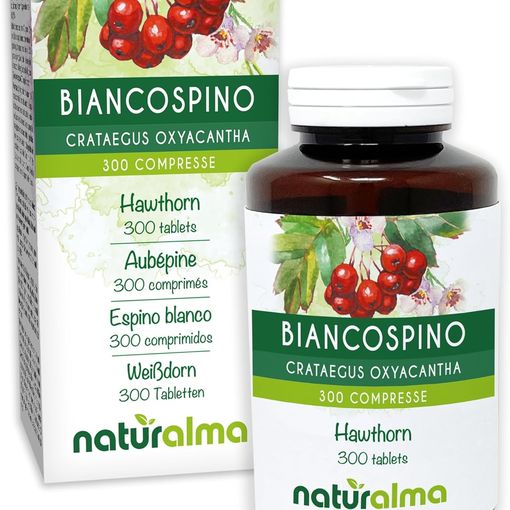
- Naturalma Hawthorn (Crataegus oxyacantha) Flowers and Leaves, 300 Tablets
- Safety and Side Effects
-
Best Hawthorn Berry Supplement FAQ
- What is hawthorn berry, and what is it traditionally used for?
- Does hawthorn actually work for heart failure symptoms?
- Why isn't there a THR-licensed hawthorn product in the UK, the way there is for products like St John's Wort?
- Which product has the strongest dose?
- How long does it take to notice an effect?
- Is hawthorn generally well tolerated?
- Should I take hawthorn alongside blood pressure or heart medication?
- Can I take hawthorn alongside mushroom supplements like Reishi or CoQ10?
- The Best Hawthorn Berry Supplement for You
The best hawthorn berry supplement in the UK is currently Vegavero Organic Hawthorn Berry Capsules 2800mg, which combines the largest review base in this comparison with a clearly disclosed extract ratio and flavonoid standardisation. See the comparison below for how five other well-reviewed options stack up on strength, standardisation and price.
Hawthorn (Crataegus monogyna or Crataegus oxyacantha) is a thorny hedgerow shrub. Its berries, leaves and flowers have a long history in European herbal medicine, mainly for heart and circulatory support. The main active compounds are flavonoids and oligomeric procyanidins. Those same two compound groups are the standardised marker used in the German-developed extract behind most of the trial evidence. In the UK, hawthorn is sold only as an ordinary food supplement, not as a licensed herbal medicine. That regulatory gap is worth understanding before you buy, and we cover it in full below.
Three things matter most when choosing a product. First, is the extract ratio or active-compound percentage actually stated, rather than just a bare mg figure? Second, does the dose sit near the range used in research? Third, and most importantly, is hawthorn even safe for you, given its direct interaction risk with heart medication? We've weighed all three below, alongside manufacturing quality and value.
Key Takeaways (TL;DR)
- Extract ratio and flavonoid or procyanidin percentage are the real differentiators between products; a bare "1000mg" or "2500mg" figure alone tells you little about potency.
- None of the UK's Amazon-available products match the specific standardised extract (WS 1442, ~17-20% procyanidins) used in most clinical trials, so treat any of them as a traditional-use supplement rather than a substitute for that research extract.
- The clinical evidence is genuinely mixed: a Cochrane review of smaller, older trials found symptom and exercise-capacity benefits, but the largest, most rigorous trial (SPICE) found no significant effect on its main cardiac-event endpoint.
- Hawthorn has a serious, well-documented interaction concern with heart medication, including digoxin, beta-blockers and other antihypertensives; this is not a minor caution.
- No hawthorn product currently holds an MHRA Traditional Herbal Registration (THR) in the UK; every option here is an unlicensed food supplement.
- Liquid tinctures and tablets/capsules dose very differently; drops are harder to compare mg-for-mg against a capsule's stated extract ratio.
- Most trial participants were assessed after 8 to 24 weeks of continuous use, so give it that long before judging whether it's doing anything.
How We Choose
We score each product on four factors. First, whether the extract ratio or active-compound percentage is actually disclosed, not just a bare weight figure. Second, whether the daily dose sits near a sensible research-backed range, keeping in mind that no OTC UK product matches the exact extract used in trials. Third, manufacturing quality, including third-party testing and GMP certification. Fourth, value against the other products here. Full methodology is on our About page.
Quick Comparison
Each product's overall rating starts from its real Amazon UK customer rating, then gets adjusted (up to ±0.5) for dose versus clinical research, extract standardisation, manufacturing quality, and value. Click a product name to jump straight to its full review below.
| Product | Best For | Type | Serving | Standardisation |
|---|---|---|---|---|
|
Vegavero Organic Hawthorn Berry Capsules 2800mg (4:1 Extract) 4.9 |
Best overall, most-reviewed standardised extract | Capsules | 1 capsule daily (700mg of 4:1 extract, equiv. 2800mg herb) | 4:1 extract standardised to 1.5% flavonoids (10.5mg per capsule) |
|
Hepatica Hawthorn Berry Extract 20:1, Standardised to 1.5% Flavonoids 4.9 |
Best standardised extract, highest herb-equivalent dose | Capsules | 1 capsule daily (500mg of 20:1 extract, equiv. 10,000mg herb) | 20:1 extract standardised to 1.5% flavonoids; equivalence stated on label |
|
Zipvit Hawthorn Berry Leaf 1000mg, High Strength 10:1 Extract 4.7 |
Best established UK brand, high-strength leaf extract | Tablets | 1 tablet daily (1000mg of 10:1 hawthorn leaf extract) | 10:1 leaf extract disclosed; no flavonoid percentage stated |
|
Solgar Hawthorne Berry Vegetable Capsules 4.6 |
Best long-established global brand | Capsules | 1 capsule daily (434mg berry powder plus 35mg 4:1 extract) | Powder and 4:1 extract blend; no flavonoid percentage stated |
|
A.Vogel Hawthorn Crataegus Drops 4.6 |
Best liquid format for those who dislike swallowing tablets | Liquid/Tincture | 15-20 drops in water, 3 times daily (fresh berry tincture) | Fresh-plant tincture; no standardised active-compound percentage disclosed |
|
Naturalma Hawthorn (Crataegus oxyacantha) Flowers and Leaves, 300 Tablets 4.4 |
Best budget bulk supply | Tablets | 2-4 tablets daily (300mg hawthorn per tablet) | Plain powder; around 10mg oligomeric procyanidins per 4 tablets disclosed |
Vegavero Organic Hawthorn Berry Capsules 2800mg (4:1 Extract)
Best Overall — Most-Reviewed Standardised Extract
based on 734 Amazon UK reviews (4.6★), adjusted for formulation quality
What We Love About the Clear Flavonoid Figure
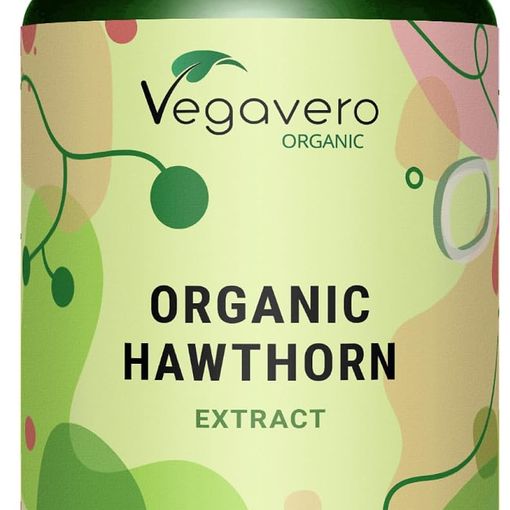
Vegavero has become the most-reviewed hawthorn product on Amazon UK by a wide margin, and the reason is partly that it actually tells you what's in the capsule. Each one provides a 4:1 extract standardised to 1.5% flavonoids, working out to 10.5mg of hyperoside, quercetin, rutin and vitexin per capsule, rather than a vague "high strength" claim with nothing behind it. The brand also states the product is lab-tested and free from unnecessary additives, which matters for a single-ingredient herbal capsule where fillers can otherwise make up a surprising share of the contents.
The 4:1 Extract: All The Details
One capsule a day provides 700mg of 4:1 extract, equivalent to 2800mg of raw hawthorn berry, taken with food. That's a substantial daily dose by OTC standards, organic-certified, and sold in a resealable pouch rather than a bottle. It doesn't match the specific procyanidin-standardised extract used in most heart-failure trials, a gap no UK food supplement currently closes, but the flavonoid disclosure here is more transparent than most competitors manage.
Hepatica Hawthorn Berry Extract 20:1, Standardised to 1.5% Flavonoids
Best Standardised Extract — Highest Herb-Equivalent Dose
based on 63 Amazon UK reviews (4.5★), adjusted for formulation quality
What We Love About the 20:1 Concentration
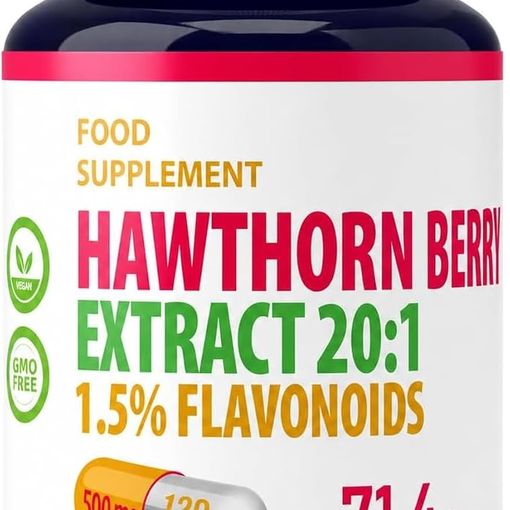
Hepatica pushes the extract ratio further than anything else in this lineup. Each capsule is a 20:1 extract, meaning 500mg of concentrated material is drawn from 10,000mg of raw hawthorn berries, and the flavonoid content is standardised to the same 1.5% figure as the Vegavero capsule above. It's a single-ingredient formula with no fillers or bulking agents, which keeps the label simple and the active-compound maths checkable.
10,000mg Herb-Equivalent: All The Details
One vegan capsule daily covers a four-month supply from the 120-capsule bottle, manufactured in a GMP-certified facility and tested by an independent laboratory for heavy metals and microbiology, with a certificate of analysis available on request. The smaller review count here, 63 against Vegavero's 734, reflects a newer listing rather than any quality concern visible in the product's own specification, though a shorter track record is worth weighing if you'd rather buy from a product with years of customer feedback behind it.
Zipvit Hawthorn Berry Leaf 1000mg, High Strength 10:1 Extract
Best Established UK Brand, High-Strength Leaf Extract
based on 638 Amazon UK reviews (4.5★), adjusted for formulation quality
What We Love About the Leaf-Extract Approach
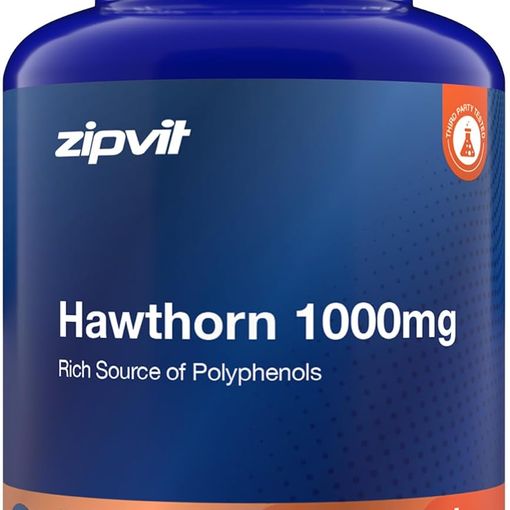
Zipvit has been formulating UK supplements for over 25 years, and this tablet uses hawthorn leaf rather than berry, which the brand claims carries a richer polyphenol profile than berry-only extracts. One tablet delivers 1000mg of a 10:1 extract, a meaningfully concentrated dose for a single daily tablet, and it's third-party tested for heavy metals in a GMP-certified UK facility. With well over 600 reviews at a consistent 4.5-star average, it has one of the deepest track records among genuine single-ingredient hawthorn products on Amazon UK.
The Leaf-Extract Ratio: All The Details
Each vegan tablet contains 1000mg of 10:1 concentrated hawthorn leaf extract, taken once daily, and the 90-tablet bottle covers three months at that dose. No flavonoid or procyanidin percentage is stated on the label, so while the extraction ratio itself is a genuine quality signal, you're trusting the ratio rather than a guaranteed active-compound content the way you would with Vegavero or Hepatica above.
Solgar Hawthorne Berry Vegetable Capsules
Best Long-Established Global Brand
based on 559 Amazon UK reviews (4.5★), adjusted for formulation quality
What We Love About the Brand Pedigree
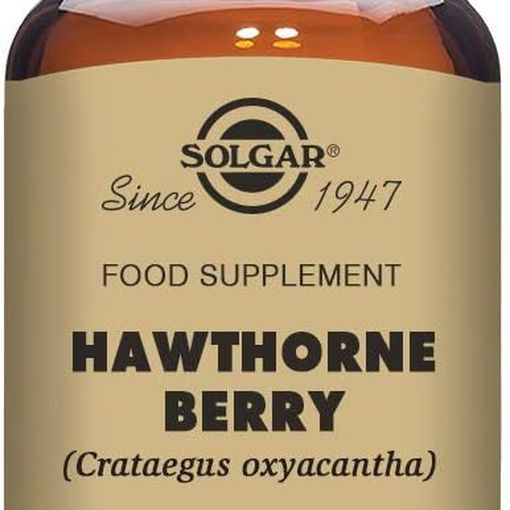
Solgar has been making vitamins and herbal supplements since 1947, and that longevity shows up in small details rather than marketing claims: 100% recyclable amber glass bottles, small-batch production, and a consistent 4.5-star average across 559 reviews. For buyers who weigh brand track record heavily when choosing a herbal supplement, that history counts for something a newer private-label listing can't match yet.
The Powder-Plus-Extract Blend: All The Details
Each vegetable capsule provides 434mg of hawthorn berry powder alongside 35mg of a 4:1 extract, taken once daily at mealtime. That combination gives a lower total concentrated-extract dose than Vegavero or Hepatica, since most of the capsule's weight is raw powder rather than concentrated extract, and no flavonoid percentage is disclosed for either component. It suits buyers who prioritise an established, consistently-sourced brand over squeezing out the highest possible extract ratio.
A.Vogel Hawthorn Crataegus Drops
Best Liquid Format for Those Who Dislike Tablets
based on 180 Amazon UK reviews (4.6★), adjusted for formulation quality
What We Love About the Fresh-Plant Tincture
A.Vogel's parent company, Bioforce, has made fresh-plant tinctures since the 1920s, and this one is pressed directly from fresh Crataegus oxyacantha berries rather than from dried, stored material. If swallowing tablets or capsules isn't practical for you, diluting a measured number of drops in water is a genuinely easier daily routine, and the 180 reviews behind it at 4.6 stars suggest it's a well-tolerated format for regular users.
The Drops Format: All The Details
The directions call for 15-20 drops in a little water, three times a day, from a 50ml bottle. Because it's a tincture rather than a dry extract, there's no extract-ratio or flavonoid percentage printed on the label the way there is on the capsule products above, so comparing its strength mg-for-mg against the others isn't straightforward. It's vegan, gluten-free, and suited to anyone who finds a liquid easier to fit around meals than a fixed tablet schedule.
Naturalma Hawthorn (Crataegus oxyacantha) Flowers and Leaves, 300 Tablets
Best Budget Bulk Supply
based on 363 Amazon UK reviews (4.5★), adjusted for formulation quality
What We Love About the Transparent Procyanidin Figure
With 300 tablets per bottle and a flexible 2-to-4-tablets-a-day dosing range, this is the simplest way to try hawthorn at low cost and without committing to a single fixed dose. Unusually for a plain-powder product, Naturalma states that four tablets provide around 10mg of oligomeric procyanidins and 2mg of flavonoids, the same marker compounds the standardised clinical extract is built around, even though the concentration here is far lower.
The Plain-Powder Format: All The Details
Each tablet contains 300mg of hawthorn flowers and leaves as plain dried powder, made and packaged in Italy, with no extraction step concentrating the active compounds the way the capsule products above do. At the top of its dosing range (four tablets), you get 1200mg of raw herb and that modest 10mg of procyanidins; at the lower end (two tablets), roughly half that. It's a reasonable, low-cost way to try hawthorn, but anyone wanting a guaranteed concentrated dose should look to the standardised extracts further up this page instead.
Safety and Side Effects
Hawthorn carries a more serious safety profile than most single-ingredient herbal supplements on this site. Its main risk isn't a mild, generic caution. It's a direct overlap with how heart medication works in the body.
Hawthorn should not be combined with digoxin, beta-blockers, other antihypertensives, or antiarrhythmic drugs without medical supervision. The best human evidence on digoxin comes from a small crossover trial in eight healthy volunteers. Three weeks of combined use did not significantly change digoxin's measured blood levels or clearance, and the authors concluded the two could be taken together safely at the doses studied.1 That's a reassuring result, but it has real limits. It was a short study in healthy people, not in the heart-failure patients who would actually take both drugs together. The authors also flagged the underlying concern behind the caution: hawthorn's flavonoids may affect P-glycoprotein, the same transport protein digoxin relies on. That's the proposed mechanism for a possible interaction, even though this one small study didn't detect it. Separately, hawthorn has its own mild blood-pressure-lowering and heart-rate-lowering effects. Combining it with beta-blockers or other blood-pressure medication could plausibly add to those effects, lowering heart rate or blood pressure further than either drug would alone. This is a theoretical risk based on how hawthorn is known to act on the heart, not a specific trial finding, and it's why drug-interaction references treat the combination with caution rather than waving it through.
If you take digoxin, a beta-blocker, any other blood-pressure or heart-rhythm medication, or you have a diagnosed heart condition, do not start hawthorn without talking to your GP, cardiologist or pharmacist first. This applies to every product in this comparison. The concern is about the ingredient itself, not any particular brand.
Beyond that medication overlap, hawthorn is generally well tolerated over the short-to-medium term. Trials pooled in the Cochrane review reported side effects as infrequent, mild and temporary, mostly nausea, dizziness, and mild cardiac or gastrointestinal complaints.2 It hasn't been adequately studied in pregnancy or breastfeeding, so it's best avoided in both without specific medical advice. Anyone scheduled for surgery should also mention hawthorn use beforehand, given its effects on the heart.
Best Hawthorn Berry Supplement FAQ
What is hawthorn berry, and what is it traditionally used for?
Hawthorn (Crataegus monogyna or Crataegus oxyacantha) is a hedgerow shrub whose berries, leaves and flowers have been used in European herbal medicine for centuries, mainly for heart and circulatory support. Its main active compounds are flavonoids and oligomeric procyanidins, and in Germany a standardised extract of the leaf and flower (WS 1442) has been studied specifically for mild-to-moderate chronic heart failure.
Does hawthorn actually work for heart failure symptoms?
The evidence is genuinely mixed, not a clear yes or no. A 2008 Cochrane review pooled 14 trials, most of them smaller and older. It found hawthorn extract improved exercise capacity and eased symptoms like breathlessness and fatigue, compared with placebo, when added to standard treatment.2 But the largest, most rigorous trial since then tells a different story. The SPICE study followed 2,681 patients for two years and found no significant benefit on its main endpoint, time to a first cardiac event. It did find one secondary signal: a reduced rate of sudden cardiac death, but only in a subgroup of patients with less severely reduced heart function.3 Treat hawthorn as a traditional, adjunctive option with modest supporting evidence, not a proven replacement for prescribed heart-failure treatment.
Why isn't there a THR-licensed hawthorn product in the UK, the way there is for products like St John's Wort?
We couldn't find a single hawthorn product on the MHRA's Traditional Herbal Registration scheme. One established UK herbal retailer says this is because the MHRA treats hawthorn's heart-failure-related indication as needing a full medicinal licence, not a traditional-use registration, and that full route is too costly for most manufacturers to pursue. Every hawthorn product here, and every one we found on Amazon UK, is sold as an ordinary, unregulated food supplement instead. That means none of their extract strengths, consistency or labelling claims have been independently checked by the MHRA.
Which product has the strongest dose?
Hepatica's 20:1 extract provides the highest herb-equivalent dose here, at 500mg of extract equal to 10,000mg of raw berries per capsule, with Vegavero's 4:1 extract (2800mg equivalent) close behind. Neither matches the specific procyanidin-standardised extract used in the clinical trials, which is a gap that applies to every OTC product sold in the UK, not just these two.
How long does it take to notice an effect?
Clinical trials assessing hawthorn for heart failure symptoms typically ran for 8 to 24 weeks before measuring outcomes, so that's the realistic window to judge whether consistent daily use is doing anything, rather than days or a couple of weeks.
Is hawthorn generally well tolerated?
For most people without an interacting heart condition or medication, yes. Reported side effects in clinical trials were infrequent, mild and transient, mainly nausea, dizziness and mild gastrointestinal complaints.2 See Safety and Side Effects above for the medication interactions that matter far more than general tolerability.
Should I take hawthorn alongside blood pressure or heart medication?
Not without medical supervision. Hawthorn has a direct pharmacological overlap with digoxin, beta-blockers and other antihypertensive or antiarrhythmic drugs, and this is a genuinely serious interaction concern, not a routine caution. Speak to your GP, cardiologist or pharmacist before combining hawthorn with any prescribed heart or blood-pressure medication.
Can I take hawthorn alongside mushroom supplements like Reishi or CoQ10?
Hawthorn's main risk is specifically pharmacological, tied to heart medication rather than to other supplements, so pairing it with something like Reishi for general wellbeing, or CoQ10 for cellular energy support, doesn't carry the same red flag as combining it with digoxin or a beta-blocker. That said, introduce one new supplement at a time, and if you're already on any heart or blood-pressure medication, get that combination specifically checked by a pharmacist before adding anything, hawthorn included.
The Best Hawthorn Berry Supplement for You
Vegavero's 4:1 extract is the strongest all-round pick here, backed by the deepest review history and a clearly stated flavonoid figure, with Hepatica's 20:1 extract as the choice if you want the highest herb-equivalent dose on offer. Zipvit and Solgar suit buyers who weigh an established brand's track record heavily, A.Vogel's drops are worth a look if tablets aren't practical for you, and Naturalma covers the budget, flexible-dose end of the market. Whichever you pick, this is one supplement where the safety section above isn't optional reading: if you take digoxin, a beta-blocker or any other heart or blood-pressure medication, talk to your GP or pharmacist before starting hawthorn, not after.